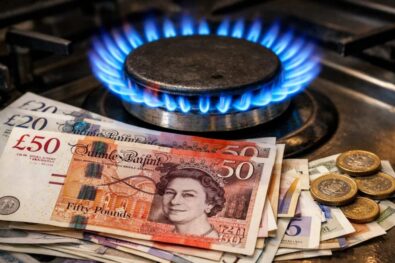
The latest british gas energy bill update indicates that 4.7 million homes in England are now at risk of severe energy hardship, as household energy bills are forecast to rise to £1,929 a year from July 2026 following a sustained surge in wholesale gas prices linked to geopolitical tensions around the Middle East, with new analysis identifying more than 6,500 neighbourhoods as high-risk “energy crisis hotspots” where low incomes, inefficient housing and high energy demand are combining to create persistent financial pressure, leaving millions of households exposed to structurally higher costs rather than temporary price volatility, reported by The WP Times.
Why this british gas energy bill update matters beyond one supplier
For readers searching for a british gas energy bill update, the key point is that this is not just about British Gas. The pressure sits in the wider UK pricing system. Ofgem’s current energy price cap for a typical dual-fuel household paying by direct debit is £1,641 between 1 April and 30 June 2026, but Cornwall Insight forecasts that the cap could jump to £1,929 from July, an increase of £288, or about 18%. That projected rise would affect households on standard variable tariffs across the market, including customers of British Gas, Octopus, EDF, OVO and E.ON Next, rather than one company alone.
That distinction matters because the phrase “British Gas update” can sound like a company-specific pricing event. In reality, the bigger story is that the UK remains tied to a regulatory framework in which wholesale energy shocks feed into household bills with a lag. So when international markets move sharply, millions of customers across multiple suppliers feel the effect, especially once the cap is reset.
Why 4.7 million homes are now considered at risk
The figure of 4.7 million homes comes from Friends of the Earth research mapping more than 6,500 neighbourhoods in England as “energy crisis hotspots”. These are areas where household income is below the national average and energy demand is high, often because homes are poorly insulated and leak heat. In other words, the problem is not just that energy is expensive. It is that millions of households are trapped in homes that require more energy in the first place. This is what makes the current phase of the energy crisis more serious than a temporary bill shock. When low incomes meet old housing stock, poor insulation and higher tariffs, households do not have much room to adjust. They cannot easily cut demand without losing warmth, and they often do not have the savings to absorb repeated increases. That is why campaigners and analysts are describing the situation less as a passing price spike and more as a structural affordability problem.
Friends of the Earth says households in these hotspot areas could face average annual bills of around £2,170, which is roughly £241 above the forecast national typical level. The local authority areas with the highest number of hotspots include Birmingham, Bradford, Enfield, Brent and Ealing, showing that the risk is concentrated not only in remote or off-grid areas but also in major urban parts of England.
What is pushing bills higher in 2026
The immediate pressure comes from wholesale energy markets. Cornwall Insight said on 31 March that, despite a small pullback in its estimate in late March, it still expected the July cap to rise sharply because of market conditions. Meanwhile, the House of Commons Library said UK wholesale natural gas prices had risen by roughly 75% between late February and 23 March 2026, linked to the Middle East conflict and wider supply fears.
The geopolitical backdrop matters because Britain remains exposed to international gas pricing. Reuters reported that Cornwall Insight linked the expected July increase to higher market costs, while recent reporting on the Strait of Hormuz shows how vulnerable global energy routes remain to conflict and disruption. Even where oil and gas prices later ease, the earlier shock can still feed through into regulated household pricing because the cap works with a lag rather than in real time. That is why consumers can feel confused. They may hear that markets have calmed, or that oil has fallen on a ceasefire headline, and assume bills will drop immediately. But household tariffs in Britain do not reset every day. The July cap reflects earlier wholesale conditions, not just the latest daily movement. So even if markets soften in April, many households may still face a materially higher bill from summer.
Who is most exposed to the next rise
The projected increase is serious for almost everyone on a default tariff, but it is not evenly distributed. Low-income households in inefficient homes face the hardest hit because they already spend a larger share of their income on essentials. In practical terms, an extra £24 a month may be uncomfortable for some households but destabilising for others, especially where food, rent, transport and debt costs are already high.
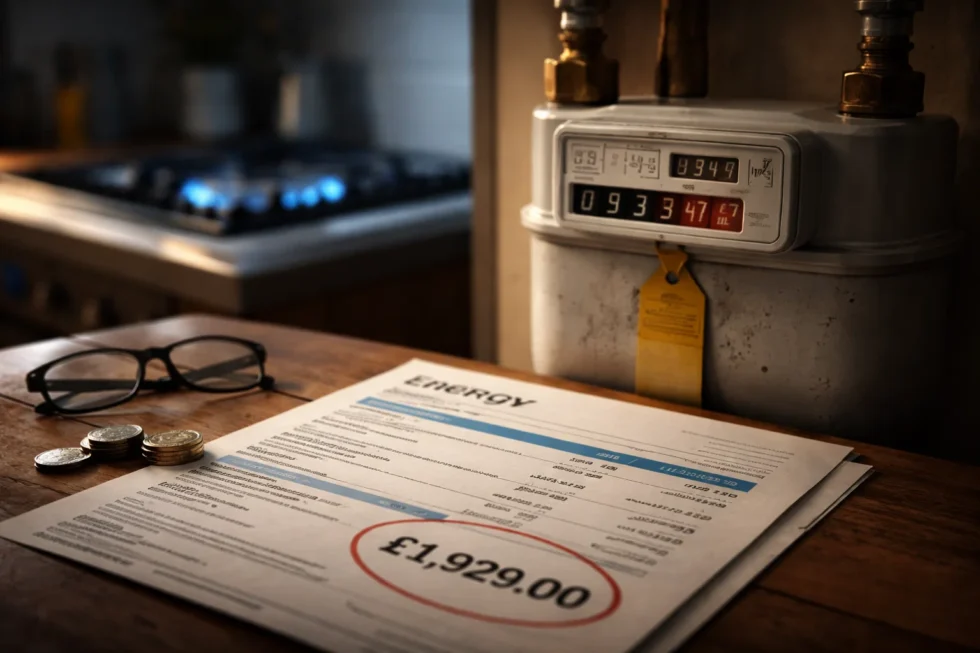
Friends of the Earth also warns that some rural households reliant on heating oil could be in an even worse position. In places including Torridge, South Norfolk, King’s Lynn and West Norfolk, and North Norfolk, some homes could pay around £1,000 more than the average household. That reflects a two-speed energy system in which off-grid households and those in older rural housing can be exposed to sharper volatility and fewer protections than households on mains gas. There is also a regional inequality dimension. Birmingham topping the list for hotspot concentration shows that this is not just a rural fuel-poverty story. It is also an urban housing story, tied to older building stock, poor retrofit rates, stagnant incomes and concentrated deprivation. In that sense, the next cap rise is not creating inequality from scratch. It is exposing and magnifying it.
What households actually need to understand now
For many readers looking up a british gas energy bill update, the practical question is simple: what does this mean for my bill? The answer is that if the July forecast holds, the typical annual bill benchmark would rise from £1,641 to £1,929. That does not mean every household pays exactly that amount, because actual bills depend on usage, tariff type, payment method and region. But it does mean the pricing environment is turning materially worse again after a brief period of relief in April. It also means that households should be careful about assuming the cap is a spending limit. Ofgem makes clear that the price cap is not a cap on the total bill; it is a cap on the unit rate and standing charge for a typical household. Homes that use more energy pay more. That point is especially important this year because poorly insulated households can be forced into higher usage even when residents try to cut back. Consumers may also see more discussion around fixed tariffs. Some analysts argue fixed deals can offer protection if they come in below future cap expectations, but the decision depends on the terms, exit fees and the household’s tolerance for risk. What is clear from the current data is that the era of assuming prices will steadily normalise has been broken again.
Why the UK remains so vulnerable to energy shocks
The deeper reason this story keeps returning is that Britain has not fully solved three structural weaknesses at once: exposure to global gas markets, inefficient housing and slow reform. The current price cap offers some protection against the worst extremes, but it does not remove the underlying dependency. If wholesale gas rises sharply, consumer costs still rise later.
The housing issue is equally important. Millions of homes still lose heat too quickly. That means high bills are not only a market problem but a building-quality problem. In a more efficient housing stock, the same wholesale shock would still hurt, but not as severely. In the UK’s existing stock, the impact becomes harsher because households need more energy to achieve the same level of warmth. Then there is the policy gap. Friends of the Earth is calling for faster rollout of renewables, targeted insulation for low-income households, a social tariff for the most vulnerable, moving some policy costs into general taxation and a stronger windfall tax on oil and gas companies. Whether or not all of those proposals are adopted, they point to a clear conclusion: the problem is no longer being framed simply as “prices are up”. It is increasingly being framed as “the system is too exposed”.
The July cap forecast is not the final number yet, but it is now a major warning signal. Cornwall Insight said the rise looked “pretty much unavoidable”, even if the final level could still move before the cap is set. That means households, suppliers and policymakers are heading into summer with a strong expectation of higher costs rather than relief.
The autumn position is even less certain. If wholesale prices remain elevated, another difficult reset later in the year cannot be ruled out. If markets ease materially and stay lower, some pressure could be reduced. But the events of recent weeks have shown how quickly geopolitical shocks can upend forecasts. The UK is still operating in an environment where conflict abroad can rapidly reshape domestic living costs.
The most important thing about this british gas energy bill update is that it captures a wider national problem. Britain is not just facing another quarterly adjustment. It is confronting the return of an energy affordability crisis in a country where millions of people are already living in homes that are expensive to heat and hard to improve quickly. That is why the number 4.7 million homes matters. It turns a market story into a social one. It shows that the issue is not only how much energy costs in theory, but who is structurally least able to cope when those costs rise again. And unless the UK reduces its exposure to volatile gas markets and upgrades the homes people live in, this cycle of relief, shock and renewed hardship is likely to keep returning.
Read about the life of Westminster and Pimlico district, London and the world. 24/7 news with fresh and useful updates on culture, business, technology and city life: Why is the royal mail price increase pushing UK stamp costs higher despite ongoing delivery concerns
Sources used in this report include analysis and reporting from Friends of the Earth, Cornwall Insight, Ofgem, as well as market data and UK media coverage.