
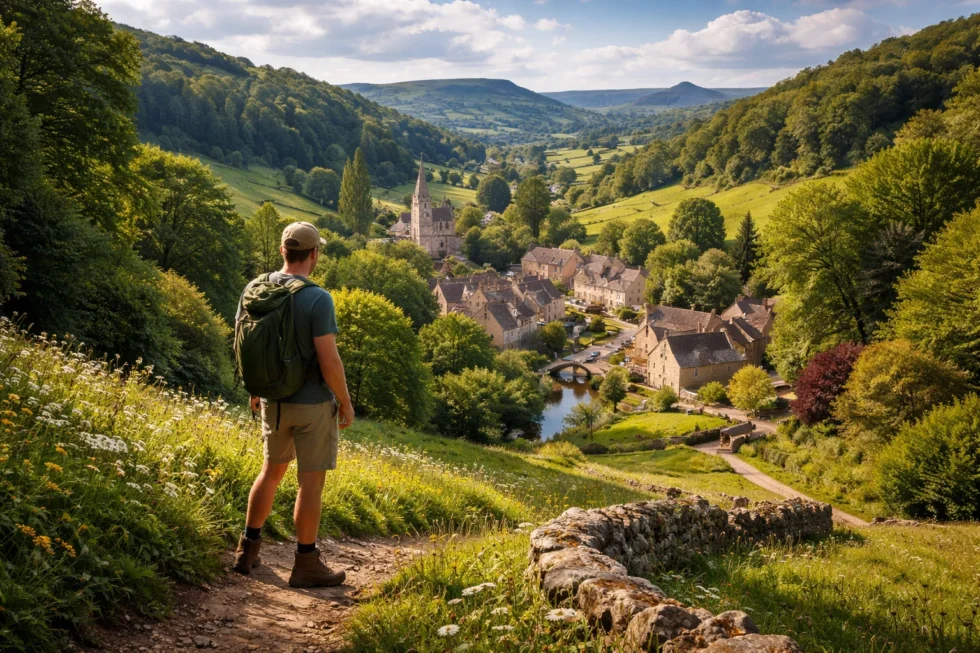
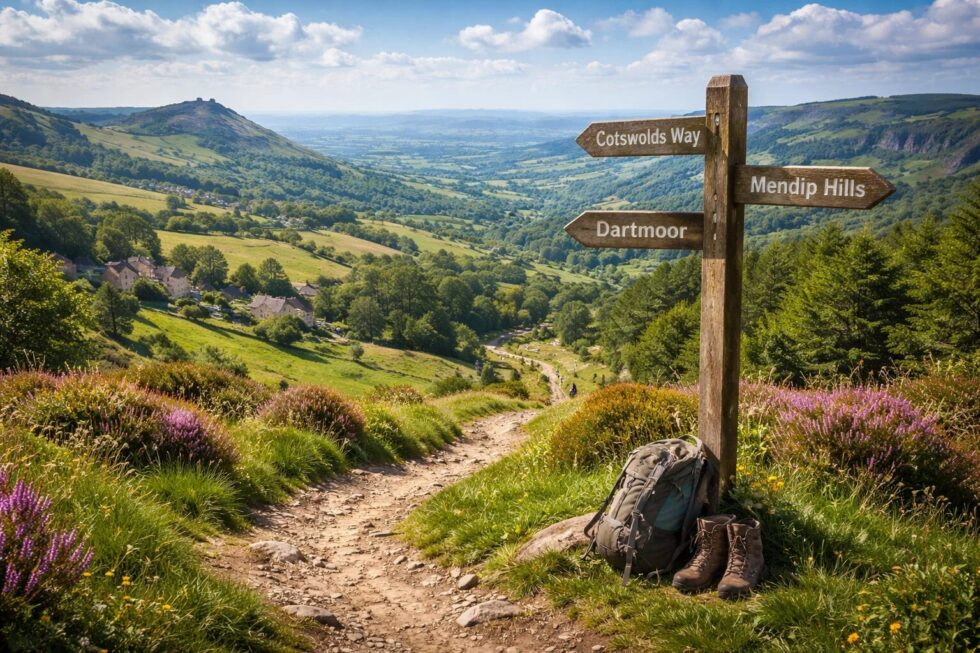
Weekend hiking in Western England is one of the most rewarding outdoor experiences for families, casual walkers, and anyone seeking accessible nature without extreme difficulty. The region boasts three of England’s most iconic natural areas: the Cotswolds, known for its rolling hills and classic rural scenery; Dartmoor National Park, a vast wild landscape of open moorland, granite tors, and shaded valleys; and the Mendip Hills, a limestone ridge area rich in diverse terrain, woodlands, and long recreational paths. Together, these destinations offer a range of easy to moderate hiking trails, circular walks, accessible pathways, family‑friendly routes, and scenic highlights that make Western England ideal for weekend outdoor plans, reported by The WP Times.
For families, planning a hike includes more than just distance: considerations such as terrain type, trail difficulty, facilities at trailheads, seasonal conditions, parking availability, safety, and points of interest play a major role in determining a successful and stress‑free outdoor weekend. This guide brings together detailed logistics, recommended routes, practical tips, and structured information for hikers who want to explore the Cotswolds, Dartmoor, and Mendip Hills with children, grandchildren, or friends — without the need for technical equipment or advanced experience.
Understanding the Landscapes: Cotswolds, Dartmoor, Mendip Hills
Western England’s outdoor offerings are diverse but rooted in distinct geological and historical influences:
Cotswolds
- Region: Stretching through Gloucestershire, Oxfordshire, Wiltshire, Somerset
- Landscape: Rolling limestone hills (the Cotswold escarpment), pastoral farmland, dry stone walls
- Character: Gentle gradients, scenic villages (e.g., Broadway, Bourton‑on‑the‑Water), grassland footpaths
- Best For: Easy family loops, accessible village walks, picnic sites near pubs and cafés
Dartmoor National Park
- Region: Southern Devon
- Landscape: Open moorland plateaus, deep wooded valleys, granite tor formations
- Character: Wild and spacious, with shaded trails, rivers, and historic farmland edges
- Best For: Woodland loops, short moorland circuits, opportunities to see Dartmoor ponies
Mendip Hills
- Region: Somerset
- Landscape: Limestone ridges, valleys, ancient woodlands, former railway routes
- Character: Limestone pavements, underground caves (not on family trails), rural paths
- Best For: Easy going wood paths, traffic‑free rail trails, shorter scenic loops
These three areas are part of England’s National Character Areas and are recognized for their public rights of way networks, natural heritage, and access for outdoor recreation. Reliable information on footpaths and access is maintained by local councils, national park authorities, and walking organizations.
Essential Planning Tips for Family Hikes
Determining Suitable Trail Difficulty
When planning a family hike, selecting a trail appropriate to the group’s fitness level and ages of participants is essential. A trail’s distance alone is insufficient — the type of terrain, elevation gain, rest opportunities, and surface quality are also critical. For family hikes, aims can vary:
- Toddlers & Young Children: Short paths under 2 km (1.2 miles) on flat ground
- Elementary School Age: 2 to 5 km (1.2–3.1 miles), small climbs acceptable
- Active Families: 5 to 8 km (3.1–5 miles) with gentle elevation and varied scenery
Many official guidebooks and national park resources categorize walks by difficulty and provide estimated times, which are typically generous to account for breaks, photos, snacks, and slower walking speeds with children.
Family Trail Difficulty Guidance
| Difficulty Category | Approx Distance | Terrain | Family Suitability |
|---|---|---|---|
| Very Easy | <2 km (1.2 mi) | Flat fields, paved paths | Best for toddlers |
| Easy | 2–5 km (1.2–3.1 mi) | Gentle ups/downs, firm paths | Most families |
| Moderate | 5–8 km (3.1–5 mi) | Variable surfaces, small climbs | Older kids |
A key point: flat or gently rolling terrain with good surface quality (grass, compacted soil, or short gravel) is more family‑friendly than the same distance on uneven moorland rock, slippery surfaces, or steep incline.
Preparing Logistics: What to Pack and Safety First
Proper preparation ensures comfort and safety:
Essential Items for Family Hikes
- Water and snacks: Enough for the whole hike plus extra; children need frequent small snacks to stay energized.
- Weather protection: Waterproof jackets, hats, sunscreen — weather in Western England can change rapidly, especially in Dartmoor.
- Navigation tools: Printed map, trail description, and a charged phone with offline maps; even well‑marked routes benefit from awareness of direction.
- First aid kit: Basic supplies including plasters, antiseptic wipes, and blister care.
- Comfort items: Picnic blanket, spare socks, wipes — small comforts improve the experience for families.
Safety Considerations
- Check weather forecasts before you set out. Moorland regions can become foggy and wet with little warning.
- Stay on marked paths. Many areas have sensitive habitats; keeping to footpaths reduces erosion and respects local ecology.
- Respect livestock. Farm animals are common; follow guidelines for passing sheep and cattle.
- Keep dogs under control — required in many areas year‑round.
- Know turnaround times. Set a comfortable target and allow buffer time for breaks.
Planning Checklist for Family Hikes
| Preparation Item | Why It Matters | Best Practice |
|---|---|---|
| Trail difficulty | Match route to ability | Choose easier routes for young children |
| Distance & time | Estimate real walk duration | Add 30–60 min buffer |
| Surface & terrain | Understand trail conditions | Avoid overly muddy/steep paths |
| Facilities | Toilets, picnic tables, cafés | Research ahead of time |
| Parking & transport | Ease of access | Arrive early on busy weekends |
| Weather | Variable climate | Waterproofs, layers, sun protection |
| Wildlife rules | Respect habitats | Follow Countryside Code |
Cotswolds Family Routes: Detailed Guide
The Cotswolds Area of Outstanding Natural Beauty (AONB) is home to some of England’s most iconic rural scenery, with public footpaths connecting villages, farms, and open countryside. This structured section details family‑friendly walks with precise logistics and points of interest.
Castle Combe Circular Walk (Extended Guide)
Overview
The Castle Combe Circular Walk is a classic short countryside loop that starts and ends in one of England’s most picturesque villages. Known for its shallow stream and stone bridges, Castle Combe is frequently rated among England’s prettiest villages.
Route Logistics
- Distance: ~4.3 km (2.7 miles)
- Surface Type: Field paths, narrow country lanes, some grass tracks
- Elevation: Low, gentle ups and downs
- Time: 1.5–2.5 hours with breaks
- Start/Finish: Village centre near parking at Dunns Lane
Trail Description
The trail begins on a gentle meadow path behind the village green. Within the first 10 minutes, walkers encounter the Bybrook River, where children can safely play in shallow sections under supervision. The path then transitions to a marked field track with intermittent hedgerows and grazing sheep. There are no steep climbs, and the walk stays within open countryside, offering uninterrupted views of rolling fields.
After 1.5 km, the route passes through a farmyard path (gates present) before returning via quiet country lanes bordered by dry stone walls. The loop concludes with a short riverside path leading back to the village.
Facilities & Accessibility
- Parking: Dunns Lane, with pay‑and‑display; arrive before 10:30 AM on weekends.
- Toilets: Public toilets at village centre.
- Refreshments: Tea rooms, ice cream shop, and pub accessible after the walk.
- Pushchair Note: Some sections have grass and slight uneven ground — not ideal for standard pushchairs. Use a trail‑rated stroller or carrier for younger children.
Points of Interest
- Historic village stone cottages (17th–18th century).
- River shallow enough for supervised wading.
- Seasonal wildflower hedgerows in spring and summer.
Safety & Seasonal Notes
- Summer: Bring sun hats; no shade on field sections.
- Winter: Fields can be muddy — waterproof boots recommended.
- Livestock fields: Keep dogs on short leads.
Financial Planning for Family Hiking Weekends in Western England
Although hiking trails in Western England are generally free to access due to the UK's public rights of way system, a well-planned family weekend still involves multiple cost layers. These costs vary depending on region (Cotswolds, Dartmoor, Mendip Hills), travel distance, season, and lifestyle choices such as dining out versus self-catering.
For families, understanding the full financial picture helps prevent overspending and allows better planning of transport, parking, meals, accommodation, and optional attractions. This section provides a structured, realistic cost framework based on typical UK pricing levels for 2026.
A hiking weekend can cost anywhere from a minimal £40 day trip to a £350–£500 overnight experience, depending on choices. The key is understanding fixed versus variable costs and identifying where savings are possible without reducing experience quality.
Core Cost Categories Explained in Detail
Transport Costs
Transport is typically the largest cost component, especially for Dartmoor, which may require longer drives.
Driving Costs
Fuel prices in England fluctuate but typically range between £1.40 and £1.60 per litre in recent averages. A family vehicle consuming 6–8 litres per 100 km will incur:
- Short regional trip (Cotswolds or Mendip from Bristol/Bath area): £10–£20 fuel return
- Medium-distance trip (to Dartmoor from Bristol): £25–£40 fuel return
- Longer regional trip (from London to Cotswolds): £35–£60 fuel return
Additional factors:
- Motorway tolls are generally not applicable in these regions.
- Rural driving increases fuel usage slightly.
- Parking fees (covered below) must be added separately.
Public Transport Costs
Public transport can reduce stress but may increase total cost depending on family size.
Examples:
- Regional train return (adult): £10–£25
- Child fares: Often 50% discount or family railcards reduce total cost
- Bus fares between villages: £3–£7 per ride
Family railcards in the UK reduce costs by up to one third, which can make train travel competitive with fuel costs for small families.
Strategic tip: Public transport works best for linear routes like parts of the Cotswold Way or Dartmoor routes near Okehampton.
Parking Fees by Region
Parking policies vary considerably.
Cotswolds
The Cotswolds is the most commercially active region of the three, especially in villages like Bourton-on-the-Water and Broadway.
- Typical daily rate: £3–£8
- Hourly systems common (2–4 hour limit)
- Summer weekends often full by mid-morning
- Card payments widely available
Hidden cost factor: Some car parks enforce strict time limits; overstaying may incur £50+ penalties.
Dartmoor
Dartmoor National Park has more rural car parks.
- Many are free
- Some charge £2–£5 per day
- National Trust sites (e.g., Castle Drogo) may require membership or entry fee
Less commercial pressure than Cotswolds but fewer amenities.
Mendip Hills
Generally the most budget-friendly:
- Many woodland trail car parks are free
- Village car parks may charge £2–£5
- Strawberry Line access points often free
Parking Cost Comparison Table
| Region | Typical Daily Cost | Risk of Fines | Weekend Crowding |
|---|---|---|---|
| Cotswolds | £3–£8 | Moderate | High |
| Dartmoor | £0–£5 | Low | Moderate |
| Mendip Hills | £0–£5 | Low | Moderate |
Food and Refreshment Budget
Food choices significantly influence total weekend spending.
Picnic-Based Budget Strategy
For a family of four:
- Homemade sandwiches & snacks: £12–£18
- Fruit & drinks: £6–£12
- Emergency snacks/treats: £5–£10
Estimated total per day: £20–£35
Advantages:
- Predictable cost
- Dietary control
- Flexibility for remote trails (especially Dartmoor)
Café and Pub Strategy
In popular Cotswolds villages:
- Adult main meal: £14–£20
- Child meal: £7–£12
- Coffee/tea: £3–£4
- Desserts: £5–£8
Family meal total: £45–£75
In Dartmoor rural pubs:
- Slightly lower pricing in some areas but still similar range
In Mendip Hills villages:
- Often slightly cheaper than tourist-heavy Cotswolds
Food Cost Comparison Table
| Style | Per Day (Family of 4) | Weekend Total |
|---|---|---|
| Picnic Only | £25–£35 | £50–£70 |
| Mixed (Picnic + Café) | £45–£60 | £90–£120 |
| Full Dining Out | £70–£100 | £140–£200 |
Accommodation Costs (If Staying Overnight)
Accommodation is optional but transforms hiking into a mini-break.
Budget Accommodation
- Campsites: £15–£25 per pitch
- Basic caravan parks: £20–£40
- Shared hostel rooms: £20–£35 per person
Mid-Range Accommodation
- B&B family room: £90–£150
- Rural inn: £100–£180
- Holiday cottages (2 nights): £200–£400 depending on season
Peak Season Pricing
May–September prices increase 20–40% in:
- Bourton-on-the-Water
- Broadway
- Castle Combe
- Popular Dartmoor villages
Booking 4–8 weeks in advance recommended.
Optional Attraction and Entry Fees
While hiking is free, some associated attractions are paid:
- Manor houses or historic estates: £10–£18 adult
- Guided tours: £8–£20
- Family attraction tickets: £25–£50 total
National Trust membership may reduce or eliminate entry fees at participating properties.
Families planning a combined hiking + heritage weekend should allocate £30–£60 extra.
Equipment Investment (Long-Term Cost Perspective)
While not per-trip costs, gear improves comfort and safety.
Essential Family Hiking Gear
| Item | Budget Range |
|---|---|
| Waterproof jacket | £25–£70 |
| Hiking boots (adult) | £60–£150 |
| Kids trail shoes | £30–£80 |
| Daypack | £20–£60 |
| Basic first aid kit | £10–£25 |
Cost-saving strategy:
- Use existing trainers for easy Mendip or Cotswolds routes
- Invest in boots for Dartmoor (moorland terrain)
Regional Cost Comparison Overview
| Expense Category | Cotswolds | Dartmoor | Mendip Hills |
|---|---|---|---|
| Parking | Higher | Moderate | Low |
| Dining | Higher | Moderate | Moderate |
| Accommodation | Higher | Moderate | Moderate |
| Attraction Fees | Moderate | Low–Moderate | Low |
| Overall Budget Level | Medium–High | Medium | Low–Medium |
Read about the life of Westminster and Pimlico district, London and the world. 24/7 news with fresh and useful updates on culture, business, technology and city life: Electric Scooters and Bicycles in Great Britain: 2026 New Rules, Legal Status, and Popular Routes