
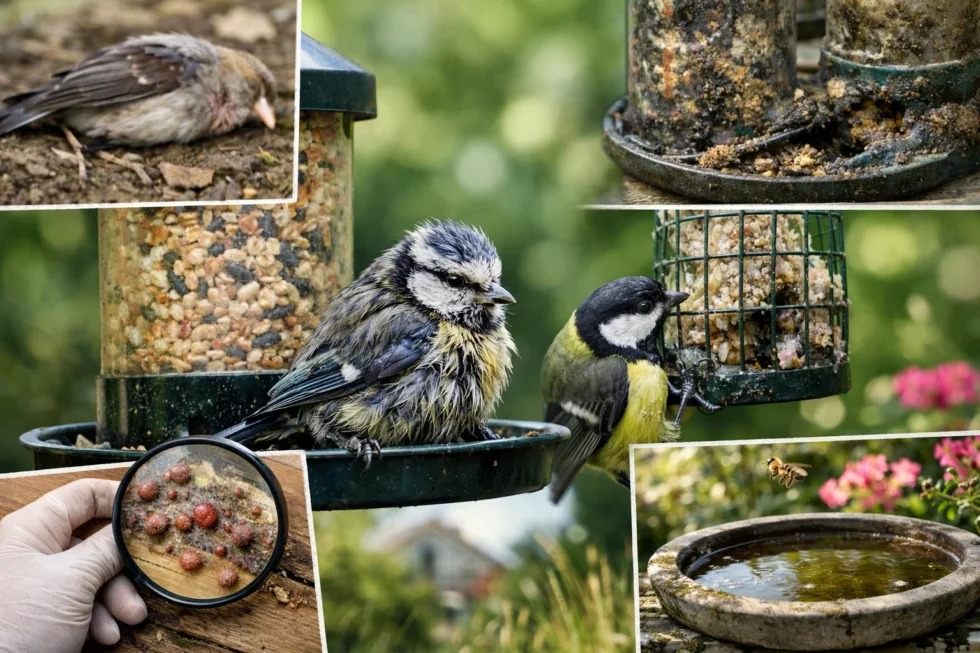
The sharp rise in searches for rspb bird feeders and rspb feeding birds guidance comes as the Royal Society for the Protection of Birds issues a clear seasonal warning: feeding garden birds during warmer months may increase the spread of disease and contribute to population decline in vulnerable species across the UK. The organisation is urging households to reconsider feeding birds rspb practices between 1 May and 31 October, when environmental conditions turn feeders into potential transmission hotspots.
Across Britain, millions of households regularly engage in bird feeding, often using seed and peanut feeders to attract wildlife into gardens. While this practice is widely encouraged during colder months, conservation experts now say that in spring and summer it can have unintended consequences. Warmer temperatures allow pathogens to survive longer on surfaces, while high-density تجمع birds around feeders increases direct and indirect contact. The WP Times reports this, citing BBC News, The Guardian and The Telegraph.
Why rspb bird feeders can spread disease in warmer months
The primary concern behind the rspb bird feeders warning is the spread of trichomonosis, a parasitic disease that has already had a measurable impact on UK bird populations. The disease is caused by a protozoan parasite that infects the upper digestive tract, affecting the mouth, throat and oesophagus. Infected birds often show symptoms such as difficulty swallowing, lethargy, weight loss and laboured breathing. In many cases, the disease proves fatal because birds are unable to feed or hydrate effectively. The parasite spreads through saliva and droppings, which contaminate shared feeding surfaces such as feeders and bird baths.
Feeders significantly increase transmission risk because they bring multiple birds into close proximity at a single location. Unlike natural feeding patterns, where birds are more dispersed, artificial feeding concentrates activity, creating repeated contact points throughout the day. In warmer conditions, the parasite survives longer on surfaces, increasing the probability of infection spreading between individuals.
Species most affected include greenfinches and chaffinches. Once common across UK gardens, the greenfinch has experienced a significant population decline linked directly to trichomonosis outbreaks. Conservation data indicates that greenfinch numbers have dropped by approximately two million, placing the species on the UK’s red list of conservation concern. Long-term monitoring supports this trend. According to the RSPB’s Big Garden Birdwatch dataset, greenfinches have fallen from seventh position in 1979 to eighteenth place in 2025. This sustained decline reflects both disease impact and broader environmental pressures, but disease transmission at feeders is identified as a key contributing factor. Another critical factor is breeding season dynamics. Adult birds feeding chicks may pass the parasite directly through regurgitated food, increasing mortality rates among younger birds. This makes the spring and summer period particularly sensitive, as infection can spread within nesting populations.
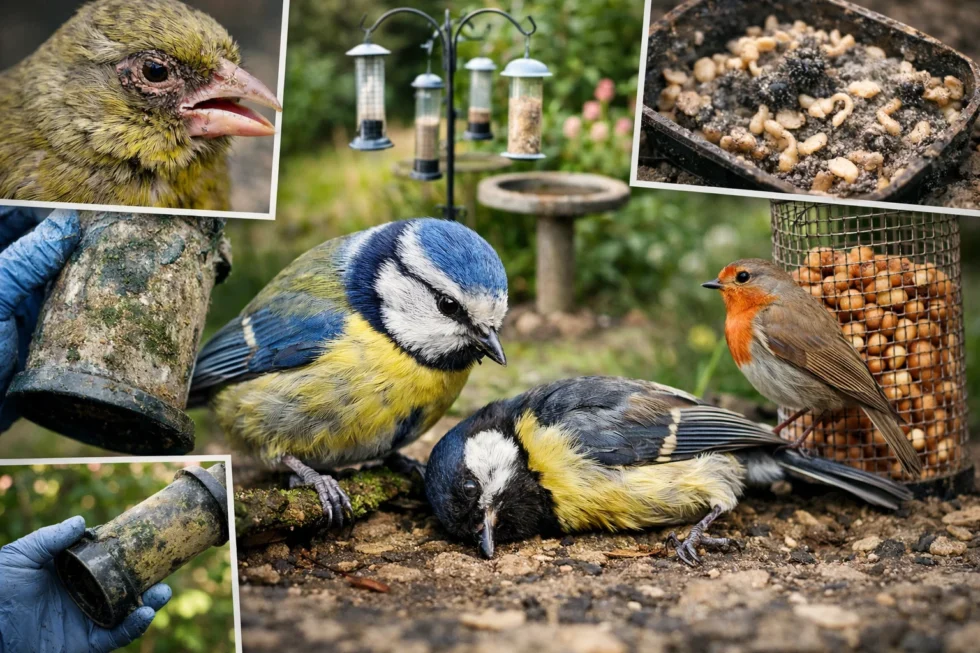
rspb feeding birds advice: what to do from May to October
The updated rspb feeding birds guidance reflects a shift towards seasonal, evidence-based intervention rather than continuous feeding. The organisation does not advise abandoning bird support entirely but recommends adjusting behaviour to reduce risk during high-transmission periods. Key recommendations include:
- Stop using seed and peanut feeders between 1 May and 31 October
- Reduce artificial تجمع points where birds gather in large numbers
- Clean feeders regularly using appropriate disinfectants if still in use
- Provide only small quantities of alternative foods such as mealworms, suet or fat-based products
- Ensure fresh water sources are clean and changed frequently
- Monitor birds for visible signs of illness and avoid feeding if disease is suspected
“Take a break from feeding birds between May and October,” the RSPB states in its seasonal guidance (RSPB advice, UK, April 2026), emphasising that feeding practices should reflect environmental conditions rather than remain constant throughout the year.
The guidance also highlights that natural food availability increases significantly during warmer months. Insects, seeds and other natural resources become more abundant, reducing birds’ reliance on artificial feeding. As a result, the ecological benefit of feeders declines, while the disease risk increases. Where feeding continues, hygiene becomes critical. Feeders should be cleaned thoroughly and frequently to reduce contamination. However, the most effective intervention remains temporary removal, particularly in areas where disease has been observed.
feeding birds rspb: risks, data and what it means for UK wildlife
The change in feeding birds rspb recommendations is grounded in long-term monitoring data and epidemiological understanding of disease transmission in wild bird populations. The interaction between environmental conditions, bird behaviour and human activity plays a central role. Below is a structured summary of key facts:
| Category | Details |
|---|---|
| Main issue | Disease transmission at shared feeders |
| Key disease | Trichomonosis (parasitic infection) |
| Transmission routes | Saliva, droppings, regurgitated food |
| Most affected species | Greenfinch, chaffinch |
| Population impact | Greenfinch decline of ~2 million |
| Survey trend | Rank 7 (1979) → Rank 18 (2025) |
| High-risk period | 1 May – 31 October |
| Core recommendation | Remove seed and nut feeders |
| Additional advice | Improve hygiene, reduce تجمع points |
The broader implication is a shift in how wildlife support is understood. Traditional advice promoted continuous feeding as a positive action for conservation. However, current evidence suggests that timing and method are equally important. Artificial feeding alters natural behaviour by concentrating birds into predictable locations. This not only increases disease transmission but can also affect migration patterns, breeding success and inter-species competition. In summer, when food is naturally available, the need for supplementary feeding is reduced, making the risks outweigh the benefits.
The RSPB emphasises that public engagement remains essential. Garden bird feeding has played a major role in raising awareness of biodiversity and supporting citizen science initiatives. However, conservation strategies are evolving to reflect new data and environmental pressures. Climate conditions also contribute to the issue. Warmer temperatures and влажные conditions can extend the survival time of pathogens on surfaces. Combined with high-density feeding points, this creates optimal conditions for outbreaks.
For households, the practical implication is clear: feeding birds should be seasonal and responsive rather than constant. Removing rspb bird feeders during warmer months reduces transmission risk while allowing natural ecosystems to function more effectively. Observation also plays an important role. Individuals are encouraged to watch for signs of disease and report unusual patterns to relevant wildlife organisations. This contributes to broader monitoring efforts and helps inform future guidance. The message is not to stop caring for birds, but to adapt behaviour based on evidence. Seasonal pauses, improved hygiene and awareness of disease risks form the basis of current best practice.
In this context, the rise in searches for rspb feeding birds reflects growing public awareness of the issue. As more households engage with wildlife, the need for accurate, evidence-based guidance becomes increasingly important. The long-term goal remains the protection of UK bird populations. Adjusting feeding practices is one of the simplest interventions available to the public, with measurable impact when applied at scale.
Read about the life of Westminster and Pimlico district, London and the world. 24/7 news with fresh and useful updates on culture, business, technology and city life: UK Border Revolution 2026: Mandatory Electronic Travel Authorisation (ETA) Enforcement and the End of Non-Digital Entry