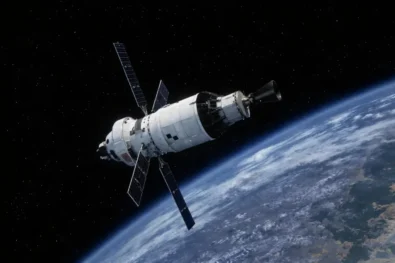
NASA Artemis II landung marks a decisive moment in modern spaceflight, as the four-person crew of NASA completed a nine-day Artemis II mission and safely returned to Earth after a historic lunar flyby, demonstrating that the Artemis programme can carry humans back to the Moon for the first time in more than 50 years. The Orion spacecraft splashed down in the Pacific Ocean on 10 April 2026 after a high-risk re-entry phase at speeds exceeding 24,000mph (38,600 km/h), confirming the performance of its heatshield under extreme temperatures, the accuracy of its re-entry trajectory and the reliability of deep-space navigation systems, reported by The WP Times, citing international agencies and NASA.
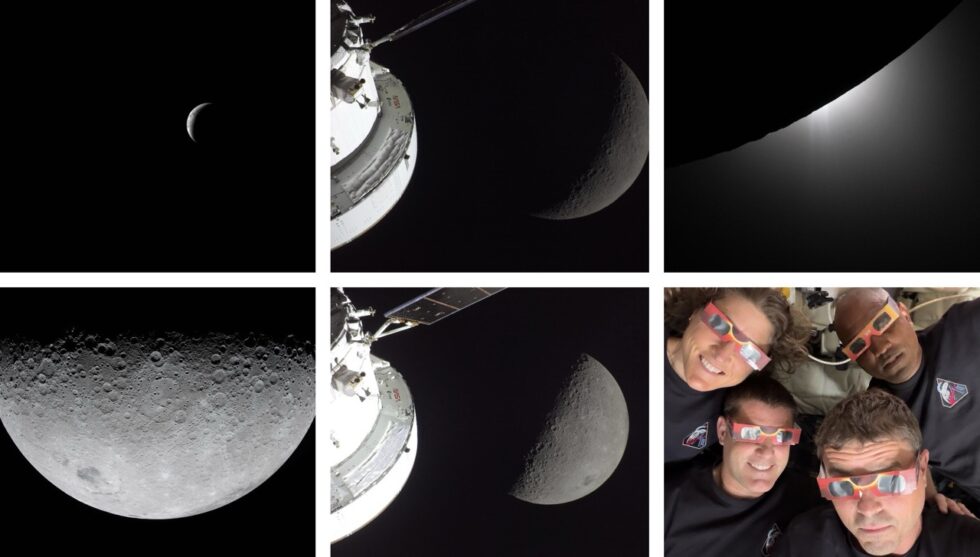
The mission — widely searched as artemis 2 live, nasa live and artemis live — saw astronauts travel farther from Earth than any humans in history since the Apollo era, conducting a seven-hour pass over the Moon’s far side and capturing unprecedented imagery, including a rare solar eclipse observed from deep space. The successful NASA Artemis II landung does not include a lunar landing itself but is the essential technical bridge toward Artemis III and future human presence on the lunar surface.
Mission outcome and artemis ii landing sequence explained
The NASA Artemis II landung unfolded as a precisely timed multi-stage operation, beginning with separation of the European-built service module and culminating in a controlled splashdown near the Californian coast. The most critical phase was atmospheric re-entry, where the Orion capsule encountered extreme thermal stress, with temperatures reaching approximately 2,750°C. Communication blackout lasted around six minutes — a standard but high-risk period where plasma buildup interrupts radio signals. Key stages of the landing sequence:
- Service module separation before Earth re-entry
- Controlled angle of atmospheric entry to avoid skip-off or burn-up
- Peak heating phase with plasma blackout
- Deployment of drogue parachutes at ~7.5 km altitude
- Main parachutes opening at ~3 km
- Splashdown at approximately 32 km/h in the Pacific Ocean
The recovery operation was executed by the USS John P Murtha, where astronauts were extracted and transferred for medical checks. NASA officials confirmed the landing zone was within one mile of the planned target — a level of precision described internally as mission-defining.
Artemis II landing technical data
| Parameter | Artemis II result |
|---|---|
| Mission duration | ~9 days |
| Max distance from Earth | ~250,000 miles |
| Re-entry speed | ~24,000 mph (38,600 km/h) |
| Peak temperature | ~2,750°C |
| Communication blackout | ~6 minutes |
| Splashdown location | Pacific Ocean, near California |
| Crew | 4 astronauts |
Artemis II lunar flyby and what astronauts saw
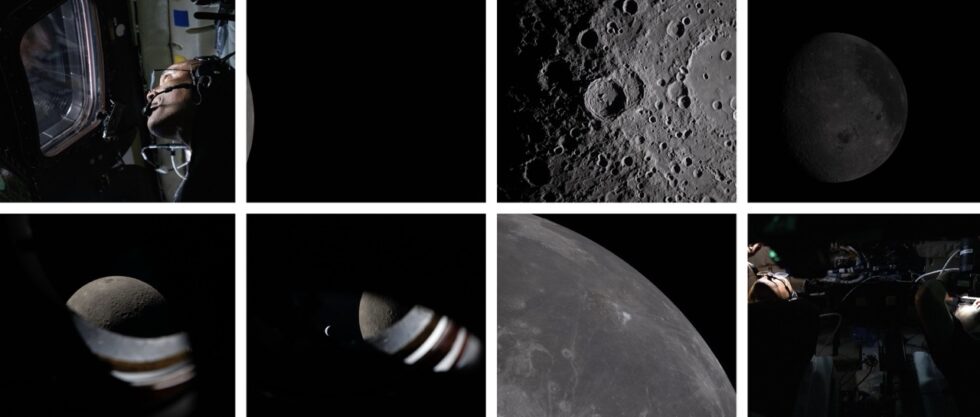
Unlike a landing mission, Artemis II focused on validating deep-space human operations, with the highlight being the lunar flyby — often searched as Artemis II Lunar Flyby. During the far-side pass, astronauts observed regions of the Moon never directly seen by humans in person. Images released on 7 April 2026 confirmed:
- high-resolution views of the lunar far side
- shadowed crater regions rarely visible from Earth
- a solar eclipse seen from lunar orbit perspective
This phase is critical not only scientifically but operationally: it proves that navigation, communication and crew endurance systems function reliably beyond low Earth orbit. NASA leadership emphasised that Artemis II was designed to test “everything except landing,” making its success a prerequisite for future missions targeting lunar surface operations.
What NASA Artemis II means for the future of artemis programme
The success of nasa artemis ii fundamentally changes the trajectory of human space exploration. It confirms that the Artemis architecture — including Orion, launch systems and mission planning — can safely support crewed lunar missions.
However, the roadmap has shifted. Current planning indicates:
- Artemis III may focus on orbital testing rather than immediate landing
- Artemis IV is now considered the first realistic lunar landing target (around 2028)
- long-term goal includes permanent lunar base infrastructure
From a strategic perspective, Artemis II demonstrates three critical achievements:
- Human deep-space capability restored after decades
- Thermal protection system validated under real conditions
- Operational coordination across international partners (including ESA and CSA)
NASA officials described the mission as “not luck, but execution,” highlighting the role of thousands of engineers and mission planners. The broader implication is geopolitical as well as scientific: Artemis positions the United States and its partners at the forefront of the next phase of lunar exploration, with potential competition from China and other spacefaring nations. For global audiences tracking nasa artemis 2 and artemis live, the message is clear — the Moon is no longer a historical destination but an active frontier.