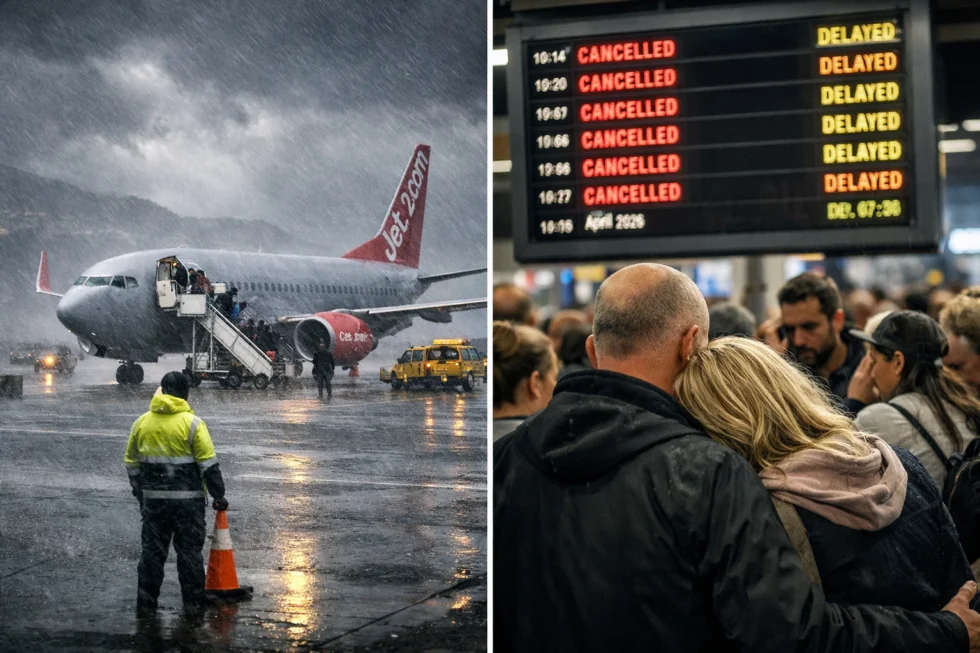
Madeira adverse weather flights are causing widespread disruption across one of Europe’s most challenging airport approaches, with strong winds, heavy rain and rough sea conditions forcing cancellations, diversions and schedule changes at Funchal Airport between 9 and 13 April 2026, directly impacting UK holidaymakers travelling with Jet2 and other carriers. Airlines and airport authorities have confirmed that operations are being affected by unstable Atlantic weather systems, with dozens of flights cancelled, multiple aircraft diverted and passengers advised to check flight status before departure, Reporter The WP Times.
The disruption intensified after Portuguese authorities issued yellow and orange weather warnings for wind across the archipelago, while airport operator ANA confirmed that no aircraft were able to land for several hours on April 9, followed by at least 20 arrivals and 20 departures cancelled later that day, highlighting the scale of operational risk at Madeira’s Cristiano Ronaldo International Airport where crosswinds regularly exceed safe landing thresholds.
Flight disruption details: cancellations, diversions and operational impact at Madeira
The situation at Madeira has evolved rapidly over several days, with weather patterns directly interfering with both arrivals and departures. The island’s mountainous terrain and short runway make it particularly vulnerable to wind shear and crosswinds, which are among the most critical risk factors in aviation. According to airport and aviation data, the disruption includes:
| Impact category | Details (April 2026) |
|---|---|
| Landings halted | No aircraft landed between approx. 02:00 and 10:45 on April 9 |
| Flight cancellations | Around 20 arrivals and 20 departures cancelled in one day |
| Diversions | At least 2 inbound aircraft diverted to alternative airports |
| Departures | Only limited early-morning departures managed |
| Ongoing risk | Further disruption expected due to continued wind warnings |
The combination of strong Atlantic winds and heavy rainfall has created unstable approach conditions, forcing pilots to abort landings or divert mid-flight. Madeira is widely known among aviation professionals as one of Europe’s most technically demanding airports, meaning even moderate weather changes can have disproportionate operational consequences. For passengers, this translates into last-minute delays, overnight disruptions and re-routing through mainland Portugal or the Canary Islands.
Jet2 warning and airline response: safety priority and passenger advice
UK airline Jet2 issued a formal warning to passengers travelling to and from Madeira, confirming that its operations team is actively managing disruption linked to adverse weather conditions affecting Funchal.
In its latest operational update, the airline stated that it is working to minimise delays but acknowledged that safety constraints may override scheduling:
“We are aware of adverse weather conditions currently affecting Madeira (Funchal). Our UK-based operations team are working hard to minimise any disruption to flights,” (Jet2 statement, UK operations update). Passengers have been advised to:
- Check flight status via airline websites before leaving for the airport
- Allow extra time for check-in and boarding
- Monitor email and SMS notifications for schedule changes
- Avoid travelling to the airport without confirmed flight status
Jet2 also confirmed that affected passengers already on the island have been contacted directly regarding delays and rebooking options, reflecting the operational complexity of managing outbound tourist flows during weather disruption.
Why Madeira airport is especially vulnerable to adverse weather
Funchal’s Madeira International Airport, also known as Cristiano Ronaldo Airport, is structurally unique and operationally sensitive due to its geography. Key risk factors include:
- Short runway built on stilts extending over the ocean
- Mountainous terrain creating unpredictable wind patterns
- Strong crosswinds from Atlantic systems
- Limited go-around options for pilots during landing
These conditions mean that even experienced crews must follow strict wind limits. If those limits are exceeded, landings are aborted immediately, often leading to diversions to Lisbon, Porto or nearby islands. This explains why, during the April 2026 weather event, multiple aircraft were unable to land for extended periods despite being in holding patterns over the Atlantic.
Weather warnings and forecasts: what authorities are saying
Portugal’s national weather agency, IPMA, issued yellow warnings for wind across Madeira, with some forecasts indicating escalation to stronger conditions depending on Atlantic pressure systems. Meanwhile, maritime authorities also warned of:
- Rough seas across the archipelago
- Increased wind gusts affecting coastal and aviation conditions
- Continued instability through the weekend period
Airport operator ANA reinforced this risk in a public advisory:
“Weather forecasts indicate adverse conditions that may affect operations (departures and arrivals) in the coming days. Passengers should contact their airline before heading to the airport,” (ANA airport operations statement). This coordinated messaging between aviation and weather authorities underscores that the disruption is not a one-off event but part of a broader weather pattern affecting the region.
What travellers should expect next: delays, rebooking and travel risk
For UK and EU travellers, particularly during the spring holiday period, the disruption carries both short-term and ongoing implications. Key expectations for passengers
- Continued delays and cancellations over several days
- Possible overnight stays due to missed connections
- Increased pressure on alternative routes via Lisbon
- Higher demand for last-minute accommodation
Airlines typically prioritise safety over schedule recovery in such conditions, meaning flights will not resume normal frequency until wind speeds stabilise below operational thresholds. For those planning travel in mid-April, flexibility remains critical.
Passenger checklist: how to manage Madeira flight disruption
To minimise disruption impact, aviation experts recommend a structured approach:
Before travel
- Check airline status updates every 2–3 hours
- Avoid early airport arrival without confirmation
- Prepare digital boarding passes and alerts
During disruption
- Stay in contact with airline customer service
- Request written confirmation of delays for insurance
- Track alternative routes via Lisbon or Porto
After cancellation
- Request rebooking or refund under EU261 rules
- Keep receipts for accommodation and meals
- Monitor airline communication channels continuously
This approach is particularly important in Madeira, where rapid weather changes can shift flight status within hours.
Read about the life of Westminster and Pimlico district, London and the world. 24/7 news with fresh and useful updates on culture, business, technology and city life: Lufthansa strike Germany flights: Hundreds of cancellations hit Frankfurt and Munich as unions escalate dispute