
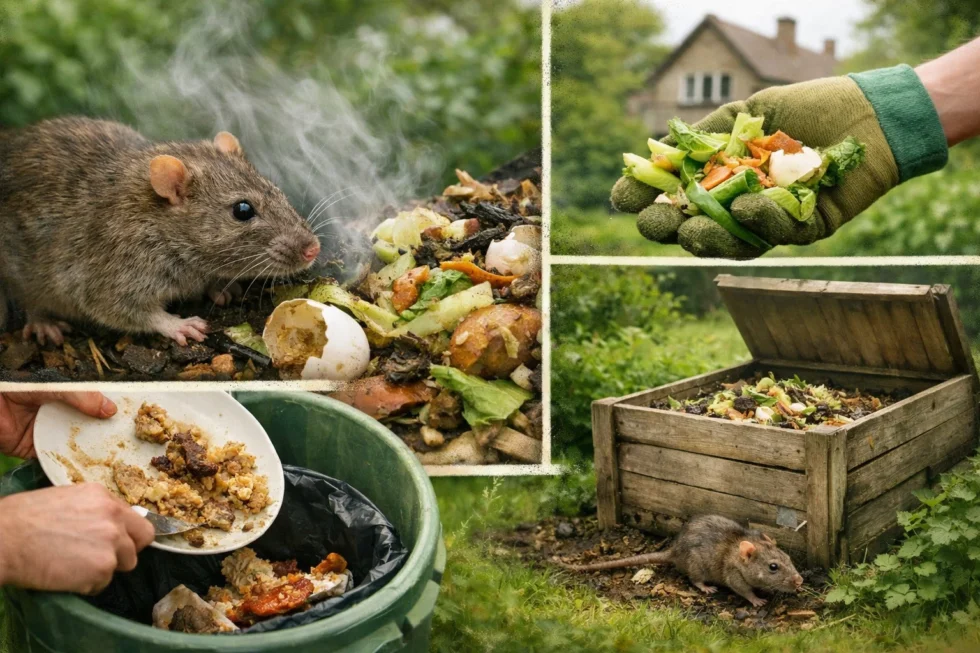
Monty Don has warned that a single, widely overlooked gardening habit—improper compost management—is directly contributing to a measurable rise in rat activity across UK gardens as spring conditions accelerate breeding cycles, expand food availability and improve survival rates among rodent populations, The WP Times reports, citing Cambridge News.
The issue centres on compost use, which, when mismanaged through the inclusion of cooked food, meat and fats, creates a stable, nutrient-rich and continuously accessible feeding source that attracts rats from surrounding areas, particularly in suburban and urban environments where natural feeding grounds are limited and human waste becomes the dominant resource. The warning, echoed by Alan Titchmarsh, comes as seasonal shifts—rising temperatures, increased household organic waste and intensified microbial decomposition—combine to form optimal ecological conditions for rodents to settle, feed and reproduce rapidly, increasing the risk of infestations spreading from gardens into nearby structures if left unmanaged.
Why compost becomes the key driver of rat activity in spring
The seasonal rise in rat activity across UK gardens is closely linked to the way compost behaves as temperatures increase, transforming from a passive waste system into an active biological environment that produces heat, moisture and strong organic signals detectable to rodents over distance. As spring stabilises, compost heaps begin to function as micro-ecosystems, sustaining bacteria, fungi and invertebrates, but also unintentionally creating ideal feeding and nesting conditions for rats if inputs are not controlled.
This shift is particularly visible in residential areas, where natural food sources are limited and human-generated waste becomes the primary attractor. Even small quantities of unsuitable material can alter the chemical profile of compost, increasing odour intensity and extending decomposition timeframes. Over time, this creates a predictable and renewable food source, encouraging repeated visits and, in some cases, permanent habitation within or near the compost structure.
What attracts rats: the critical composting errors
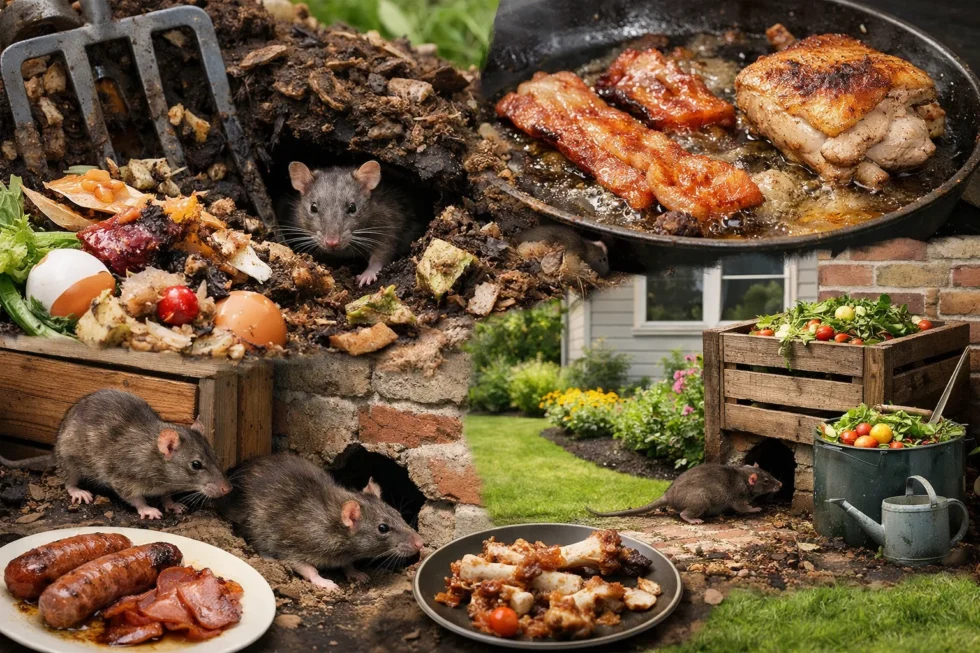
The distinction between effective composting and rodent attraction lies in material selection and structure. While plant-based waste decomposes efficiently under balanced conditions, certain household food types disrupt the process and significantly increase risk. The most common high-risk inputs include:
- cooked starches such as rice, pasta and potatoes, which ferment and retain moisture
- meat and fish products, which generate strong odours during breakdown
- fats and oils, which resist decomposition and linger in the compost mass
- processed food containing mixed ingredients and additives
- exposed waste placed on top rather than integrated into the pile
These materials not only slow microbial activity but also create surface-level accessibility, allowing rodents to feed without disruption. Once established, this pattern reinforces itself, as rats return to a consistent food source and begin to explore surrounding structures for shelter.
Expert guidance: compost as a controlled system
According to Monty Don, compost should be treated as a regulated biological process rather than a general-purpose disposal site. The effectiveness of compost depends on balance—between green and brown materials, moisture levels and oxygen flow—ensuring rapid and contained decomposition.
“Don’t add meat, fats or cooked material… it will attract rodents. You will get rats,” (Monty Don, UK media, 2026)
Alan Titchmarsh reinforces this position by highlighting the structural properties of compost heaps, particularly the heat generated during decomposition, which creates a stable and attractive habitat even in fluctuating outdoor conditions.
“Don’t put processed food, anything cooked or meat… it’s an open invitation for rats,” (Alan Titchmarsh, UK gardening guidance, 2026)
Together, these recommendations position compost management as the primary point of control in preventing rodent presence in domestic gardens.
Growth dynamics: why early control is critical
The biological capacity of brown rats to reproduce rapidly makes early-stage prevention essential. Under favourable conditions, populations can expand at a pace that outstrips detection, particularly when food sources remain stable.
| Factor | Detail |
|---|---|
| Sexual maturity | From approximately 5 weeks |
| Gestation period | Around 21–23 days |
| Average litter size | 6–12 offspring |
| Annual litters | Up to 7 per female |
| Peak activity | Spring and summer |
This reproductive cycle means that even a limited initial presence can develop into a sustained infestation within a short timeframe, especially where compost provides uninterrupted access to food.
Health and infrastructure implications
The presence of rats in garden environments extends beyond inconvenience, carrying both public health and structural implications. Rodents are associated with a range of pathogens that can be transmitted through contaminated surfaces, water or indirect contact with urine and droppings. Key health risks include:
- Leptospirosis (Weil’s disease)
- Salmonella
- Listeria
- Toxoplasma gondii
- Hantavirus
In parallel, rats can cause physical damage through persistent gnawing, affecting wood, insulation and electrical systems. This behaviour not only leads to material degradation but can also introduce secondary risks, including electrical faults and fire hazards.
Immediate measures to reduce attraction
Preventative control focuses on removing the environmental conditions that enable rat activity, with compost management forming the central intervention point. Effective measures include:
- excluding cooked food, meat and fats from compost inputs
- using sealed or rodent-resistant compost bins
- regularly turning compost to accelerate decomposition
- securing bird feed and animal food in closed containers
- removing accessible food sources from garden surfaces
These actions reduce both the availability and detectability of food, interrupting the behavioural patterns that lead to repeated rodent visits.
The increase in rat activity during spring reflects a consistent environmental pattern, driven by rising temperatures, increased biological activity and higher levels of human-generated organic waste. Gardening activity intensifies during this period, amplifying both compost use and the risk of improper waste handling. Long-term control depends on maintaining consistent compost discipline rather than reactive measures. When managed correctly, compost remains a valuable component of sustainable gardening. When unmanaged, it becomes a predictable attractor within the local ecosystem.
The central principle remains clear: composting itself is not the risk factor—mismanaged compost is. By removing cooked food, meat and fats from compost systems and maintaining structural control, gardeners can significantly reduce the likelihood of attracting rats. This single adjustment directly addresses the primary driver identified by both Monty Don and Alan Titchmarsh, aligning practical gardening behaviour with effective pest prevention while preserving the environmental benefits of composting.
Read about the life of Westminster and Pimlico district, London and the world. 24/7 news with fresh and useful updates on culture, business, technology and city life: The Masters 2026: Augusta National Commences 90th Edition in a Post-Tiger Era