
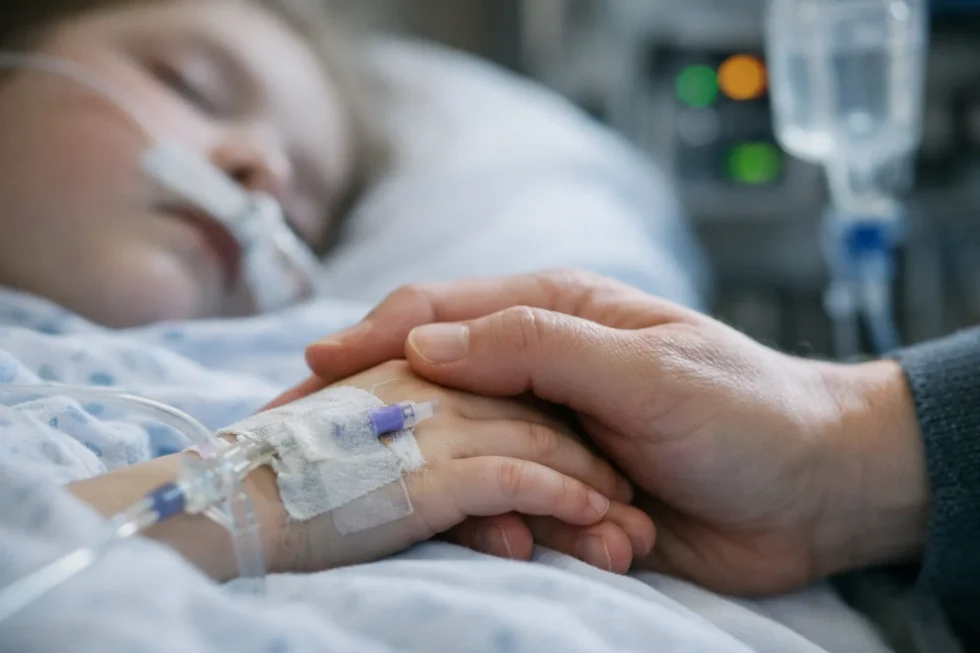
The Mail reports a Staveley mother has paid tribute to her daughter who died aged 25 after living with the rare neurological condition Niemann-Pick disease type C (NPC), a progressive and incurable disorder that disrupts the body’s ability to process cholesterol and lipids, leading to severe brain and organ damage. The case highlights how the disease can remain undetected in early childhood before rapidly deteriorating, with symptoms emerging around the age of seven and intensifying over time, ultimately requiring full-time care and resulting in premature death, The WP Times reports.
The Mail details how Yasmin Taylor, originally given a life expectancy of just 12 years, lived more than a decade beyond medical expectations before dying on 26 February, with her mother Michelle describing both the clinical progression of the illness and the emotional reality of long-term care, as well as renewed calls for greater public awareness and increased government funding for research into rare diseases such as NPC.
Yasmin’s condition reflects a recognised pattern in Niemann-Pick type C, where children may initially develop normally before neurological symptoms begin to appear. In this case, early signs were subtle, including speech difficulties and learning challenges, which gradually escalated into more severe impairments. Over time, the disease led to loss of motor and cognitive functions, epilepsy, and eventual loss of speech, illustrating the progressive and degenerative nature of the condition.
The clinical mechanism behind NPC is linked to a failure in intracellular lipid transport. Cholesterol and other fats accumulate in cells instead of being distributed correctly, particularly affecting the brain, liver and spleen. This accumulation causes irreversible damage, making the disease both life-limiting and currently incurable. While cases vary, clinical data shows that once neurological decline begins in Niemann-Pick disease type C, deterioration can accelerate rapidly, shifting from early disruption to severe, irreversible damage within a limited timeframe. The progression typically follows a defined clinical pattern:
- Normal early childhood development
- Early signs: speech impairment and coordination issues
- Cognitive decline and loss of previously acquired skills
- Loss of motor function and independence
- Onset of epilepsy and advanced neurological deterioration
In Yasmin Taylor’s case, this pattern was clearly evident. Her mother described how abilities once fully developed—including writing her own name—were gradually lost. Such regression is recognised as a core hallmark of the disease and a key diagnostic marker in paediatric neurology.
The psychological impact is equally severe. In the early stages, patients are often aware of their decline, creating acute emotional distress. Yasmin’s final conversations, according to her mother, were marked by confusion and a direct attempt to understand what was happening to her—highlighting the human reality behind progressive neurological disease. The long-term reality of living with Niemann-Pick disease type C extends far beyond clinical diagnosis, placing sustained and often invisible pressure on families who must adapt to round-the-clock care, emotional strain and financial uncertainty. Cases such as Yasmin’s highlight how the condition reshapes daily life entirely — from constant supervision to managing complex neurological symptoms — while exposing a wider gap in public understanding of rare diseases, The Mail reports.
For caregivers, the burden is cumulative and unrelenting. Medical needs intensify as the disease progresses, while independence steadily declines. Families frequently describe a dual reality: maintaining outward stability while coping with internal exhaustion, grief and long-term uncertainty about disease progression and life expectancy. Typical pressures reported by families include:
- Continuous 24/7 supervision and medical monitoring
- Managing seizures, coordination loss and mobility decline
- Emotional fatigue and psychological stress within the household
- Social isolation as normal routines become unsustainable
- Financial strain linked to specialised care and reduced work capacity
Michelle Taylor, Yasmin’s mother, described the experience as “physically exhausting and emotionally complex”, stressing that public empathy remains critically lacking (Michelle Taylor, quoted in The Mail). Her appeal reflects a broader systemic issue: rare diseases often remain poorly understood outside medical settings, leaving families without adequate social support.
“When you see people with wheelchairs or special needs… just be kind,” she said, adding that many families are “in pieces” despite appearing resilient in public (Michelle Taylor, The Mail interview).
From a clinical perspective, NPC is a progressive neurodegenerative disorder caused by impaired lipid transport within cells, leading to accumulation in vital organs including the brain, liver and spleen. The disease can present at any age, though it often begins in childhood, and is characterised by gradual neurological decline, loss of motor function and, in many cases, epilepsy. There is currently no curative treatment — only supportive care aimed at slowing progression and managing symptoms.
| Category | Detail |
|---|---|
| Disease type | Rare genetic neurological disorder |
| Cause | Lipid transport dysfunction in cells |
| Organs affected | Brain, liver, spleen |
| Onset | Variable (often childhood) |
| Treatment | Supportive care only |
| Progression | Progressive and degenerative |
| Life expectancy | Reduced, varies by case |
The rarity of NPC directly impacts outcomes. Limited awareness frequently leads to delayed diagnosis, while research funding remains disproportionately low compared to more common conditions. This slows the development of therapies and restricts access to specialised care pathways. Yasmin’s case illustrates a known but critical nuance: survival timelines can vary significantly. Her life extended beyond initial medical expectations — a factor specialists often attribute to consistent supportive care and individual biological variation — yet this does not alter the disease’s underlying trajectory of progressive decline.
Following her daughter’s death, Michelle Taylor has shifted focus towards advocacy, calling for increased awareness and funding for rare diseases. Organisations such as NPUK remain central to this effort, providing practical and emotional support while funding research and promoting earlier diagnosis. Their work typically includes:
- Direct support services for affected families
- Funding clinical and laboratory research
- Raising awareness among healthcare professionals
- Connecting patients with specialist networks
Health experts consistently emphasise that earlier diagnosis — even in the absence of a cure — can significantly improve quality of life by enabling faster access to care, therapies and support systems. At a systemic level, the case underscores a persistent healthcare challenge: balancing investment between widespread conditions and rare diseases, where patient numbers are smaller but the individual burden is often significantly higher. Yasmin’s story reflects not only the medical realities of NPC, but the lived experience behind the diagnosis — where long-term care, emotional endurance and family resilience remain central in the absence of a cure.
Read about the life of Westminster and Pimlico district, London and the world. 24/7 news with fresh and useful updates on culture, business, technology and city life: Euphoria Season 3: Can the A-list cast survive Sam Levinson's provocative 2026 scripts