
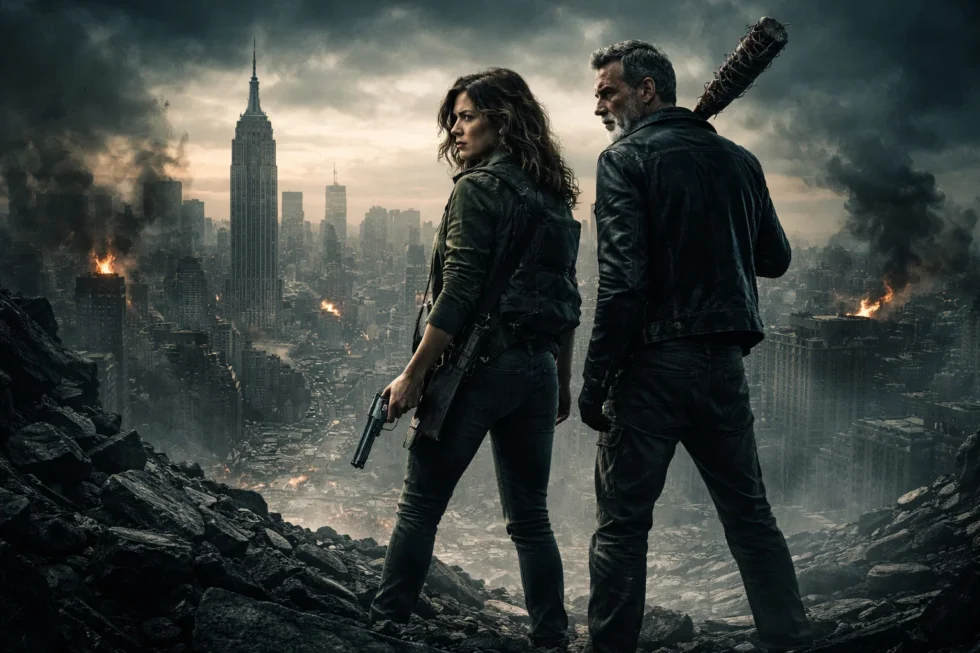
Season 3 of The Walking Dead: Dead City entered active production development in April 2026 in the United States, with AMC confirming changes to creative leadership, episode structure and narrative scope ahead of a planned late-2026 release. Seth Hoffman has been appointed showrunner and lead writer for the opening episode, overseeing a revised production model that reduces parallel storylines and tightens writers’ room control following pacing and cohesion issues identified during season 2. Early-stage script work, set planning and continuity design—focused primarily on Manhattan-based environments—indicate a shift towards character-led progression, where each episode is structured to deliver clear narrative consequence rather than fragmented, multi-thread storytelling, The WP Times reports.
At the centre of the new season is a recalibrated focus on Maggie and Negan, positioned as the primary narrative axis around which all major developments are constructed. Their relationship is being written with increased psychological continuity, where prior events directly inform present behaviour and decision-making across episodes. Instead of dispersing tension across multiple subplots, the season concentrates on sustained interaction, allowing conflict, negotiation and shifting alignment to develop incrementally. This marks a structural shift in how tension is built, moving from external threat-driven escalation to internal, character-driven progression, where dialogue, timing and reaction carry greater narrative weight.
Dead City season 3 structure and episode design
The eight-episode format remains in place, but internal construction has been refined to increase narrative density and continuity within each instalment. Episodes are being developed with longer scene sequences and fewer location transitions, allowing environments—particularly Manhattan’s post-collapse zones—to function as stable narrative frameworks rather than transitional backdrops. This reinforces continuity of action within the same space and strengthens spatial logic across episodes.
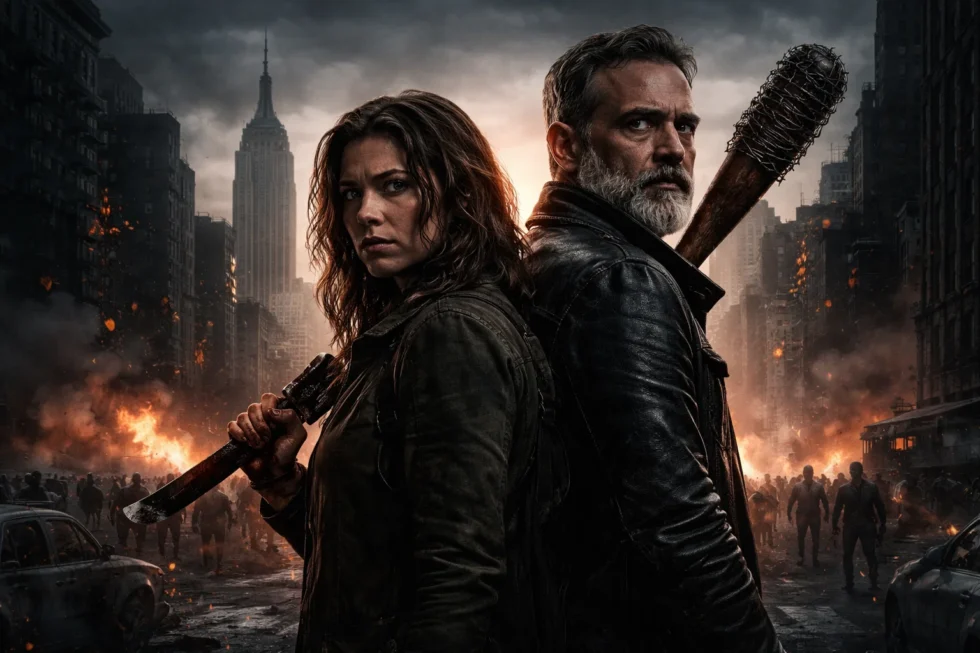
Filming structure and production notes indicate a shift towards contained storytelling, where fewer storylines are developed simultaneously and each arc extends across multiple episodes rather than resolving quickly. This model improves narrative clarity and reduces the fragmentation that affected pacing in the previous season. Episode endings are also being redefined, with each instalment structured around a clear emotional or strategic pivot point, ensuring continuity without abrupt tonal breaks.
| Element | Season 2 execution | Season 3 adjustment |
|---|---|---|
| Narrative scope | Multiple parallel arcs | Centralised core storyline |
| Scene structure | Frequent short transitions | Extended, continuous sequences |
| Location use | Constant movement | Fixed, evolving environments |
| Character focus | Distributed ensemble | Concentrated on two leads |
| Episode endings | Open, fragmented | Defined narrative pivot points |
Walking Dead franchise strategy and commercial background
The Walking Dead: Dead City sits within a broader restructuring by AMC following the end of The Walking Dead in 2022, when the network shifted from a single large-scale production to a portfolio of smaller, character-led spin-offs. The original series generated multi-billion-dollar value across advertising, syndication and international licensing, but declining linear viewership in later seasons required a transition towards more cost-efficient, modular content capable of sustaining the brand without large ensemble production costs.
Within this model, Dead City was designed as a controlled-format project, using a confined Manhattan setting to reduce production complexity while maintaining a distinct visual identity. Compared to earlier Walking Dead seasons, which required multi-location filming and large-scale coordination, Dead City operates with fewer environments, a smaller core cast and more predictable shooting schedules. This improves cost control per episode while maintaining franchise visibility across both traditional broadcast and the AMC+ platform.
The season 3 reset therefore reflects not only narrative recalibration but also alignment with this cost-and-structure model. As AMC continues to operate multiple spin-offs in parallel, each project is positioned with a defined role within the franchise. Dead City is being reinforced as a contained, character-driven series focused on psychological tension, allowing it to coexist with more expansive projects such as The Walking Dead: Daryl Dixon without overlapping in scope or audience positioning.
Narrative continuity and legacy character integration
A confirmed development within season 3 is the controlled reintroduction of Beth Greene, implemented through non-linear narrative devices rather than direct chronological return. Early script indications point to the use of flashbacks, memory constructs or symbolic sequences that connect past and present timelines without altering established canon.
From a production standpoint, this reflects a measured use of legacy intellectual property, where returning characters are used to reinforce emotional continuity rather than expand plot complexity. The broader objective is to stabilise audience engagement by reconnecting current storylines with earlier emotional arcs, particularly for long-term viewers. Within AMC’s wider strategy, season 3 functions as a recalibration layer, aligning Dead City with a more focused, character-led format designed for sustained development without structural expansion.
Read about the life of Westminster and Pimlico district, London and the world. 24/7 news with fresh and useful updates on culture, business, technology and city life: Euphoria Season 3: Can the A-list cast survive Sam Levinson's provocative 2026 scripts