
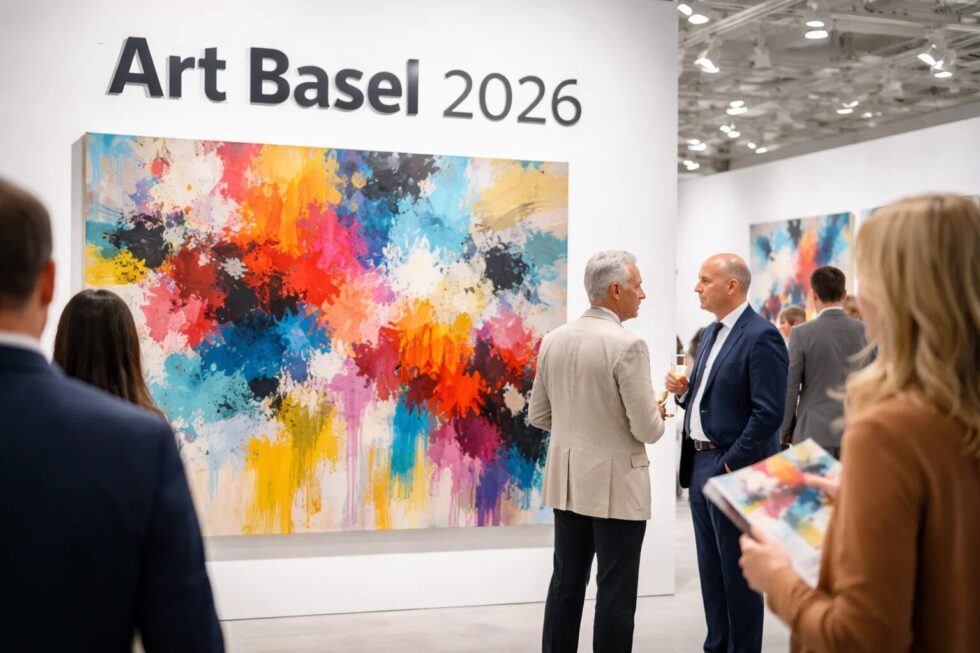
Basel has consolidated its position as the world’s leading art capital in 2026, driven by the expanding influence of Art Basel, a surge in ultra-high-net-worth collectors, and structural shifts in global investment behavior toward tangible assets. The Swiss city now functions not only as a marketplace but as a pricing engine, where galleries, collectors, and financial intermediaries converge to set global benchmarks for contemporary and modern art. The concentration of capital, institutional trust, and curated scarcity explains why Basel—rather than competing hubs—has become the decisive node in the art economy, reports The WP Times via Baselpost.ch.
Why Basel dominates the global art market in 2026
Basel has emerged in 2026 as the most influential global center of the art market due to a precise convergence of capital concentration, institutional trust, and controlled supply. Unlike traditional hubs, the Swiss city operates as a synchronized ecosystem where galleries, collectors, museums, and financial intermediaries act within a tightly coordinated timeframe. This concentration creates a rare environment in which pricing, validation, and transaction execution happen simultaneously.
The city’s dominance is directly linked to the structural strength of Art Basel, which has evolved beyond a commercial fair into a global benchmark-setting institution. Its ability to attract the highest tier of galleries ensures that the most important works are presented in a single location.
This centralization reduces fragmentation in the global art market and increases Basel’s authority over pricing dynamics.
In 2026, Basel also benefits from geopolitical neutrality and financial stability, making it a preferred destination for cross-border capital flows. Buyers from multiple regions can transact with reduced regulatory friction, reinforcing liquidity. As a result, Basel is no longer just a marketplace—it is the point where global art value is effectively defined.
How Art Basel reshaped global art market architecture
Art Basel in 2026 operates as a complex infrastructure rather than a standalone event, integrating primary sales, private transactions, and institutional acquisitions into one coordinated system. The fair’s selective entry model ensures that only top-tier galleries participate, which directly strengthens buyer confidence and reduces perceived risk.
This curated environment leads to faster deal execution. Transactions that previously required months of negotiation are now completed within hours or days during the fair. The presence of leading collectors and advisors in one location eliminates delays and increases transactional efficiency. Another defining factor is Basel’s influence on institutional collecting. Museums and foundations increasingly align their acquisition strategies with what is presented at the fair. This creates a feedback loop: works shown in Basel gain institutional validation, which in turn supports long-term price appreciation.
Furthermore, Basel’s role extends into the secondary market. Auction houses monitor sales closely, using them as reference points for upcoming auctions. In this way, Art Basel effectively sets the tone for global pricing cycles across the entire art ecosystem.
Billionaire collectors and capital concentration dynamics
The presence of billionaire collectors in Basel has intensified significantly in 2026, reshaping demand patterns and pricing structures. These buyers are no longer passive participants; they actively influence market direction through aggressive acquisition strategies and rapid capital deployment.
Collectors from the United States, the Gulf region, and Asia are particularly dominant. Their approach is characterized by a willingness to pay premium prices for rare works, especially those with strong provenance and institutional backing. Unlike previous cycles, these buyers are increasingly advised by professional art consultants and family offices, which introduces a more structured investment approach.
A notable trend is the emergence of collaborative acquisitions. Syndicates of investors pool resources to acquire high-value artworks, reducing individual exposure while maintaining access to top-tier assets. Basel provides the infrastructure for such deals through private sales rooms and pre-negotiated agreements.
Key characteristics of current demand:
- Strong preference for blue-chip artists with established auction records
- Increased reliance on advisory networks and data-driven decisions
- Growth of private, off-market transactions at premium valuations
Investment trends redefining art as an asset class
Art in 2026 is increasingly integrated into diversified investment portfolios, with Basel acting as a central hub for price discovery and market validation. Investors now view art not only as a cultural asset but as a strategic financial instrument capable of delivering long-term returns.
One of the key drivers is inflation. As traditional assets face volatility, tangible assets like art offer a hedge against currency depreciation. Basel plays a critical role by providing transparent pricing benchmarks, which are essential for investors entering the market.
Art-backed lending has also expanded. Financial institutions are more willing to accept artworks as collateral, provided they have been validated through reputable platforms such as Art Basel. This creates additional liquidity without requiring asset liquidation. At the same time, data analytics and digital tools are improving market transparency. While the art market remains relationship-driven, access to pricing data and historical performance metrics has enhanced investor confidence and participation.
Basel versus other global art hubs
Basel’s dominance over cities such as New York and London is rooted in structural efficiency rather than scale. The city’s compact geography allows for high-density interaction among key market participants, significantly reducing transaction friction.
Switzerland’s regulatory framework also contributes to Basel’s appeal. The country’s stable legal environment and strong financial infrastructure facilitate high-value transactions with minimal risk. This is particularly important for international buyers seeking secure and discreet deals. Another advantage is timing. Art Basel creates a concentrated market moment, where global attention is focused on a single event.
This temporal concentration amplifies demand and accelerates decision-making, giving Basel a unique edge over year-round markets in other cities.
Prices and valuation benchmarks in 2026
Pricing dynamics in Basel have reached new levels in 2026, with record-breaking transactions reinforcing the city’s role as a global benchmark. Blue-chip artworks by established artists frequently achieve multi-million-dollar valuations during the fair.
Top-tier galleries report that primary market prices for leading contemporary artists now range between $500,000 and $5 million for major works. Secondary market pieces, particularly those with strong provenance, can exceed $20 million, depending on rarity and historical significance.
The pricing structure is influenced by several factors, including artist reputation, exhibition history, and institutional backing. Basel’s controlled environment allows galleries to introduce works at higher price points, testing market elasticity in real time.
Typical price ranges observed in Basel 2026:
| Segment | Price Range (USD) |
|---|---|
| Emerging artists | $50,000 – $200,000 |
| Mid-career artists | $200,000 – $1 million |
| Blue-chip contemporary | $1 million – $5 million |
| Museum-grade masterpieces | $5 million – $20+ million |
These benchmarks often influence global auction estimates and private sale negotiations in the months following the fair.
Market signal and pricing power
Basel has become the primary location where pricing power is exercised and validated. Galleries use the fair to introduce new works at ambitious price levels, leveraging the concentration of high-net-worth buyers to test demand.
Successful transactions during Art Basel often lead to immediate upward adjustments in artist valuations. This effect extends beyond the fair, influencing gallery pricing strategies and auction house estimates worldwide. Unlike auctions, which reflect reactive market conditions, Basel enables proactive pricing. Galleries control supply and presentation, allowing them to shape market perception and value.
“Basel is where price discovery becomes price confirmation, because the entire ecosystem—collectors, institutions, and capital—is present in one place,” - Art Market Strategist, European private bank.
What this means for the global art economy
Basel’s rise as a global art capital reflects a broader trend toward centralization in high-value markets. As long as Art Basel maintains its exclusivity and attracts elite participants, its influence is expected to grow further.
However, this concentration also creates barriers for smaller galleries and emerging artists. Access to Basel is limited, and competition for inclusion is intense. This may lead to increased segmentation within the global art market. For investors and collectors, Basel remains a critical indicator of market direction. Trends observed during the fair often provide early signals of broader shifts in pricing, demand, and capital allocation.
- Basel functions as the global center for art price discovery and validation
- Art Basel integrates cultural authority with financial market dynamics
- Billionaire collectors are key drivers of liquidity and price growth
- Art is increasingly treated as a structured investment asset
- Pricing benchmarks established in Basel influence global markets
Basel’s transformation into the global art capital in 2026 is driven by a combination of institutional credibility, concentrated capital, and controlled market access. Through Art Basel, the city has established itself as the definitive arena where artistic value and financial valuation converge, shaping the trajectory of the global art market with precision and consistency.
Read about the life of Westminster and Pimlico district, London and the world. 24/7 news with fresh and useful updates on culture, business, technology and city life: What next for Bank of England interest rates as Iran conflict reshapes 2026 outlook