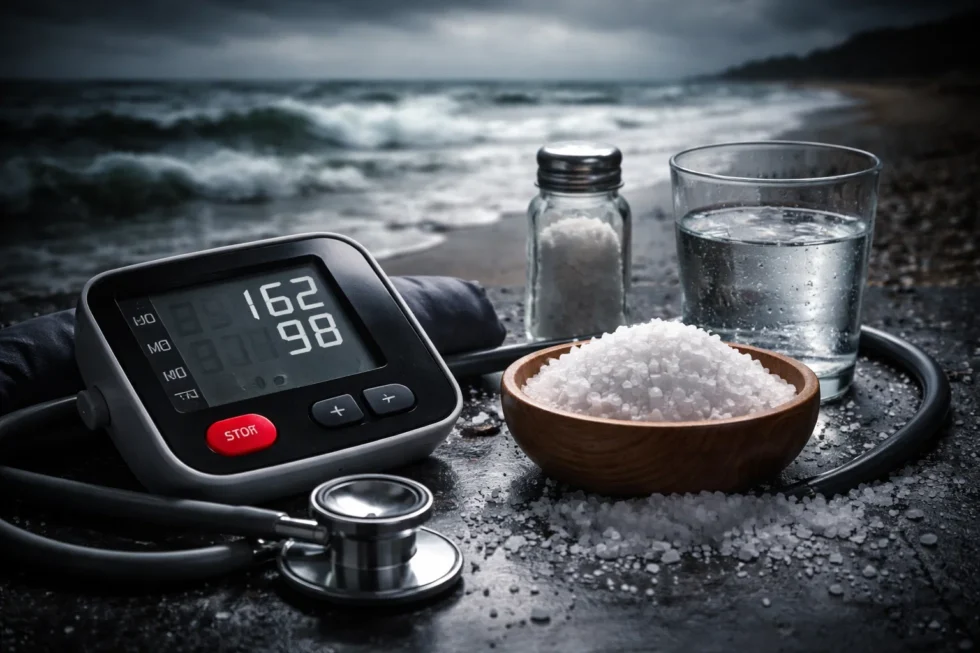
Rising levels of salinity in drinking water are increasingly being linked to higher blood pressure across large populations, with new global analysis suggesting that millions may be exposed to hidden sodium intake through everyday water consumption rather than food alone. The findings, based on a meta-analysis of 27 studies covering more than 74,000 people across regions including the United States, Europe, Bangladesh and Vietnam, show that individuals consuming saltier water consistently recorded elevated cardiovascular indicators, with coastal areas identified as the most affected due to seawater intrusion into freshwater systems, The WP Times reports.
The research highlights a structural public health issue driven by climate change, where rising sea levels are pushing saltwater into groundwater supplies used for drinking and cooking, often without noticeable taste differences. This environmental exposure is now being treated as a measurable contributor to hypertension risk, with evidence showing average increases of 3.22 mmHg in systolic and 2.82 mmHg in diastolic blood pressure, alongside a 26% higher likelihood of developing hypertension in populations exposed to higher salinity levels.
how water salinity is linked to blood pressure risk
The relationship between drinking water salinity and blood pressure is rooted in sodium intake. While dietary salt remains the primary source, saline water introduces an additional, often undetected pathway. In many coastal and low-lying regions, groundwater salinity is increasing as seawater penetrates freshwater aquifers, especially in countries where groundwater is the main drinking source.
Researchers found a consistent pattern across diverse populations: higher sodium concentration in water correlates with increased cardiovascular strain. Importantly, this exposure is not always detectable by taste, meaning individuals may unknowingly consume excess sodium daily.
Key findings from the global analysis:
- +3.22 mmHg average increase in systolic pressure
- +2.82 mmHg average increase in diastolic pressure
- 26% higher risk of developing hypertension
- Strongest effects observed in coastal populations
- Comparable risk level to low physical activity (15–25%)
Even small increases at the individual level translate into significant public health consequences when applied across millions of people.
why coastal regions face the highest impact
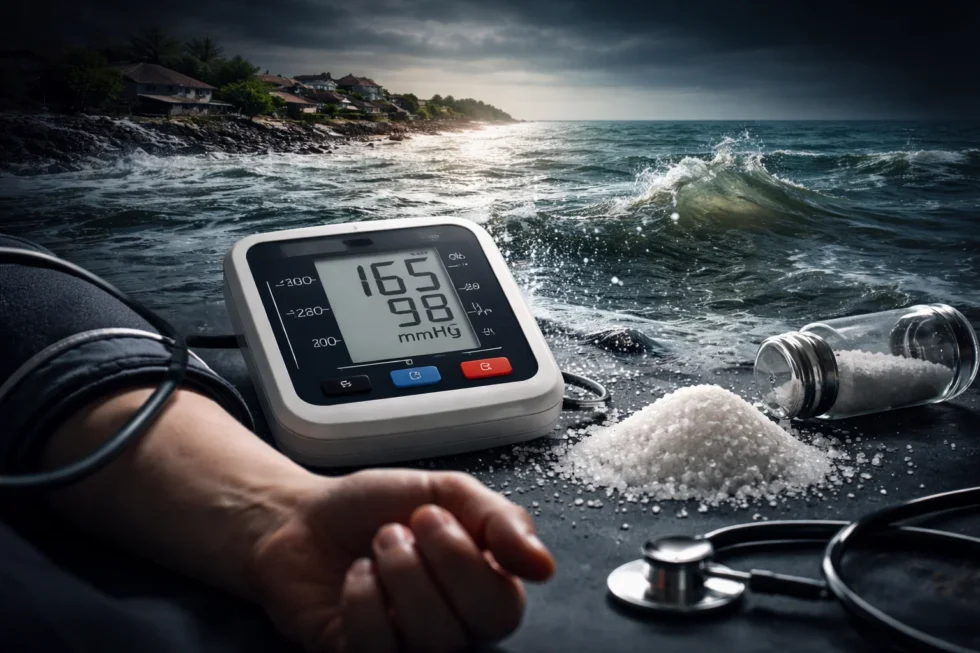
More than 3 billion people globally live in coastal or near-coastal zones, where the risk of saltwater intrusion is highest. As sea levels rise, freshwater systems become increasingly contaminated, particularly in regions lacking advanced water treatment infrastructure.
In these environments, daily exposure accumulates through:
| Exposure source | Impact on sodium intake |
|---|---|
| Drinking water | Direct ingestion of dissolved salts |
| Cooking water | Increased sodium in prepared food |
| Agriculture | Saline irrigation affecting crops |
This creates a cumulative effect where total sodium intake exceeds recommended levels without clear behavioural causes such as diet or lifestyle.
environmental factor overlooked in hypertension prevention
Global health strategies have traditionally focused on lifestyle interventions such as diet, smoking cessation and exercise. However, environmental contributors like water salinity have received limited attention despite growing evidence.
The study suggests that blood pressure management frameworks may need to expand beyond individual behaviour and incorporate environmental monitoring. Notably, current guidelines from the World Health Organization do not define health-based limits for sodium in drinking water, highlighting a regulatory gap.
“More research is needed to examine connections with coronary heart disease and stroke, and to create strategies to counter salinity’s effects, particularly in climate-vulnerable coastal areas” (study authors, BMJ Global Health analysis, 2026).
what individuals and policymakers can do now
While long-term infrastructure upgrades remain essential, the evidence linking water salinity to blood pressure suggests that both individuals and authorities can act immediately to reduce exposure and limit cardiovascular risk. The key challenge is that sodium in water is often invisible and not perceived as a threat, meaning mitigation must combine awareness, monitoring and targeted intervention rather than relying on behaviour change alone. At the individual level, risk management should focus on controlling total sodium intake from all sources — not just food. In areas where salinity is suspected or confirmed, even moderate adjustments can reduce cumulative exposure over time and stabilise blood pressure outcomes.
Practical actions include
- Checking official water quality reports or municipal disclosures
- Using reverse osmosis or desalination-based filtration where needed
- Avoiding additional salt in cooking if water salinity is elevated
- Tracking sodium intake holistically (food + water combined)
- Using portable salinity meters in high-risk or coastal regions
- Prioritising bottled or treated water for vulnerable groups
exposure control: individual vs system-level response
| Level | Action | Impact on blood pressure risk |
|---|---|---|
| Individual | Filtration (reverse osmosis) | Direct reduction in sodium intake |
| Individual | Diet adjustment | Compensates for hidden salt exposure |
| Community | Water testing programmes | Early detection of salinity changes |
| Government | Infrastructure upgrades | Long-term systemic risk reduction |
| Policy | Regulation of water sodium levels | Establishes safety thresholds |
From a policy perspective, the findings point to a structural gap between environmental change and public health response. As seawater intrusion accelerates, especially in low-lying and coastal regions, existing frameworks for hypertension prevention may no longer be sufficient.
Key priorities for policymakers:
- Establishing health-based sodium limits in drinking water
- Expanding routine salinity monitoring in public water systems
- Investing in desalination and freshwater protection infrastructure
- Integrating environmental data into cardiovascular risk strategies
- Targeting coastal and climate-vulnerable populations with early interventions
key questions now being raised
- At what salinity level does drinking water begin to significantly affect blood pressure?
- Which populations are most vulnerable to long-term exposure?
- Can filtration alone offset the cardiovascular risk in high-salinity regions?
- Should sodium in water be regulated similarly to food salt intake?
- How quickly will climate-driven salinity changes impact urban water systems?
At a population level, the shift is increasingly clear: blood pressure is no longer determined solely by lifestyle factors such as diet or exercise, but also by environmental exposure embedded in daily infrastructure. Without coordinated monitoring and policy response, this hidden source of sodium may continue to elevate hypertension risk at scale, particularly in regions already under pressure from climate change.
Read about the life of Westminster and Pimlico district, London and the world. 24/7 news with fresh and useful updates on culture, business, technology and city life: The Walking Dead: Dead City season 3 signals creative reset as AMC refocuses on Maggie and Negan