
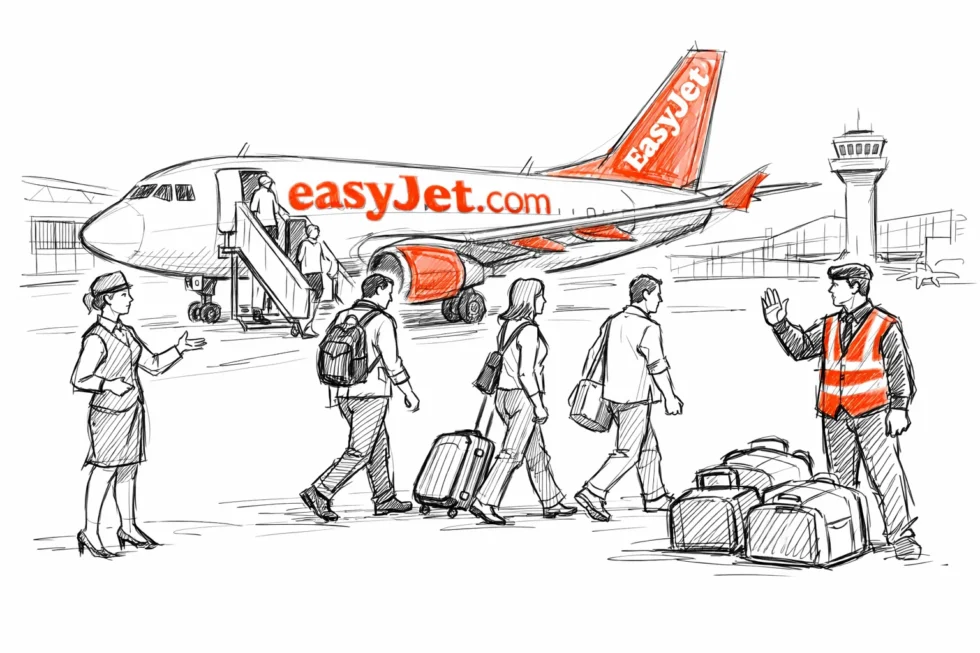
Southend easyJet weight limit forced a last-minute intervention on an easyJet flight departing London Southend Airport to Malaga on 11 April 2026, when the captain informed passengers the aircraft could not safely depart unless several people volunteered to disembark due to performance limits linked to runway length and weather conditions, with the Airbus A319 leaving shortly after once the required weight reduction was achieved, The WP Times reports.
The flight, U2 7008, scheduled for 08:40 BST, was preparing for departure when the crew halted the take-off process after calculations showed the aircraft exceeded allowable take-off weight under prevailing conditions, leading to a request for six volunteers to leave the aircraft or, alternatively, for all hold luggage to be removed, with passengers stepping forward within minutes and the aircraft departing at approximately 08:59 BST after a short delay.
Passengers onboard described the announcement as unexpected. “I honestly thought he was joking at first,” said one passenger travelling on the flight, adding that the situation appeared unusual before it became clear the request was operational. According to accounts from the cabin, the captain explained that the aircraft could not take off unless weight was reduced immediately. Witnesses said the choice presented was between passengers leaving the aircraft or luggage being offloaded before departure. Passengers reported that five individuals agreed to disembark within around 10 minutes, with a sixth volunteer identified shortly afterwards, allowing the aircraft to proceed. Those who left the aircraft were later rebooked on alternative flights the same day. People remaining onboard said the delay was brief, and the departure proceeded without further incident once the required reduction had been achieved. Passengers reportedly applauded those who volunteered to leave.
An easyJet spokesperson said the decision was taken in line with standard safety procedures. “The safety and welfare of our passengers and crew is always easyJet’s highest priority,” the airline said, adding that weight restrictions are applied across all flights depending on operational conditions. The airline confirmed that affected passengers were provided with alternative travel options, including transfers to London Gatwick Airport, and would be offered compensation.
The aircraft involved was an Airbus A319, which has a maximum certified take-off weight of approximately 75.5 tonnes. However, allowable take-off weight varies depending on conditions at the airport. At locations such as Southend, shorter runways reduce the distance available for acceleration, requiring stricter weight limits to ensure safe departure. Environmental factors including temperature, air pressure and wind also affect aircraft performance. Under such conditions, aircraft may be required to operate below maximum capacity. Reduced air density, commonly associated with warmer temperatures or low pressure, lowers both engine performance and lift generated by the wings. Where sufficient lift cannot be achieved within the available runway distance, weight must be reduced before take-off clearance can be granted.
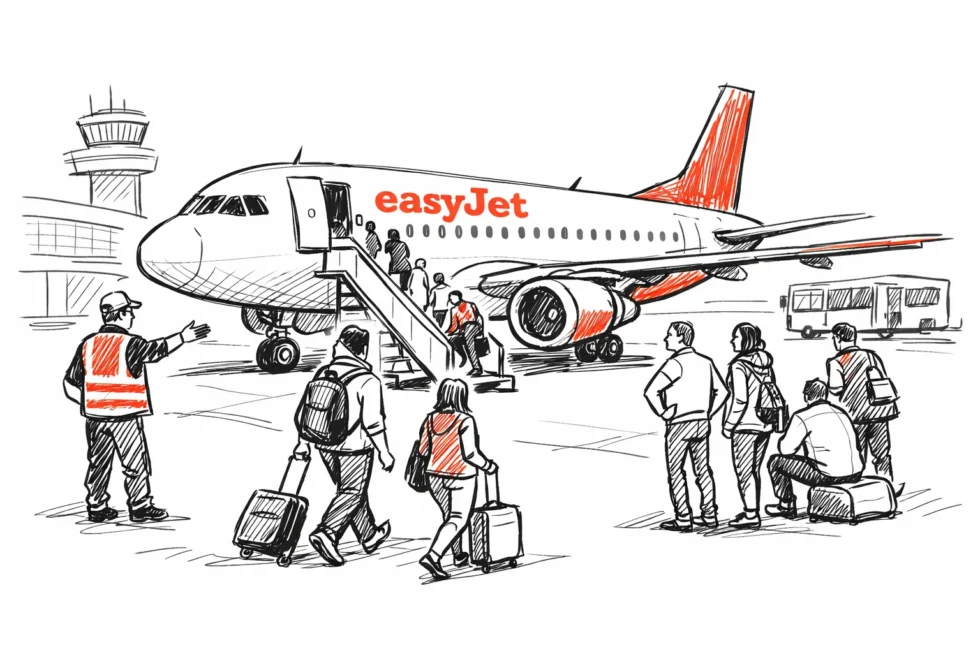
Passengers said crew discussed the possibility of flying luggage separately, but this option was not used. Offloading baggage can create additional handling and delivery issues at the destination. In practice, airlines typically request volunteers to leave the aircraft as a faster operational solution when immediate weight reduction is required.
According to guidance from the UK Civil Aviation Authority, passengers affected by denied boarding or significant delay on medium-haul flights may be entitled to compensation, typically ranging between £175 and £350 depending on the delay length and circumstances. The airline did not confirm specific compensation amounts in this case but stated that support would be provided in line with regulations. Airlines do not routinely weigh passengers individually. Instead, they rely on standard average weights established through regulatory studies. The most recent figures from the European Union Aviation Safety Agency indicate an average passenger weight, including hand luggage, of approximately 84 kilograms. These averages are used for planning purposes, although final operational limits are calculated in real time before departure.
Flight data shows the aircraft departed less than 20 minutes after its scheduled time, indicating that the situation was resolved within a short operational window. A similar incident was recorded on the same Southend to Malaga route in 2014, also linked to weight and runway performance constraints. The flight continued to Malaga without further reported issues after departure, with the airline confirming that all procedures followed standard safety requirements applicable across commercial aviation.
Read about the life of Westminster and Pimlico district, London and the world. 24/7 news with fresh and useful updates on culture, business, technology and city life: HMRC still sending cheques: 178,000 taxpayers miss £800 rebates as £144m goes unclaimed in 2026
Sources used: BBC News, AIRLIVE (Melanie Kraft, 16 April 2026), Daily Mail, easyJet statement, UK Civil Aviation Authority, European Union Aviation Safety Agency.