
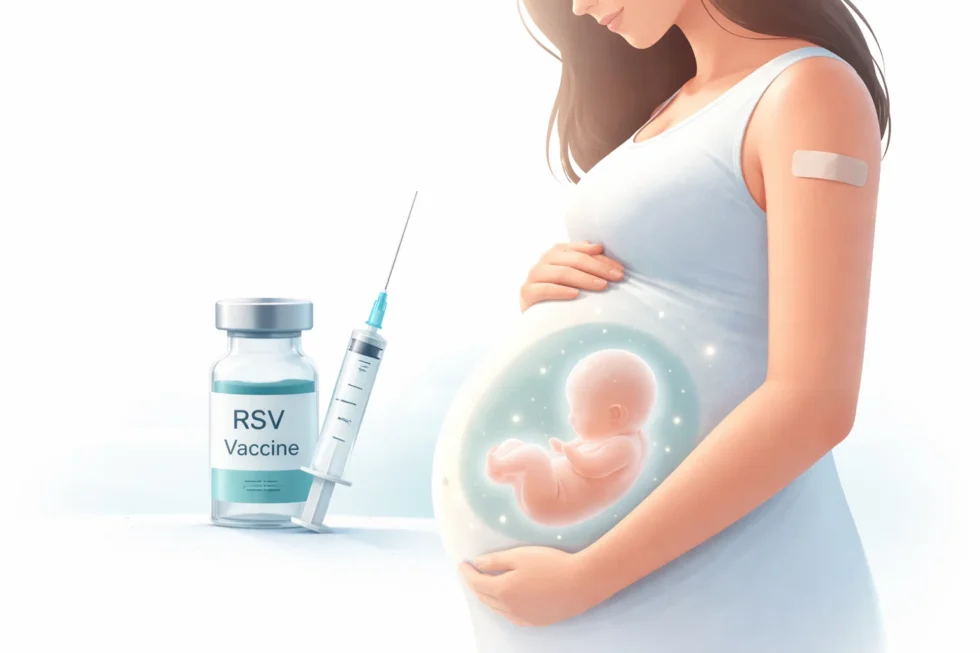
An RSV vaccine in pregnancy is now a central element of UK infant health strategy, with national data showing that when administered in the third trimester it reduces the risk of newborn hospital admission by more than 80%, as antibodies transferred before birth protect babies during their most vulnerable early weeks. The effect is closely linked to timing, uptake and seasonal exposure, with the strongest protection observed when the vaccine is given at least four weeks before delivery, allowing sufficient maternal immune response and placental transfer, The WP Times reports, citing BBC News.
The analysis, covering nearly 300,000 births in England between September 2024 and March 2025 during the peak RSV season, shows that the majority of more than 4,500 infants admitted to hospital were born to unvaccinated mothers, indicating a clear protection gap at population level driven by uneven vaccine uptake.
what RSV is and why newborns are most exposed
Respiratory syncytial virus (RSV) is a highly seasonal respiratory infection that circulates across the UK each winter, with transmission peaking between late autumn and early spring and infecting the majority of children before the age of two. While older children and adults typically experience mild, cold-like symptoms, the clinical course in newborns can deteriorate quickly, progressing to bronchiolitis or viral pneumonia due to the vulnerability of the lower airways. The heightened risk in early infancy is driven by a combination of physiological and environmental factors:
- Immature lungs: newborns have narrower airways, which are more easily obstructed by inflammation and mucus, increasing the likelihood of breathing difficulties
- Underdeveloped immunity: the neonatal immune system is not yet capable of mounting an effective independent response to viral infection
- High exposure rates: RSV spreads efficiently through close contact, particularly within households, making early-life exposure common
In clinical settings, severe RSV infection is characterised by rapid or laboured breathing, visible chest retractions and declining oxygen saturation levels. Infants may struggle to feed due to respiratory distress, and in more serious cases require hospital admission for oxygen support, fluid management or, less commonly, assisted ventilation.
how the maternal RSV vaccine works biologically
The maternal RSV vaccine is administered during pregnancy to induce a targeted immune response, leading to the production of neutralising antibodies against respiratory syncytial virus. These antibodies are transferred across the placenta into the foetal circulation, providing passive immunity from birth.
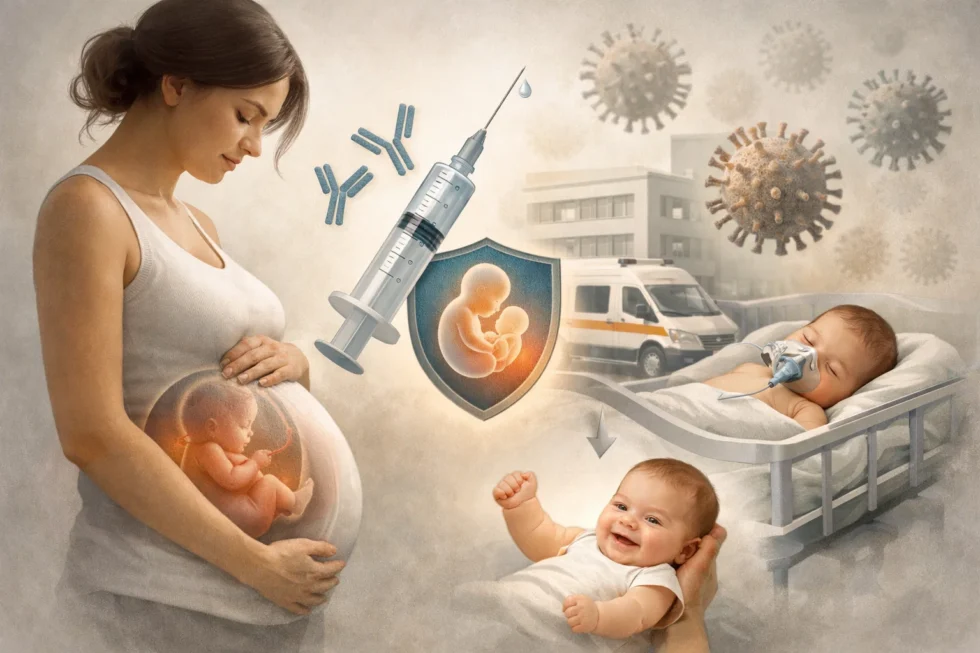
The mechanism is based on established maternal immunisation pathways:
- Placental IgG transfer: antibody transfer increases in the third trimester, particularly after 28 weeks of gestation
- Immediate neonatal protection: antibodies are present at birth, removing the delay associated with postnatal vaccination
- Defined protection window: highest antibody levels are observed in the first 3 to 6 months of life, corresponding to peak clinical risk
Effectiveness is directly linked to the interval between vaccination and delivery:
| Interval before birth | Observed protection level |
|---|---|
| ≥4 weeks | ~85% reduction in severe outcomes |
| 2–4 weeks | partial protection |
| <2 weeks | reduced but detectable protection |
“If you've got a longer interval between when the vaccine gets given and when baby is born, then you get even better protection,” (Dr Conall Watson, UK Health Security Agency).
This timing profile underpins guidance to offer vaccination from week 28 of pregnancy to maximise antibody transfer before delivery.
The England dataset provides a large-scale, real-world assessment of the maternal RSV vaccination programme across a national birth cohort, combining clinical outcomes with uptake during a full winter season. The analysis includes approximately 300,000 infants born between September 2024 and March 2025, with more than 4,500 hospital admissions recorded over the same period. Vaccination coverage reached around 64% among pregnant women in England, with lower uptake of about 53% reported in London. Across the dataset, hospital admissions are predominantly observed among infants whose mothers were not vaccinated, while babies born to vaccinated mothers show lower rates of RSV-related hospitalisation. This distribution is consistent across regions and reflects differences in maternal immunisation status at the time of birth.
Timing of vaccination remains a key operational factor. The vaccine is offered from 28 weeks of pregnancy, aligning with the period when placental antibody transfer increases. A longer interval between vaccination and delivery is associated with higher antibody levels in the newborn. “If you've got a longer interval between when the vaccine gets given and when baby is born, then you get even better protection,” (Dr Conall Watson, UK Health Security Agency). Delivery of the programme is integrated into routine antenatal care, with vaccination offered through midwives and primary care services. Uptake varies by region, with lower coverage in some urban areas. “This is very, very frightening as a parent, frightening with good reason,” (Dr Conall Watson, UKHSA national briefing). The data reflect programme performance under routine conditions, including timing of administration, regional coverage and observed hospital activity during the RSV season.
Read about the life of Westminster and Pimlico district, London and the world. 24/7 news with fresh and useful updates on culture, business, technology and city life: What is the UK’s first domestically made mRNA vaccine and how will it change NHS supply and pandemic readiness