

The European Union is moving toward a unified digital identification framework that will allow citizens and residents to prove their identity seamlessly across borders, both in public administration and private services, as part of the rollout of the EU Digital Identity Wallet under updated eIDAS 2 regulation. By the end of 2026, each member state is expected to deploy at least one compliant wallet, enabling cross-border authentication, document sharing, and legally binding digital signatures, while raising critical questions about cybersecurity, privacy, and inclusion, The WP Times reports.
The initiative builds on existing national systems already in use across Europe and aims to standardise them into a single interoperable ecosystem, allowing, for example, a French citizen to access German public services as easily as a local resident while maintaining control over personal data and digital credentials.
What is the EU Digital Identity Wallet (EUDIW)
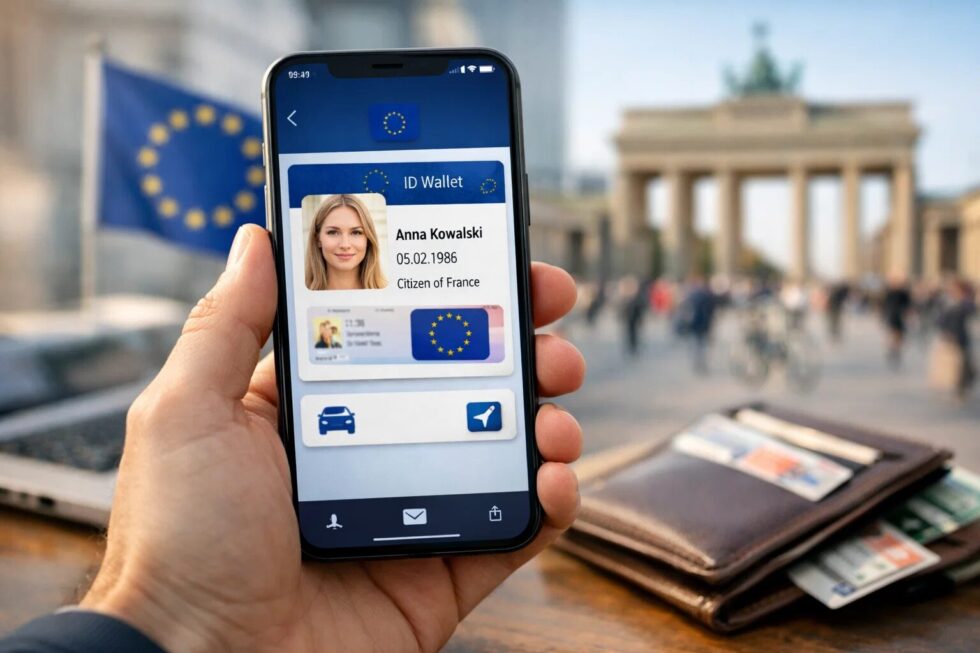
The EU Digital Identity Wallet (EUDIW) is a mobile-based digital identity solution designed to provide secure, interoperable identification across all EU member states. It is being developed under the revised European Commission regulatory framework known as eIDAS 2. The wallet will function as a digital container for identity credentials, official documents, and authentication tools.
It is not a single app issued centrally but rather a framework under which each member state provides at least one certified wallet. These wallets must comply with EU-wide technical and legal standards to ensure cross-border compatibility. The system aims to reduce fragmentation between national digital identity schemes currently in place.
The rollout timeline is aggressive, with deployment expected by the end of 2026 and broader adoption targets extending to 2030. The European Commission has set a goal of reaching at least 80% of EU citizens with a digital identity solution within that timeframe.
The wallet will operate both online and offline, ensuring usability even in low-connectivity scenarios. It will also incorporate advanced privacy-preserving technologies, allowing users to share only necessary data.
Key components of EUDIW:
- Digital ID credentials (name, date of birth, nationality)
- Official documents (driver’s licences, diplomas, tickets)
- Qualified electronic signatures
- Authentication tools for public and private services
- Privacy-enhancing technologies such as pseudonyms
What can users do with an EU ID wallet
The EUDIW is designed as a multi-functional tool that goes far beyond simple identification. It enables users to authenticate themselves across a wide range of services, from government portals to private sector platforms such as banks and airlines.
One of its primary advantages is cross-border interoperability. A user from one EU country can interact with institutions in another without needing additional verification processes. This removes administrative friction in areas like employment, education, and travel.
The wallet also allows users to store and present official documents digitally. For example, a diploma can be shared directly with an employer, or a medical prescription issued in one country can be used in another. Border control processes may also become more efficient through digital document verification.
Another critical feature is the ability to sign documents using qualified electronic signatures, which carry the same legal weight as handwritten signatures under EU law. This has implications for contracts, banking, and legal transactions.
Typical use cases:
- Accessing government services across EU borders
- Renting vehicles without physical document exchange
- Submitting verified academic credentials
- Using prescriptions internationally
- Signing contracts digitally
Who will use it and when
The EUDIW will be available to all EU citizens and residents, though its use will remain voluntary. However, market dynamics may make it a de facto standard, especially as institutions begin to require strong customer authentication (SCA).
By the end of 2027, businesses and public administrations that require secure identification—particularly banks—will be obliged to accept EUDIW-based authentication. This effectively embeds the wallet into the EU’s digital infrastructure.
The wallet will primarily exist as a smartphone application, reflecting the widespread adoption of mobile devices across Europe. However, this raises concerns about accessibility for populations without smartphones or digital literacy. Each wallet must be certified at the national level and registered in a public EU database, ensuring transparency and trust. This certification process is intended to guarantee compliance with strict security and privacy standards.
Adoption timeline:
| Milestone | Timeline |
|---|---|
| National wallet rollout | By end of 2026 |
| Mandatory acceptance by institutions | By end of 2027 |
| Target user coverage (EU population) | 80% by 2030 |
What will it cost
For individuals, the use of the EU Digital Identity Wallet will largely be free. This includes issuing the wallet and using it for non-professional purposes, such as personal identification or signing documents occasionally.
However, member states retain flexibility in pricing models. Some may limit free usage or introduce fees for advanced features, particularly in professional contexts. For example, certain countries already impose limits on free digital signatures per month.
Private providers operating within the ecosystem may also charge for premium services. This introduces a hybrid model combining public infrastructure with private-sector participation. The cost structure is therefore expected to vary significantly across the EU, depending on national policies and market dynamics.
Typical cost structure:
- Free issuance of wallet
- Free personal use of digital signatures (with limits in some countries)
- Paid professional use of signatures
- Potential fees from private wallet providers
What are the main benefits
The EUDIW is expected to deliver substantial efficiency gains across both public and private sectors. By standardising identity verification, it reduces administrative burdens and accelerates digital transactions.
One of its key advantages is fraud reduction. Verified digital identities make it harder to falsify information, particularly in areas such as age verification or financial services. This could significantly impact sectors like online platforms and banking.
The wallet also enhances user control over personal data. Individuals can decide what information to share and track how their data is used through built-in dashboards.
Privacy-enhancing technologies, such as zero-knowledge proofs, allow users to confirm specific attributes—like age—without revealing full identity details. This represents a shift toward more granular and secure data sharing.
Core benefits:
- Reduced fraud and identity theft
- Faster administrative processes
- Cross-border interoperability
- Enhanced user control over data
- Advanced privacy protections
What are the risks and challenges
Despite its advantages, the EUDIW introduces several risks that policymakers and stakeholders must address. One major concern is digital exclusion. Individuals without access to smartphones or digital skills may be left behind.
Privacy risks also remain significant. While the system is designed with safeguards, the centralisation of sensitive data increases the potential impact of breaches or misuse. Certification alone cannot eliminate these risks entirely.
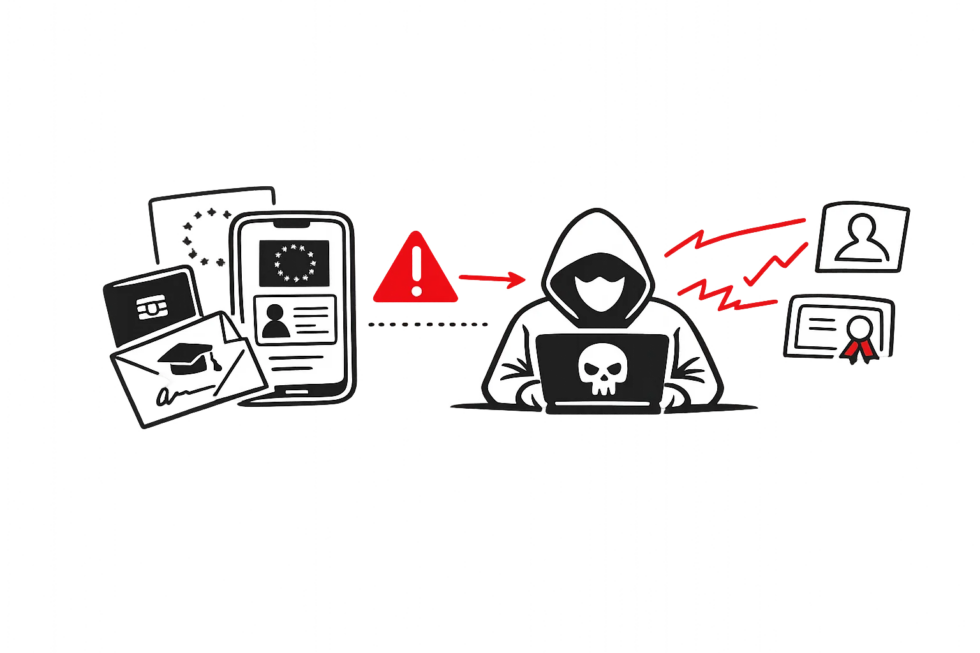
Cybersecurity threats are another critical issue. High-value verified data—such as identities and diplomas—could become targets for sophisticated cyberattacks. Past incidents, such as the Pegasus spyware scandal, demonstrate that even advanced systems can be compromised.
There are also geopolitical concerns. If non-European companies play a significant role in providing wallet infrastructure, this could expose the system to foreign interference.
Key risks:
- Digital exclusion of vulnerable populations
- Increased exposure to cyberattacks
- Potential misuse of personal data
- Dependence on private or foreign providers
- Sovereignty concerns for EU member states
What still needs to be addressed
Several operational and regulatory questions remain unresolved. These include how wallets will be issued, revoked, and updated, as well as how disputes will be handled in cases of identity theft or misuse.
Effective oversight mechanisms will be crucial. Authorities must ensure compliance not only within the EU but also among external providers interacting with the system. Sanctions and enforcement frameworks will need to be clearly defined.
Maintaining non-digital alternatives is another essential requirement. Paper-based identification systems must remain available to ensure resilience in case of cyber incidents and to preserve user choice. Experts emphasise that the success of the EUDIW will depend not just on technology, but on governance, transparency, and public trust.
Priority areas for development:
- Strong cybersecurity frameworks
- Transparent certification and auditing
- Clear user rights and protections
- Availability of offline and paper alternatives
- Robust enforcement and sanctions
Read about the life of Westminster and Pimlico district, London and the world. 24/7 news with fresh and useful updates on culture, business, technology and city life: Apple iPhone 18 Pro Max: what is revealed about colours, design and camera upgrades ahead of 2026 launch