

Jesy Nelson car stolen in the early hours of Sunday in Brentwood, Essex, with essential hospital equipment for her seriously ill twin daughters inside, prompting an urgent public appeal and a £10,000 reward for information, as confirmed through her social media and police contact channels, reported in the UK media The WP Times via BBC.
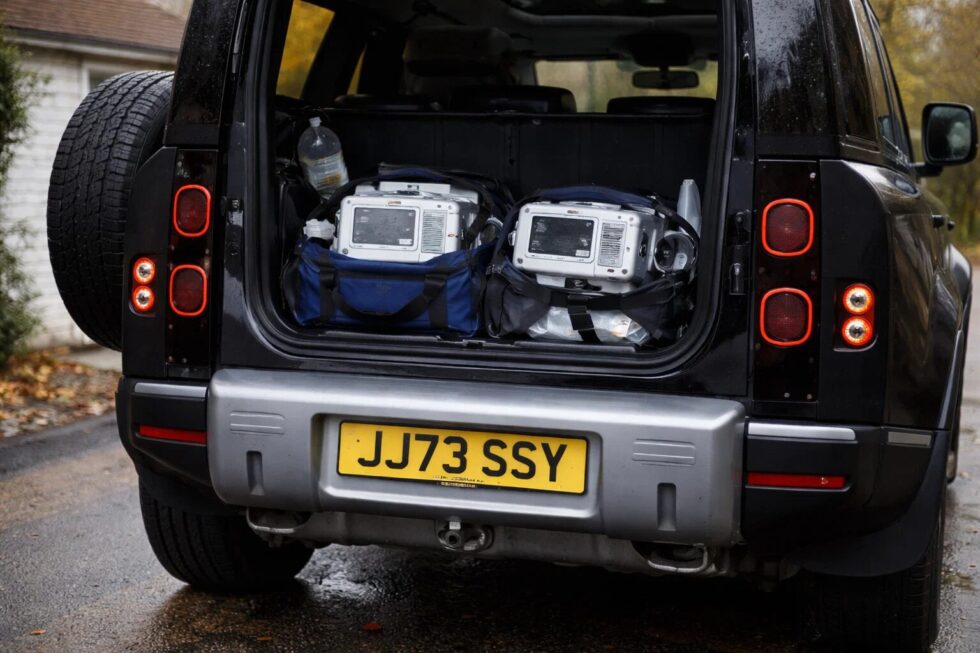
The former Little Mix singer said the stolen black Land Rover Defender contained critical medical supplies required daily for her daughters, who suffer from spinal muscular atrophy, raising immediate concerns about continuity of care and the risks associated with losing specialised feeding and monitoring equipment.
Jesy Nelson car stolen in Essex: timeline, location and police involvement
The vehicle, identified as a black Land Rover Defender with registration JJ73SSY, was reportedly taken from the driveway of Brentwood during the early hours. According to publicly shared details, the theft occurred overnight, suggesting a targeted or opportunistic residential vehicle crime.
Nelson moved quickly to issue a public appeal via social media, urging anyone with information to contact her directly or report to the police. The case has now entered standard investigative procedure, likely involving CCTV analysis, ANPR tracking, and local patrol alerts. Given the high-profile nature of the victim, the case may receive prioritised attention from Essex Police.
The presence of critical medical equipment elevates the incident beyond standard vehicle theft into a potentially life-impacting situation.
Key facts of the theft:
- Location: Residential driveway in Brentwood, Essex
- Vehicle: Black Land Rover Defender
- Registration: JJ73SSY
- Time: Early hours (overnight theft)
- Reward offered: £10,000 for information
- Police: Public appeal active
SMA condition and why the stolen equipment is critical
Nelson’s twin daughters, Ocean Jade and Story Monroe, have been diagnosed with Spinal muscular atrophy (SMA), a rare genetic condition characterised by progressive muscle degeneration. This disease affects motor neurons, leading to severe muscle weakness and, in advanced cases, respiratory and swallowing complications. The stolen equipment reportedly includes items necessary for tube feeding and possibly monitoring respiratory or nutritional status. Such equipment is not easily replaceable on short notice and often customised to patient needs.
Disruption in access can create immediate health risks, particularly in infants requiring continuous care. The NHS recognises SMA as a life-limiting condition requiring multidisciplinary management.
Core medical implications of SMA:
- Progressive muscle weakness and atrophy
- Difficulty swallowing and feeding
- Risk of respiratory complications
- Need for assisted nutrition (feeding tubes)
- Long-term specialist care and monitoring
Public appeal and £10,000 reward: how the search is unfolding
Jesy Nelson issued a direct plea via social platforms, asking for assistance in locating the stolen vehicle. She emphasised the urgency by highlighting the presence of “so much” essential hospital equipment inside the car. The £10,000 reward signals both the seriousness of the situation and an attempt to accelerate information flow.
Public engagement in such cases often plays a critical role, particularly when vehicles may be abandoned or moved quickly across regions. Police typically rely on a combination of public tips, traffic camera data, and forensic analysis.
The visibility of the case may increase recovery chances compared to standard theft incidents.
Public response mechanisms:
- Social media amplification
- Direct messages to Nelson
- Police tip lines
- CCTV and ANPR tracking
- Media coverage increasing awareness
“Please, if any of you have seen or know of any information can you DM me or contact the police. I have so much of my girls' hospital equipment in that car that's really needed,” Nelson stated in her appeal.
Her comments reflect ongoing challenges since the twins’ diagnosis. Earlier this year, she disclosed that multiple GP visits initially failed to identify the severity of the condition. Only after diagnosis were the infants admitted for urgent care due to underweight concerns and feeding difficulties.
This timeline highlights systemic challenges in early detection of rare diseases. The case has also intersected with broader healthcare policy discussions in the UK.
Government response and screening policy developments
Nelson has been actively involved in advocacy following her daughters’ diagnosis, including engagement with Wes Streeting. Discussions focused on the importance of early screening for SMA, which can significantly alter treatment outcomes. The UK government has since accelerated plans to expand screening programmes, aiming to detect cases earlier in newborns.
Early intervention can improve quality of life and slow disease progression. Nelson publicly supported these measures, framing them as critical to preventing delayed diagnoses like her own experience. Policy momentum around rare diseases has increased as a result of such high-profile cases.
Policy and healthcare developments:
- Expansion of newborn screening for SMA
- Government fast-tracking diagnostic protocols
- Increased awareness of rare diseases
- Advocacy from affected families
- Emphasis on early intervention outcomes
Clinical reality: long-term outlook for SMA patients
Medical assessments shared by Nelson indicate that her daughters are unlikely to walk or regain neck strength, consistent with more severe SMA phenotypes. The condition requires lifelong management, including respiratory support, nutritional assistance, and physiotherapy. Feeding tubes remain a central component of care due to swallowing difficulties.
The loss of equipment, even temporarily, introduces significant logistical and medical challenges for families. Replacement processes often involve coordination with hospitals, suppliers, and specialists. This underscores why the theft has escalated beyond a personal loss into a healthcare concern.
Ongoing care requirements:
- Tube feeding systems
- Respiratory monitoring/support
- Regular hospital supervision
- Specialist physiotherapy
- Continuous caregiver involvement
Vehicle theft cases in the UK typically see varying recovery rates depending on speed of reporting and traceability. In this case, the immediate public appeal and detailed vehicle identification improve recovery probability. Law enforcement may prioritise areas with known vehicle dumping patterns.
If the car is recovered intact, medical equipment may still be usable depending on handling conditions. If not, rapid replacement through NHS channels becomes critical. The case also highlights vulnerabilities in transporting essential medical supplies outside controlled environments.
Read about the life of Westminster and Pimlico district, London and the world. 24/7 news with fresh and useful updates on culture, business, technology and city life: What is happening with Noah Kahan tickets as UK and Europe demand surges in 2026?