
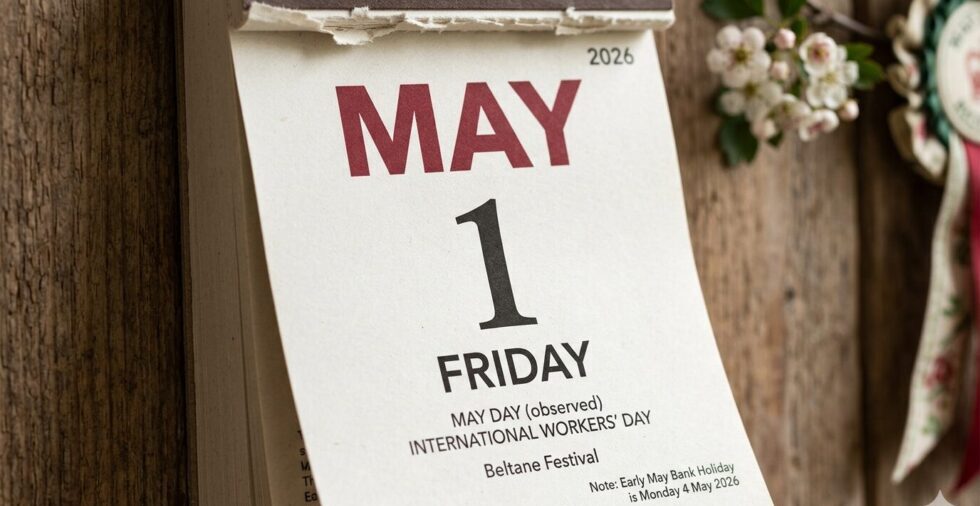
The Early May Bank Holiday in the United Kingdom is scheduled for Monday, May 4, 2026, in accordance with the Banking and Financial Dealings Act 1971. Although May Day itself falls on Friday, May 1, 2026, the statutory public holiday is observed on the following Monday across England, Wales, Scotland, and Northern Ireland. Data from the Office for National Statistics (ONS) and the Department for Business and Trade indicate that most government offices, schools, and financial institutions will remain closed on May 4. Retail operations typically maintain reduced Sunday trading hours, as governed by the Sunday Trading Act 1994. Transport providers, including National Rail and Transport for London (TfL), often schedule essential engineering works during this period, potentially affecting transit times for approximately 15 million expected domestic travelers.
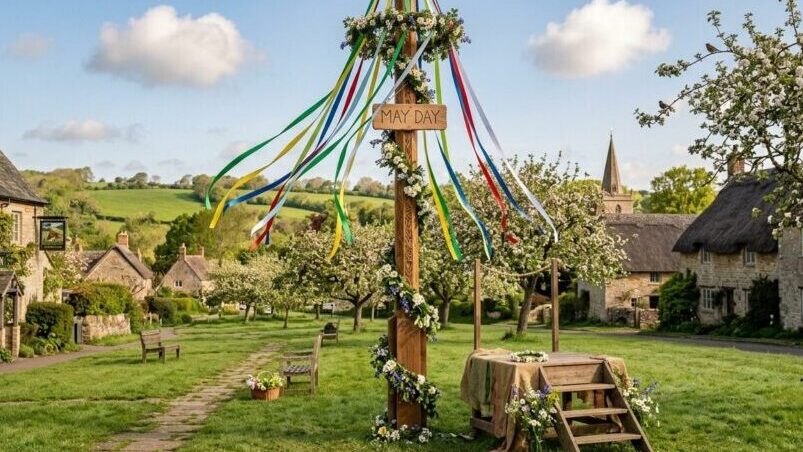
The celebration of May Day 2026 encompasses a dual significance: the ancient Gaelic festival of Beltane and the modern International Workers' Day. While the bank holiday provides a long weekend for the general population, the specific date of May 1 remains the focal point for traditional festivities such as maypole dancing and the crowning of the May Queen.
From a labor perspective, trade unions utilize the occasion to advocate for workers' rights, citing current employment statistics and the UK Employment Rights Act. For businesses, the period necessitates advance payroll planning to account for bank holiday pay entitlements. Practical implications for residents include the early submission of benefit claims to the Department for Work and Pensions (DWP), as payment cycles are adjusted to ensure funds are cleared before the holiday commences reports The WP Times.
Statutory Status and Banking Regulations for May Day 2026
The designation of the Early May Bank Holiday is managed by the Department for Business and Trade. Under the Banking and Financial Dealings Act 1971, the monarch has the authority to appoint special bank holidays through royal proclamation. For 2026, no such deviation from the standard Monday observance has been announced. Financial institutions, including the Bank of England, will cease interbank transfers on Monday, May 4.
This cessation affects BACS and CHAPS payments, requiring businesses to process salary payments by Thursday, April 30, to ensure arrival by May 1.
| Date | Day | Event Type | Legal Basis |
| May 1, 2026 | Friday | Traditional May Day | Astronomical/Cultural |
| May 4, 2026 | Monday | Bank Holiday | Banking & Financial Act 1971 |
| May 5, 2026 | Tuesday | Business Resumption | Standard Working Day |
Historical Evolution of May Day Festivities
British May Day traditions trace back to the Roman festival of Floralia and the Celtic Beltane, marking the transition from spring to summer. Historical records from the 16th century describe the central role of the maypole in village greens across England.
Following the Puritan era, where such celebrations were suppressed under Oliver Cromwell, the Restoration of the Monarchy in 1660 saw a revival of these customs. Today, these practices are maintained by local councils and heritage organizations like English Heritage.
- Maypole Dancing: Synchronized weaving of ribbons around a central timber pole.
- Morris Dancing: Rhythmic stepping performed by troupes in traditional costumes with bells.
- May Queen: Selection of a local girl to lead the seasonal procession.
- Green Man: Folkloric representation of nature paraded through streets.
International Workers' Day and Labor Rights
International Workers' Day, observed on May 1, 2026, commemorates the historic struggle for the eight-hour working day. In the UK, this is closely linked to the Trade Union Congress (TUC) and various labor movements. While it is not a standalone bank holiday unless it coincides with the first Monday of May, it remains a day of organized marches. The Employment Rights Act 1996 provides the framework for worker protections discussed during these rallies. Public sector workers often use this day to highlight issues regarding the National Health Service (NHS) and educational funding.
The year 2026 marks continued focus on the evolution of flexible working arrangements. The UK government’s "Good Work Plan" continues to influence how labor rights are interpreted in a post-digital economy. On May 1, major cities like London, Manchester, and Glasgow host demonstrations organized by unions such as Unison and Unite.
These events typically focus on the "Living Wage" standards set by the Living Wage Foundation, which for 2026 is projected to be £13.15 in London and £12.00 across the rest of the UK.
Statistical data from the ONS suggests that approximately 12% of the workforce participates in or identifies with labor-related advocacy during the May Day period.

Retail and Commercial Operations during the Bank Holiday
Retailers in England and Wales are subject to the Sunday Trading Act 1994 during bank holidays, specifically for large shops over 280 square meters. These establishments are generally restricted to a six-hour trading window between 10:00 and 18:00. Small shops under the size threshold are permitted to remain open without restricted hours.
In Scotland, trading regulations are more relaxed, allowing local authorities to determine specific closing requirements. Business owners must comply with the Working Time Regulations 1998 regarding staff rest periods.
| Shop Type | Size Threshold | Opening Hours | Legal Restriction |
| Large Supermarkets | > 280 sqm | 10:00 - 16:00 or 11:00 - 17:00 | Sunday Trading Act 1994 |
| Local Convenience | < 280 sqm | 07:00 - 23:00 | No restriction |
| Pharmacies | N/A | Rotational / On-call | NHS Contractual Duty |
Transport Infrastructure and Travel Projections
The May Day bank holiday weekend typically sees a surge in rail and road usage according to National Highways. For 2026, major infrastructure projects are planned for the West Coast Main Line and the Great Western Railway. Passengers are advised to check the National Rail Enquiries portal at least 14 days in advance for timetable revisions.
Road congestion is predicted to peak on Friday, May 1, between 16:00 and 19:00, particularly on the M25 and M6 motorways.
- National Rail: Expect engineering works between London Euston and Milton Keynes.
- Coach Travel: National Express and Megabus operate on modified holiday schedules.
- Airports: Heathrow and Gatwick recommend arriving 3 hours early for international flights.
- Fuel Prices: Average petrol prices usually fluctuate by 2-3 pence during holiday demand.
Education and School Term Dates
School holiday schedules for May Day 2026 are determined by local education authorities (LEAs). Most schools in the UK will be closed only on Monday, May 4, 2026. This date falls just before the standard "Half Term" break, which typically begins in late May. Parents must adhere to the Education Act 1996, which prohibits unauthorized absences for holidays outside of designated term dates. Fines for non-compliance are currently set at £60 per parent per child, rising to £120 if not paid within 21 days.
The Department for Education (DfE) oversees the statutory requirements for the 190 days of teaching per year. Schools often utilize the days surrounding the bank holiday for staff training (INSET days), which can extend the weekend for students. In 2026, vocational exams regulated by Ofqual may be scheduled for the Tuesday immediately following the holiday.
Higher education institutions and universities generally observe the bank holiday for administrative staff, while library facilities may remain accessible to students via automated entry systems. Educational impact assessments indicate that the May holiday provides a critical break before the start of the summer examination series.
Public Safety and Emergency Services
During the May Day bank holiday, the Home Office and local police forces implement "Operation Safer Streets" in high-traffic areas. Statistics from previous years show a 15% increase in call volumes to the 999 emergency services during long weekends. The Maritime and Coastguard Agency (MCA) issues specific safety warnings for coastal areas, as water temperatures in May remain significantly low despite rising air temperatures.
Fire and Rescue Services remind the public that the Regulatory Reform (Fire Safety) Order 2005 applies to all public events and festivals.
| Service | Emergency Number | Non-Emergency | Coverage |
| Police | 999 | 101 | Nationwide |
| NHS Health Advice | 999 | 111 | Nationwide |
| Environment Agency | 0800 80 70 60 | N/A | Flood Warnings |
Traditional May Day Greetings and Protocol
Formal greetings for May Day 2026 vary depending on the cultural context of the celebration. In rural communities, "Happy May Day" or "Blessings for the New Season" are common. For International Workers' Day, fraternal greetings such as "Happy Workers' Day" are exchanged within trade union circles. There is no official royal protocol for May Day messages, though local Mayors often provide addresses at community fairs.
Written correspondence during this period should acknowledge the bank holiday to manage expectations regarding response times.
- Social Media: Use of hashtags like #MayDay2026 and #BankHolidayUK.
- Formal Letters: "Best wishes for the May Bank Holiday."
- Union Circles: "In solidarity this May Day."
- Traditional: "Wishing you a bountiful May."
Environmental Regulations for Festival Organizers
Organizers of May Day festivals in 2026 must comply with the Environmental Protection Act 1990. This includes waste management plans and noise pollution controls. Local councils in areas like Glastonbury or Hastings require permits for large-scale outdoor gatherings to ensure minimal impact on local biodiversity. The "Leave No Trace" policy is strictly enforced by park authorities and the National Trust.
Additionally, the use of single-use plastics at public events is restricted under the Environmental Targets (Residual Waste) Regulations.
The shift towards "Green Festivals" means that 2026 events must demonstrate carbon neutrality or mitigation strategies. For instance, the Rochester Sweeps Festival uses temporary solar-powered grids for stage lighting. Biodiversity impact assessments are mandatory for events held on Sites of Special Scientific Interest (SSSI).
Local authorities such as the City of London Corporation provide guidelines for sustainable event management. Failure to comply with noise abatement notices can result in fines exceeding £5,000 for event organizers. Public liability insurance remains a prerequisite for any gathering exceeding 50 participants in public spaces.
Regional Variations in Scottish Celebrations
In Scotland, May Day is often associated with the "Beltane Fire Festival" held on Calton Hill in Edinburgh. This event, scheduled for the night of April 30 leading into May 1, 2026, attracts thousands of spectators.
Unlike England and Wales, the Scottish Bank Holiday system can differ slightly, although the first Monday in May remains a standard holiday across all regions. The Scottish Government promotes these events as part of the nation's cultural heritage strategy.
| Region | Primary Celebration | Date 2026 | Location |
| Edinburgh | Beltane Fire Festival | April 30 - May 1 | Calton Hill |
| Glasgow | May Day March | May 3 | City Centre |
| St Andrews | The May Dip | May 1 | East Sands |
The Role of the Green Man in British Folklore
The figure of the Green Man is a recurring symbol in UK May Day parades, representing the cycle of new growth. Often depicted as a face surrounded by or made of leaves, this figure is a centerpiece in the Jack-in-the-Green festivals. In 2026, the Hastings Jack-in-the-Green festival is expected to run from May 1 to May 4. These traditions are supported by the Arts Council England as vital examples of "intangible cultural heritage."
The imagery of the Green Man can be found in architectural carvings across many British churches dating back to the medieval period.
- Jack-in-the-Green: A person encased in a towering conical frame covered in foliage.
- Symbolism: Rebirth, fertility, and the resurgence of the forest.
- Procession: Usually accompanied by musicians, chimney sweeps, and dancers.
- Release: The ritual "killing" of the Jack at the end of the day to release the spirit of summer.
Department for Work and Pensions (DWP) Payment Adjustments
Individuals receiving Universal Credit, State Pension, or other benefits must be aware of payment schedule changes for the May Bank Holiday. If a payment date falls on Monday, May 4, 2026, the DWP typically issues the funds on the preceding working day, which would be Friday, May 1. This ensures that claimants are not left without resources during the bank closure. Benefit recipients do not need to contact the DWP, as these adjustments are automated within the "Payment Cycles" framework.
The DWP’s official guidance for 2026 confirms that all Jobcentre Plus offices will be closed on the bank holiday. This closure affects scheduled appointments, which will be moved to alternative dates. Helpline services for Personal Independence Payment (PIP) and Disability Living Allowance (DLA) will also be unavailable on May 4.
For those on low incomes, the early payment can necessitate careful budgeting, as the gap until the next payment will be slightly longer.
According to 2025 data, approximately 6 million people in the UK are impacted by these holiday schedule shifts. The "Benefit Payment Dates" page on the GOV.UK website provides a dedicated calculator for verifying exact arrival times.
Healthcare Services and NHS Pharmacy Access
The NHS operates a reduced service model on the May Day Bank Holiday. While Emergency Departments (A&E) remain open 24/7, General Practitioner (GP) surgeries will be closed on May 4, 2026. Patients requiring urgent but non-life-threatening care are directed to the NHS 111 service.
A "Bank Holiday Pharmacy Rota" is published by local Integrated Care Boards (ICBs) to ensure that residents have access to prescription medications and basic health advice in every district.
| Facility Type | Availability on May 4 | Action Required |
| GP Surgery | Closed | Contact NHS 111 |
| A&E Department | Open 24 Hours | For life-threatening emergencies |
| Designated Pharmacy | Limited Hours (e.g. 10:00-16:00) | Check local NHS list |
May Day Weather Trends and Meteorological Data
The Met Office provides seasonal outlooks for the May Day period, noting that weather in early May is historically highly variable. Statistical averages for London in May suggest a daytime high of 17°C and a low of 9°C. However, the phenomenon of "May frosts" can still occur, affecting agricultural output and gardening activities.
For 2026, the Met Office’s "Global Seasonal Forecast" will be utilized to predict the likelihood of precipitation during the bank holiday weekend, influencing attendance at outdoor festivals.
- Average Temperature: 13.5°C across the southern UK.
- Rainfall Probability: 35% chance of light showers in northern regions.
- Daylight: Approximately 15 hours of daylight on May 1.
- UV Index: Typically ranges between 3 and 5; sun protection is advised.
Postal Services and Royal Mail Operations
Royal Mail does not facilitate collections or deliveries on bank holidays in England, Wales, and Northern Ireland. For May Day 2026, this means no mail service on Monday, May 4. Post Offices may also operate under reduced hours, with many smaller branches inside convenience stores following the shop's holiday schedule.
Customers wishing for items to arrive by the weekend should use "Special Delivery Guaranteed" by Thursday, April 30.
The Royal Mail statutory holiday policy aligns with the national bank holiday calendar. Post boxes will not be emptied on May 4, and any mail posted after the final collection on Saturday, May 2, will not be processed until Tuesday, May 5. International shipping through Parcelforce Worldwide will also experience a one-day delay in transit times. Business account holders are advised to adjust their "Expected Delivery" dates on e-commerce platforms to avoid negative customer feedback.
According to Royal Mail's performance reports, holiday periods see a 20% increase in customer inquiries regarding parcel tracking.
Agriculture and the "May Day" Farming Impact
In the agricultural sector, May 1 marks a critical point for crop growth and livestock management. Under the Sustainable Farming Incentive (SFI), farmers must document specific land management actions during the spring. The May Day period is often the peak time for silage making, provided the weather conditions are optimal.
Defra (Department for Environment, Food & Rural Affairs) monitors soil moisture levels during this transition to ensure national food security targets are being met.
| Crop/Livestock | Activity in May | Regulation/Body |
| Winter Wheat | Nitrogen Application | Defra / Red Tractor |
| Sheep | Lambing completion / Shearing | Animal & Plant Health Agency |
| Silage | First cut of grass | Health and Safety Executive |
May Day Marches and Public Order Act 2023
Public demonstrations on International Workers' Day 2026 are subject to the Public Order Act 2023. Organizers must provide at least six days' notice to the police regarding the route and timing of any march. The Metropolitan Police in London and other regional forces have the authority to impose conditions on protests to prevent "serious disruption." These regulations are designed to balance the right to freedom of assembly with the rights of the wider community to access public spaces and services.
Organizers are required to appoint stewards to manage the flow of participants and liaise with Police Liaison Officers. In 2026, the use of "locking-on" devices is strictly prohibited under Section 1 of the Public Order Act, with significant penalties for violators. Noise levels from sound systems must not exceed the limits set by local Environmental Health officers.
Historically, the London May Day March attracts between 5,000 and 10,000 participants, moving from Clerkenwell Green to Trafalgar Square. Statistical analysis by the Home Office indicates that 98% of these events conclude without arrests, provided that clear communication is maintained between unions and local authorities.
Small Business Payroll and Bank Holiday Pay
Employers must navigate the complexities of bank holiday pay for May Day 2026. There is no automatic legal right to paid leave on bank holidays; this is determined by the specific terms of an individual's employment contract. According to Advisory, Conciliation and Arbitration Service (Acas) guidelines, if the contract states "20 days plus bank holidays," the employee is entitled to the day off.
If the contract is silent on bank holidays, the employer can require the employee to work, provided they meet the minimum 5.6 weeks of statutory annual leave.
- Full-time Employees: Entitled to a pro-rata share of bank holidays.
- Part-time Workers: Must receive a proportional entitlement to avoid discrimination.
- Premium Pay: No legal requirement for "double time" unless contracted.
- Notice Requirements: Employers must give notice if they require staff to work.
Cultural Heritage and the British Museum Perspective
The British Museum and other national galleries often hold special exhibitions relating to the history of British folk customs during the May period. For 2026, educational programs may focus on the "Cerne Abbas Giant" and other Neolithic sites associated with spring fertility.
These institutions remain open on the bank holiday, typically attracting a 40% increase in family visitors. Funding for these cultural programs is partially provided by the Department for Culture, Media and Sport (DCMS).
Educational workshops for schools often highlight the transition from pagan rituals to modern community festivals. The "Museums and Heritage" report for 2026 emphasizes the role of the May holiday in boosting regional tourism through "heritage trails." In cities like Oxford, the "May Morning" celebration involves the Magdalen College Choir singing from the Great Tower at 06:00, a tradition dating back over 500 years.
This event alone draws over 10,000 spectators to the city center. Public access to such events is managed by local councils under the Licensing Act 2003, ensuring safety and crowd control.
The observation of May Day on May 1, 2026, followed by the Bank Holiday on May 4, 2026, represents a significant period for the UK economy and culture. Compliance with the Banking and Financial Dealings Act 1971 ensures a synchronized pause in the financial sector, while local traditions maintain historical continuity.
Stakeholders, from business owners to travelers, are advised to utilize official resources such as GOV.UK and the Met Office to plan for the practical adjustments required during this weekend. The intersection of ancient tradition and modern labor rights continues to define the unique character of May Day in the British Isles.
Read about the life of Westminster and Pimlico district, London and the world. 24/7 news with fresh and useful updates on culture, business, technology and city life: How is Lidl’s medium ceramic egg grill undercutting B&Q by £250 in UK garden BBQ market