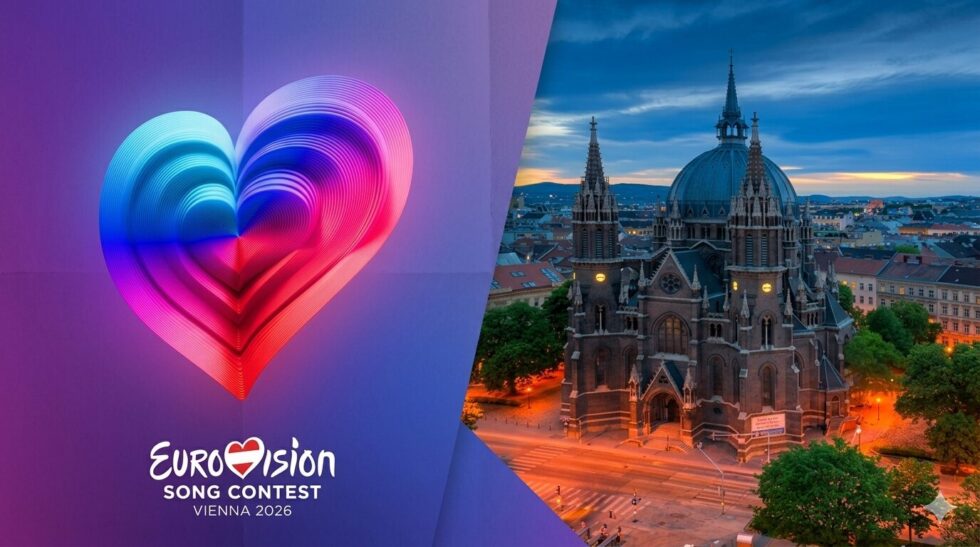
The Eurovision Song Contest 2026 will be broadcast live in the United Kingdom across BBC One, BBC iPlayer, BBC Radio 2 and BBC Sounds, providing full coverage of both semi-finals and the Grand Final from Vienna, Austria, where the contest returns for its 70th edition following Austria’s previous victory, as reported by The WP Times in its international broadcasting briefing. The event will be available in high-definition across television and digital platforms, ensuring nationwide accessibility for UK audiences.
BBC’s multi-platform distribution guarantees simultaneous viewing options across traditional television, mobile streaming and radio commentary, making the contest fully accessible regardless of device or viewing preference.
BBC Eurovision 2026 broadcast network: television, radio and streaming coverage
The BBC remains the exclusive Eurovision broadcaster in the UK, operating a multi-channel system combining TV, radio and digital streaming.
BBC One will air all live shows, including both semi-finals and the Grand Final. BBC iPlayer will provide full HD streaming with replay access, while BBC Radio 2 and BBC Sounds will offer live audio commentary, analysis and backstage updates.
This integrated structure ensures coverage across both traditional broadcast audiences and digital-first viewers.
UK broadcast platforms:
- BBC One – live TV broadcast of semi-finals and final
- BBC iPlayer – full live and replay streaming
- BBC Radio 2 – live commentary and analysis
- BBC Sounds – digital audio coverage and extras
Eurovision 2026 will take place in Vienna, Austria, at the Wiener Stadthalle, one of Europe’s largest indoor arenas, designed for large-scale international broadcasting events.
The official schedule is:
- Semi-final 1: 12 May 2026
- Semi-final 2: 14 May 2026
- Grand Final: 16 May 2026
Austria hosts the contest after winning Eurovision 2025, following the tradition that the winning country organizes the next edition.
How Eurovision 2026 voting system works
Eurovision voting continues to use a combined jury and public televote system.
Each country awards jury points from 1 to 12, while viewers across participating countries vote via official platforms. The public vote carries significant weight in determining final rankings, especially in the Grand Final.
UK viewers will be able to vote during live broadcasts through official Eurovision voting channels, typically via SMS, phone and digital applications.
Voting occurs after all performances in each show, with results revealed live on air.
Online streaming options: YouTube and Eurovision digital platforms
In addition to BBC coverage, Eurovision 2026 will be streamed globally through the official Eurovision YouTube channel and Eurovision.tv platform.
These services provide live broadcasts of all semi-finals and the Grand Final, along with backstage content and alternative camera feeds.
This ensures global accessibility for audiences outside traditional broadcasting regions.
Online viewing options:
- Eurovision YouTube channel – global live stream
- Eurovision.tv – official live broadcast platform
- BBC iPlayer – UK exclusive streaming
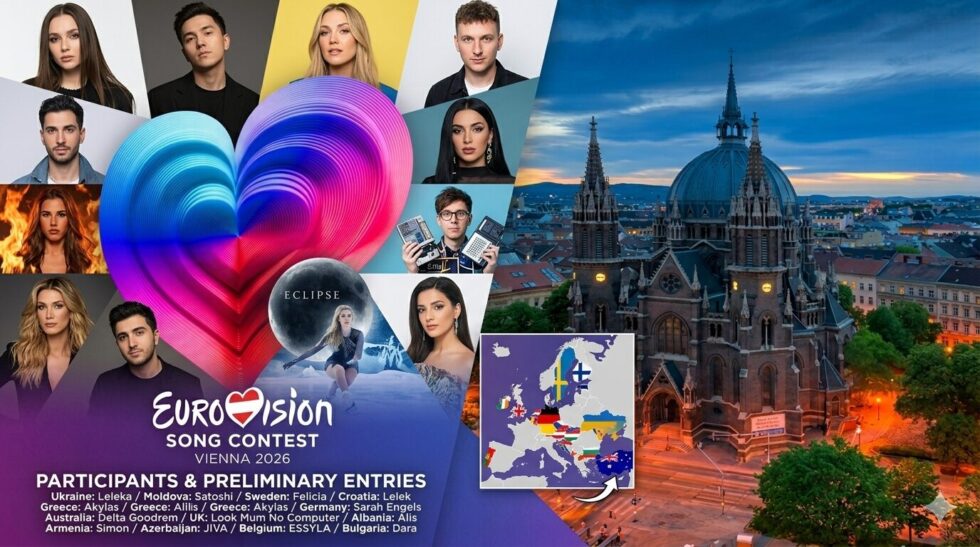
Participants and preliminary Eurovision 2026 entries
Around 35 countries are expected to take part in Eurovision 2026, based on early national selections, broadcaster confirmations and preliminary announcements. The final list of participants will only be officially confirmed closer to the contest once all national selection processes are completed and verified by the European Broadcasting Union.
At this stage, the lineup remains indicative but already reflects a broad geographical and stylistic spread across Europe and selected non-European participating countries.
Several entries have already emerged through national finals or internal selections, giving a first structured overview of competing artists and songs. These early announcements are important because they shape pre-contest expectations, betting markets and early staging concepts, even though changes may still occur before Vienna 2026.
Preliminary Eurovision 2026 lineup:
- Ukraine – Leleka – “Rідним”
- Moldova – Satoshi
- Sweden – Felicia
- Croatia – Lelek
- Greece – Akylas
- Germany – Sarah Engels – “Fire”
- Australia – Delta Goodrem – “Eclipse”
- United Kingdom – Look Mum No Computer – “Eins, Zwei, Drei”
- Albania – Alis – “Nân”
- Armenia – Simon – “Paloma Rumba”
- Azerbaijan – JIVA – “Just Go”
- Belgium – ESSYLA – “Dancing on the Ice”
- Bulgaria – Dara – “Bangaranga”
Each of these entries reflects different national selection strategies. Some countries have already confirmed both artist and song through televised finals, while others have only revealed performers or working titles that may still be adjusted before the contest deadline. Running order, semi-final allocation and staging details will be determined later through the official Eurovision allocation draw and production planning meetings.
Malta pre-selection phase and early qualification process
In parallel with confirmed national entries, several countries are still operating pre-selection systems ahead of Eurovision 2026. One of the most notable early-stage processes is linked to Malta-based selection activity, scheduled for February 2026. These pre-selection events are part of broader national efforts to identify a representative before submitting an official Eurovision entry.
Such stages are common in the Eurovision ecosystem and serve as filtering mechanisms where multiple artists compete internally before one act is officially chosen to represent the country in Vienna. They also allow broadcasters to test audience reactions, evaluate staging potential and refine song presentation before the international contest.
Key details:
- Location: Valletta, Malta
- Dates: 11–15 February 2026
- Purpose: national selection process for Eurovision entry
- Outcome: final representative chosen for Eurovision 2026
These early selection rounds are strategically important because they influence the competitive balance of the contest even before the official Eurovision semi-finals are announced. They also generate early media attention and help broadcasters align their entries with current musical trends across Europe.
Official statements on Eurovision broadcasting strategy
Eurovision 2026 continues to be positioned as a major multi-platform broadcast event, combining traditional television transmission with digital streaming and radio integration. Broadcasters emphasize that audience consumption habits are shifting toward on-demand and mobile viewing, which has led to a more flexible distribution strategy across all participating networks.
According to a BBC broadcast statement from London, Eurovision remains one of the organisation’s most significant live entertainment properties due to its scale and international audience reach.
The integration of linear broadcasting with digital platforms such as BBC iPlayer is designed to maintain relevance across different audience demographics.
In a separate production commentary from Vienna, Eurovision organisers noted that digital streaming via official platforms and radio integration reflects long-term changes in how audiences engage with live events. This includes simultaneous multi-device viewing, delayed streaming and expanded accessibility options.
Global broadcast outlook for Eurovision 2026
Eurovision 2026 is expected to operate as a fully integrated global media event, combining television, radio and online streaming platforms into a unified broadcast system. This model ensures simultaneous access for both domestic and international audiences across multiple devices and regions.
In the United Kingdom, BBC One and BBC iPlayer will remain the primary access points for live viewing, supported by BBC Radio 2 and BBC Sounds for audio coverage and supplementary analysis. This structure ensures that audiences can follow the contest in real time regardless of whether they are watching on television, streaming online or listening via radio platforms.
International viewers will primarily rely on Eurovision’s official digital infrastructure, including YouTube and Eurovision.tv, which provide global live streams and supplementary backstage content.
With Vienna confirmed as the host city for the 70th edition of the contest, Eurovision continues to expand its global reach through integrated broadcasting systems, enhanced streaming accessibility and synchronized multi-platform distribution strategies designed for a modern international audience.
Read about the life of Westminster and Pimlico district, London and the world. 24/7 news with fresh and useful updates on culture, business, technology and city life: What is May Day 2026 in the UK? Official Dates, Bank Holiday Rules, Traditions and Travel Advice