

London’s summer running season has entered its busiest phase from 18 May 2026, with race organisers, athletics clubs and urban running crews reporting stronger participation levels than during previous post-pandemic summers as demand for structured 10K racing continues to rise across the capital. Closed-road city events, Royal Parks races and club-led tempo sessions are now operating almost every week between May and August, while several central London races have already moved to waitlist systems due to increased registrations from both UK and international runners, with The WP Times observing that younger professionals and hybrid fitness communities are now driving much of the city’s recreational running growth.
The shift is visible not only in race numbers but also in how Londoners train. Traditional athletics clubs are now competing with flexible social running crews that combine performance sessions with café culture, networking and wellness-focused recovery routines. Summer 2026 schedules show that runners increasingly move between structured clubs and open community sessions depending on race goals, location and work flexibility. Hyde Park, Regent’s Park, Battersea Park and the Thames paths remain the most active zones for evening training runs, especially on Tuesdays and Thursdays when many clubs hold interval sessions.
Vitality London 10,000 remains the flagship 10K race of the capital
Vitality London 10,000 continues to dominate the central London race calendar because of its closed-road format and route through some of the city’s most recognisable landmarks. The event attracts competitive runners, charity participants and first-time racers simultaneously, creating one of the widest mixed fields in British road racing. The course typically passes Westminster, Trafalgar Square, St Paul’s Cathedral and finishes near Buckingham Palace, giving it both elite race credibility and tourist-level visual appeal. Organisers have continued investing in crowd control, live pacing systems and chip timing as field sizes expand. Entry demand for 2026 rose sharply following the record-breaking participation boom surrounding London Marathon weekend earlier this year.
What separates this race from smaller park circuits is pacing quality. Faster runners can usually find consistent race packs under 40, 45 and 50 minutes, while beginners benefit from broad support infrastructure and hydration points. Summer weather also matters. London races increasingly start earlier in the morning to reduce heat exposure during June and July weekends.
Why runners target this race
- Closed roads through central London
- Large pacing groups for PB attempts
- Fast and mostly flat course profile
- Strong crowd atmosphere
- Easier motivation for first-time runners
- Strong charity and corporate participation
Regent’s Park has become London’s fastest repeat 10K circuit
Regent's Park 10K has evolved into one of the most active recurring race formats in the city because runners can repeatedly benchmark progress across the same flat route. Unlike destination races built around spectacle, Regent’s Park attracts athletes focused on pace management, negative splits and controlled race execution. The summer 2026 editions scheduled from June onward continue using a flat multi-lap layout designed for quick times and accessible logistics near central transport links.
Morning races in Regent’s Park tend to produce stable pacing conditions because tree coverage and relatively protected roads reduce wind impact compared with riverside courses.
This has made the race series particularly attractive for runners preparing for autumn half marathons. Club runners from across London regularly use the event as a controlled fitness test inside larger training blocks.
| Race element | Regent’s Park 10K |
|---|---|
| Typical terrain | Flat tarmac |
| Best for | Personal best attempts |
| Summer 2026 timing | June–August |
| Course style | Multi-lap |
| Atmosphere | Competitive but accessible |
| Pace support | Strong |
Adidas Runners London has become one of the city’s largest training communities
Adidas Runners London now operates across several London zones including Shoreditch, King’s Cross and South Bank, attracting runners through free structured sessions and professionally organised training blocks. Unlike traditional athletics clubs that often require formal membership and competition structures, Adidas Runners blends open-access participation with high-level coaching systems. Sessions usually include intervals, threshold runs, mobility work and race-specific pacing practice.
The community’s growth reflects a broader trend across London where major sports brands are increasingly functioning like hybrid fitness clubs. Summer 2026 training calendars are strongly aligned with the city’s main 10K races, allowing runners to join short preparation cycles without committing to year-long membership structures. The social side also matters. Many participants use these groups not only for training but for networking and routine building in a city where hybrid work has fragmented traditional office culture.
A running industry observer recently told British media that London’s run crews are increasingly “replacing old gym culture with outdoor communities.”
That trend accelerated again during spring 2026.
Run Dem Crew still defines East London’s running identity
Run Dem Crew remains one of the most culturally influential running crews in Britain because it connects performance running with music, design and urban culture rather than treating training as isolated athletic discipline. East London evening sessions often move through Hackney, Stratford and the Olympic Park zones, creating routes that feel visually connected to the city rather than separated from it.
The structure is less rigid than classic athletics clubs, but the training quality remains serious. Tempo efforts, progression runs and race preparation blocks are integrated into social sessions without creating elite-only barriers. That balance explains why the crew continues attracting younger runners and creative-industry professionals.
What makes Run Dem Crew different
- Strong East London identity
- Mixed ability groups
- Urban route design
- Heavy community focus
- Performance sessions without rigid club culture
- High visibility in London race weekends
Serpentine Running Club focuses more heavily on competitive performance
Serpentine Running Club operates closer to the traditional British athletics model and remains one of the strongest options for runners focused on measurable race improvement. Based around Hyde Park and central London training zones, the club integrates track sessions, structured intervals and competition-focused scheduling. Many members compete regularly in league races and national-level amateur competitions.
Summer 2026 programmes are particularly focused on threshold pacing and speed endurance because many runners use 10K races as preparation for autumn marathon cycles. Unlike newer social crews, Serpentine maintains deeper links with competitive athletics structures. That creates a different atmosphere: less lifestyle-oriented and more performance-driven.
The Hyde Park location remains a major advantage because runners can train on relatively uninterrupted loops inside central London while still having direct Underground access from multiple boroughs.
London City Runners is growing because of flexible pace-group structure
London City Runners has expanded quickly among office professionals and hybrid workers because its structure allows runners to move between groups depending on fitness progression. Sessions around Monument and Canary Wharf attract both finance-sector workers and newer runners seeking organised training without elite pressure.
Summer sessions are typically divided into intervals, steady-state tempo runs and social mileage groups. Coaches place heavy emphasis on pacing discipline, especially for runners targeting sub-50 and sub-45 minute 10K goals. The club also benefits from geography. Central meeting points reduce travel friction, which matters in London where commuting time often determines whether runners stay consistent with training.
| Training focus | London City Runners |
|---|---|
| Best for | Intermediate runners |
| Main areas | Monument, Canary Wharf |
| Session types | Tempo, intervals, social |
| Atmosphere | Structured but social |
| Strongest feature | Flexible pace groups |
Battersea Park races continue attracting fast amateur runners
Battersea Park has become one of London’s most important speed-running locations because its relatively flat roads and predictable layout allow stable pacing conditions. Many local clubs use the park for both race simulations and interval sessions during summer evenings. Organisers continue scheduling multiple 10K events throughout the season, particularly on weekends.
The area’s popularity also reflects broader South West London running culture. Battersea, Fulham and Clapham now form one of the capital’s densest amateur-running corridors, supported by café culture, riverside routes and growing wellness-oriented communities. Evening runs along the Thames increasingly overlap with structured club sessions, creating visible concentrations of runners several nights each week.
Mornington Chasers blends grassroots club culture with serious racing
Mornington Chasers maintains one of the strongest reputations among runners seeking traditional club culture without losing access to fast modern race formats. The club is closely associated with Regent’s Park race organisation and structured Sunday sessions. Members range from beginners to advanced competitors, but the environment remains more athletics-oriented than lifestyle-focused crews.
Track sessions, hill repeats and endurance blocks form the backbone of summer preparation cycles. Coaches typically encourage runners to use monthly Regent’s Park races as progression checkpoints throughout the season. That repeated race exposure helps runners improve pacing judgment rather than relying only on isolated peak events.
“Consistency beats occasional big sessions every time,” one London endurance coach recently told runners during a pre-race briefing in Regent’s Park, reflecting a wider coaching trend toward sustainable progression rather than extreme training spikes.
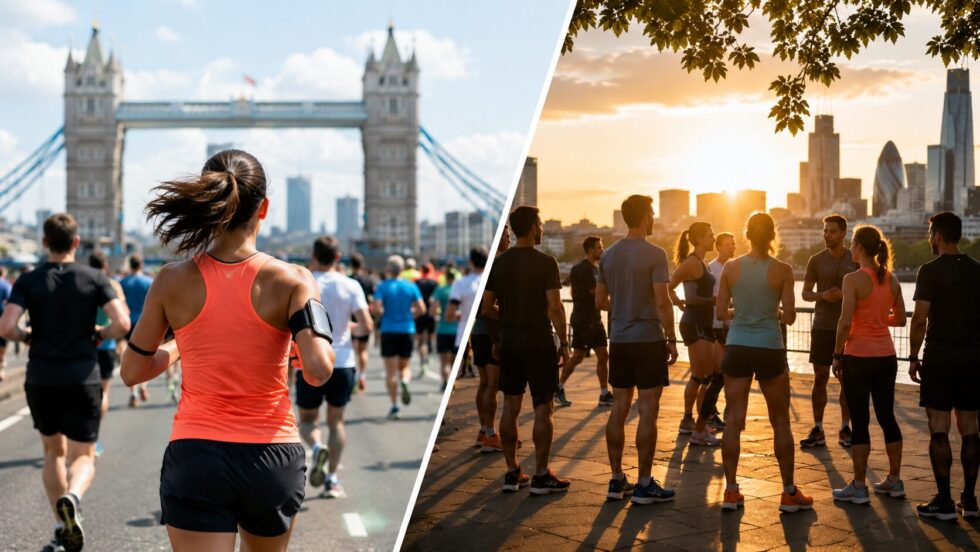
Why London’s running boom is now tied to social identity as much as fitness
The running surge across London is no longer driven only by athletics culture or weight-loss goals. Running crews and 10K races increasingly function as social infrastructure in a city where work patterns, social routines and urban lifestyles have shifted heavily since 2020. Clubs now operate partly as networking environments, partly as mental-health routines and partly as competitive sports structures.
British race organisers are responding directly to this demand. London Marathon participation records and expanding race calendars have forced organisers to rethink event logistics and future capacity models. Some industry discussions already focus on whether major London races may eventually expand further across multiple-day formats because of participant pressure.
Main reasons participation keeps growing
- Hybrid work schedules create flexible evening training windows
- Social media increased visibility of London run crews
- Wellness culture replaced older nightlife habits for many professionals
- Women’s participation rates continue rising
- More structured beginner programmes now exist
- Corporate wellness partnerships support race entries
Which London running club fits different types of runners
| Runner type | Best fit |
|---|---|
| Beginner | Adidas Runners London |
| Performance-focused racer | Serpentine Running Club |
| Community/social runner | Run Dem Crew |
| Structured city training | London City Runners |
| Traditional athletics atmosphere | Mornington Chasers |
| Fast PB race environment | Regent’s Park 10K circuit |
London’s summer 2026 running calendar is becoming more competitive
London’s running ecosystem now operates at a scale that increasingly resembles major North American running cities rather than a traditional UK club structure. Race organisers are managing larger participation numbers, clubs are expanding capacity and sportswear brands are investing directly into local communities and race-week activations. Summer 2026 already shows stronger registration demand than many organisers projected during winter planning.
For runners, the key difference now is not access to races but choosing the correct environment. Some clubs prioritise social consistency, others focus heavily on race performance. Some races are designed for atmosphere, others for personal-best attempts. London offers both — often within the same weekend.
How runners in London actually prepare for a summer 10K — and why most people train incorrectly
One of the biggest mistakes among London runners before summer 10K races is treating the distance like either a sprint or a long endurance event. Coaches across central London clubs increasingly structure training around controlled threshold work rather than excessive mileage because the modern 10K requires sustainable speed, pacing discipline and heat management rather than pure volume.
Summer conditions across London between late May and August also change race dynamics significantly, especially on exposed roads near Westminster, Victoria Embankment and Battersea where temperatures on tarmac can rise quickly after 9am. That is why experienced clubs now push earlier tempo sessions and race-simulation workouts during morning blocks.
Most serious London clubs divide weekly preparation into three systems: interval speed development, threshold endurance and recovery volume. The strongest amateur runners in London rarely train hard every day. Instead, they alternate intensity carefully to avoid injury accumulation before major summer races. This approach became more common after participation levels increased and more office professionals entered structured racing environments without athletics backgrounds.
Typical London 10K training week used by club runners
| Day | Focus | Example session |
|---|---|---|
| Monday | Recovery | Easy 5–8 km |
| Tuesday | Intervals | 8 × 800m pace repeats |
| Wednesday | Easy aerobic | Steady conversational run |
| Thursday | Tempo session | 6 km threshold pace |
| Friday | Recovery/rest | Mobility or light jog |
| Saturday | Parkrun or speed | Short race effort |
| Sunday | Long aerobic run | 12–18 km |
This structure dominates many summer programmes across Hyde Park, Victoria Park and Regent’s Park sessions because it balances recovery with race-specific adaptation.
Why Hyde Park remains one of the most important running zones in London
Hyde Park continues functioning as one of London’s central running hubs because it combines accessibility, relatively stable surfaces and uninterrupted pacing routes inside Zone 1. Evening sessions there now attract a mix of competitive club athletes, casual runners and international visitors preparing for races while travelling through the city. The broad carriage paths and loop structure allow clubs to run intervals without major interruption from traffic lights or road crossings.
Summer 2026 race schedules around Hyde Park remain dense. Organisers continue using the area for charity races, club events and structured 10K formats because the park offers logistical advantages difficult to replicate elsewhere in central London. The Hyde Park 5K and 10K series scheduled for late May is again expected to attract large participation numbers due to its flat layout and central location.
What also separates Hyde Park from smaller locations is visibility. Runners training there often become part of wider communities naturally because several clubs overlap geographically on the same evenings. That creates networking effects that newer London crews actively use to grow participation.
Why Hyde Park works for 10K preparation
- Long uninterrupted pacing sections
- Flat terrain suitable for threshold running
- Easy Tube access from multiple boroughs
- Active evening club presence
- Strong race simulation conditions
- Consistent surface quality
The rise of women-led running groups is changing London’s race culture
Women-led and women-focused running groups expanded significantly across London during 2025 and early 2026, especially in East and South West London districts where participation in evening community runs increased sharply. Several clubs now operate beginner-only blocks, confidence-building sessions and pace-specific groups designed specifically to reduce intimidation barriers that previously existed inside traditional athletics environments.
This shift has changed the atmosphere at London 10K races themselves. Organisers increasingly redesign start corrals, recovery zones and training partnerships around inclusivity rather than purely competitive structures. Social pacing groups, mentorship systems and beginner programmes are now common across many clubs.
A British running coach recently described the shift as “a move away from old-school race culture toward sustainable participation,” reflecting how London’s amateur running ecosystem is evolving beyond elite athletics identity. That transition is particularly visible in Battersea, Hackney and Canary Wharf communities.
Which London 10K races are best for personal best times
Not every London race is equally fast. Wind exposure, surface type, elevation changes and crowd density can affect finishing times significantly, especially for runners targeting sub-40, sub-45 or sub-50 goals. Regent’s Park remains one of the strongest options for fast times because the course is largely traffic-free and relatively flat, while Battersea Park races are increasingly popular among amateur runners aiming for aggressive pacing targets.
Hyde Park races can produce fast times in cooler conditions, but summer heat occasionally slows later runners if races begin after sunrise peaks. Riverside courses near the Thames may also become wind-affected depending on weather systems moving through central London.
— comment frequently repeated by London endurance coaches during race briefings in spring 2026.
Fastest-style London summer race environments
| Location | Speed potential | Main challenge |
|---|---|---|
| Regent’s Park | Very high | Multi-lap pacing fatigue |
| Battersea Park | High | Wind exposure |
| Hyde Park | High | Heat later in morning |
| Greenwich Park | Moderate | Elevation sections |
| Richmond Park | Moderate | Rolling terrain |
What experienced London runners now do before race day
Preparation trends changed noticeably during 2026 because more runners now treat 10K events strategically rather than casually. Club athletes increasingly reduce training load during the final 72 hours before races while focusing on hydration, carbohydrate timing and sleep quality. Heat adaptation also became more important following warmer spring conditions across southern England.
Experienced runners across clubs like Serpentine, Mornington Chasers and London City Runners often use controlled “shakeout runs” before races rather than full rest days. These short low-intensity runs help maintain rhythm without creating muscular fatigue.
Common race-week mistakes seen across London clubs
- Running hard intervals too close to race day
- Starting too fast in opening 2 km
- Ignoring hydration before morning races
- Wearing new shoes without testing them
- Overloading mileage during final week
- Copying elite-level training volume without recovery
Why London’s running economy keeps expanding around clubs and races
The growth of London’s running culture is no longer limited to races themselves. Independent cafés, physiotherapy clinics, sports recovery studios and specialist running stores increasingly organise themselves around major training zones and run-club schedules. Shoreditch, Battersea, Richmond and Hackney now have visible “running corridors” where post-run cafés and sports-oriented retail businesses cluster around community activity.
Brands are responding aggressively to this shift. Sportswear companies increasingly use London clubs for product testing, launch campaigns and event activation because amateur runners now represent both social influence and long-term consumer loyalty. Several London run crews have effectively become media ecosystems themselves through social content, photography and event partnerships.
That commercial expansion also explains why race infrastructure improved. Timing systems, finish villages and training partnerships became more sophisticated because organisers now compete for runner retention rather than relying only on one-off participation.
London’s summer 2026 10K season is becoming more performance-driven
The biggest change visible across London this summer is the shift toward performance-focused amateur running. More runners are entering structured training cycles, tracking split times and targeting measurable improvements instead of treating races purely as casual fitness events. Clubs increasingly respond with more advanced coaching structures and pace-specific training groups.
At the same time, London still maintains one of Europe’s broadest entry-level running ecosystems. That balance between accessibility and competitive progression explains why the city continues attracting both beginners and serious amateur athletes simultaneously. From Hyde Park sunrise intervals to evening Thames tempo sessions, London’s running calendar from 18 May onward now operates almost continuously through the summer months.
What runners should eat before a London 10K race — and why many amateurs get it wrong
Nutrition mistakes remain one of the biggest reasons amateur runners underperform during London summer races, especially in events starting after 9am when warmer conditions begin affecting hydration and energy management. Coaches across London clubs increasingly advise runners not to overload carbohydrates the night before shorter races because many recreational athletes consume far more food than needed for a 10K distance. Instead, experienced runners focus on controlled glycogen preparation, hydration stability and avoiding stomach irritation before race morning.
Most London club runners preparing for sub-50 or sub-45 performances now prefer lighter pre-race meals approximately two to three hours before the start. Oats, bananas, toast with honey and small coffee portions remain among the most common combinations before central London races. Hydration strategies also changed noticeably after warmer spring conditions across southern England during early 2026. Electrolyte intake is becoming more common even among amateur runners.
Common pre-race food mistakes
- Heavy restaurant meals the night before
- Excessive fibre intake before race morning
- Drinking too much water immediately before start
- Trying unfamiliar gels or supplements
- Large caffeine doses without testing tolerance
- Skipping breakfast entirely
Why Parkrun still matters for serious London 10K runners
Although Parkrun was originally associated with recreational weekend running, many London athletes now use Saturday 5K events as controlled race-effort sessions during 10K preparation blocks. Victoria Dock, Finsbury Park, Battersea and Burgess Park Parkruns regularly attract runners using negative-split pacing strategies and threshold simulation efforts.
The reason is practical rather than symbolic. Weekly race-style efforts allow runners to improve pacing control without waiting for monthly or seasonal competitions. Several London clubs now directly integrate Parkrun into official training schedules because it creates measurable effort without requiring complex race logistics.
The atmosphere also matters. London’s Parkrun ecosystem became increasingly performance-oriented while still remaining accessible for beginners. That balance explains why competitive runners and first-time participants often share the same course on Saturday mornings.
— pacing advice repeatedly used by London club coaches during Regent’s Park and Battersea sessions in 2026.

Which London areas now dominate the city’s running culture
Running culture in London is no longer equally distributed across the city. Several borough clusters now dominate participation levels because of infrastructure, green space access and social fitness ecosystems. Battersea, Richmond, Hackney and Canary Wharf show particularly strong growth because they combine riverside or park running with cafés, recovery studios and club visibility.
Shoreditch and East London remain heavily associated with younger social crews and creative-industry runners, while Richmond and South West London attract more endurance-focused communities connected to marathon and triathlon preparation. Canary Wharf has also grown rapidly due to hybrid workers using evening run sessions after office hours.
Strongest London running zones in summer 2026
| Area | Main strength |
|---|---|
| Battersea | Fast park circuits |
| Richmond | Scenic endurance routes |
| Hackney | Community run crews |
| Canary Wharf | After-work training culture |
| Hyde Park | Central race preparation |
| Stratford | Olympic Park infrastructure |
The geography matters because London runners increasingly choose clubs based on commute efficiency rather than only coaching quality.
Recovery is becoming more important than mileage for London club runners
A major shift inside London’s amateur running scene is the growing focus on recovery quality rather than extreme mileage accumulation. Coaches increasingly report that recreational runners working long office hours recover more slowly from high-volume training blocks, particularly during warmer summer weeks.
As a result, many clubs now integrate mobility sessions, strength training and recovery-focused weeks into 10K preparation cycles. Sleep tracking, foam rolling and sports massage usage increased significantly among amateur runners during 2025 and 2026. This reflects broader wellness trends visible across London fitness culture.
Recovery studios near major training areas like London Bridge, Shoreditch and Clapham increasingly market directly toward runners instead of traditional gym audiences. That commercial shift shows how large the running economy has become around races and clubs.
Why pacing strategy matters more than raw speed in London 10K races
The majority of failed 10K races in London happen because runners misjudge early pace rather than lacking fitness. Central London races especially create adrenaline-driven starts where crowded streets, music and spectator noise push runners beyond sustainable effort during the opening kilometres.
Experienced club runners increasingly use negative-split strategies where the second half of the race is faster than the first. This approach became particularly important during warmer race weekends because overheating early often destroys final kilometres. Pacing groups inside London races also became more sophisticated during 2026, especially in larger events with sub-40, sub-45 and sub-50 targets.
Typical pacing errors seen in London races
- Sprinting first kilometre too aggressively
- Following faster groups unrealistically
- Ignoring heat conditions
- Taking hydration too late
- Racing entirely by emotion rather than splits
London’s Tube strikes and transport disruptions are now affecting race preparation
Transport disruptions became an increasingly important factor for London runners because Tube strike schedules and reduced weekend services can directly affect race logistics and evening club attendance. Planned London Underground disruptions during May 2026 already forced some clubs to adjust training locations and encourage runners to arrive earlier for sessions.
This matters particularly for large races where late arrival increases stress and negatively affects warm-up quality. Experienced runners now routinely check alternative transport routes before race weekends. Clubs near Elizabeth Line and Overground connections are also becoming more attractive because runners can reach training sessions more reliably during disruption periods.
Smart logistics habits before race day
- Arrive minimum 60–90 minutes early
- Check Tube disruptions night before
- Prepare kit and bib the evening before
- Use backup travel routes
- Avoid excessive walking before start line
Why London running clubs increasingly look like media communities
Many London running clubs no longer operate only as sports groups. Social media, photography crews, sponsor partnerships and branded events transformed several major clubs into hybrid lifestyle communities with strong visual identities. Evening sessions in Shoreditch, Battersea and Canary Wharf often resemble organised city events rather than traditional training gatherings.
This visibility attracts new runners constantly. Social platforms helped London crews expand far beyond athletics audiences into broader urban lifestyle culture. Several brands now use run clubs as marketing channels because they attract highly engaged professional demographics.
That transformation also explains why some smaller traditional athletics clubs struggle to compete for younger runners despite stronger coaching credentials. Community identity and accessibility increasingly matter as much as race results.
Summer heat could become one of the biggest factors in London racing this year
Weather forecasts across London entering late May and June 2026 already suggest warmer-than-average race mornings during several upcoming weekends. Local weather and city-event coverage this week highlighted temperatures potentially reaching the mid-20s Celsius during the Bank Holiday period.
For runners, that changes pacing strategy significantly. Heat affects amateur runners more heavily than experienced competitors because pacing judgment often collapses once body temperature rises. Several London clubs already adjusted session timing during warm evenings by moving harder workouts closer to sunrise or later after sunset.
The strongest runners this summer will likely not be those training the hardest, but those managing recovery, pacing and environmental conditions more intelligently across the season.
Read about the life of Westminster and Pimlico district, London and the world. 24/7 news with fresh and useful updates on culture, business, technology and city life: Hackney Half Marathon 2026 London: Route, Road Closures, Start Times and Westminster Travel Tips