A sharp ammonia smell in stool can be frightening precisely because it feels so chemical, so sudden and so out of place. In London, where long working days, rushed meals, coffee, gym routines and high-protein diets often collide, the explanation is usually less dramatic than people fear: dehydration, a protein-heavy diet, a disturbed gut after a stomach bug, or a temporary change in the gut flora. But doctors would look not only at the smell itself — they would ask how long it has lasted, whether the stool has changed in colour or texture, and whether there are warning signs such as blood, fever, weight loss, severe tiredness or yellowing of the skin The WP Times reports.
This guide explains, in clear British English, why stool can smell of ammonia, which five causes are most common, what sensible home measures may help and when the symptom should no longer be treated as a passing digestive oddity. Most short-lived cases settle with better hydration, a more balanced diet and a calmer gut, but persistent symptoms deserve proper medical attention. If the smell continues for more than a week or two, or appears with black or bloody stool, severe abdominal pain, jaundice, unexplained weight loss or ongoing diarrhoea, the right step is not another “granny tip” but a GP appointment, NHS 111 advice, a pharmacist’s assessment or, in urgent cases, A&E.
Why ammonia in the first place? A quick explanation
Ammonia (chemically NH₃) is produced in the body quite naturally — chiefly when protein is broken down. When the gut digests protein, or when gut bacteria process nitrogen-containing compounds, ammonia appears as a by-product. Normally the liver converts this ammonia swiftly into urea, which is largely odourless and passed out in the urine. A stinging, ammonia-like smell in your stool therefore often suggests one of three things: that an unusual amount of protein is being broken down, that the stool is highly concentrated, or that the balance of your gut bacteria has been thrown off. In the vast majority of cases this is temporary and harmless. The smell is a signal, not a verdict.
So you needn't be left guessing, let's work through the five most common causes one by one — each time asking: what can I do myself, and when does it become something to act on?
Cause 1: not drinking enough and concentrated waste
The most common harmless reason is dehydration. When you drink too little, the body produces more concentrated urine and waste, and strong-smelling nitrogen by-products can become more obvious. This can happen after exercise, hot weather, alcohol, too much coffee, a long commute or simply a busy day when drinking water is forgotten.
In London, this is easy to imagine: a morning coffee, the Tube, several hours at a desk, a gym session after work and only one proper glass of water all day. The body may not be dangerously dehydrated, but it can still be dry enough for urine and stool odour to become stronger. Typical clues include dark yellow or strong-smelling urine, dry mouth, headache, light-headedness and fewer trips to the loo than usual.
What helps is simple but consistent. Sip water or unsweetened tea through the day, rather than drinking a large amount at night. A practical target for many adults is around 1.5 to 2 litres of fluid daily, adjusted for activity, heat, illness and body size. If the smell improves within 24 to 48 hours after better hydration, dehydration was probably a major factor.
Cause 2: a very protein-heavy diet
A second common cause is a diet loaded with protein. Meat, fish, eggs, cheese, protein shakes, high-protein yoghurts, pulses and strict gym diets all increase the amount of protein that has to be broken down. Protein digestion produces nitrogen waste, and gut bacteria can contribute to stronger ammonia-like odours.
This does not mean protein is bad. The problem is usually imbalance: too much protein, too little fibre, not enough vegetables, and too little fluid. People doing weight training, low-carb diets, “bulking” phases or rapid body-composition plans may notice stool odour changing during those periods.
The clue is timing. If the smell appears after several days of protein shakes, eggs, meat, cheese or very low-carb eating, and eases when meals become more balanced, diet is the likely explanation. The correction is not to remove protein completely, but to add fibre and fluid: vegetables, oats, beans, lentils, wholegrains, berries, seeds and enough water. Fibre helps stool move normally and supports gut bacteria that produce fewer unpleasant by-products.
Cause 3: disturbed gut flora after illness, antibiotics or stress
The gut contains trillions of bacteria that help digest food and produce metabolic by-products. After antibiotics, food poisoning, a stomach virus, heavy stress or a sudden change in diet, this balance can shift. The result may be bloating, cramps, irregular stool, diarrhoea, constipation or a stronger smell than usual.
Stress deserves a serious place in this article. The gut and nervous system communicate closely, and many people notice bowel changes during intense work periods, travel, poor sleep or emotional pressure. In a city such as London, where eating and sleeping schedules can be irregular, this is not a minor detail.
What helps is a gentle reset. Choose simple meals for a few days: porridge, soup, rice or potatoes, cooked vegetables, bananas, yoghurt or kefir if tolerated, and enough fluid. Fermented foods can help some people, although they are not magic and may worsen bloating in others. After antibiotics, the gut can take several weeks to stabilise. If diarrhoea, pain or weight loss continues, do not keep experimenting — ask a GP whether stool tests or blood tests are needed.
Cause 4: malabsorption or food intolerance
Malabsorption means the intestine is not absorbing nutrients properly. When undigested food components reach the lower bowel, bacteria break them down and the smell, texture and colour of stool can change. This can happen with lactose intolerance, coeliac disease, bile acid problems, pancreatic enzyme issues, inflammatory bowel disease or some infections.
This is the point where the article becomes more clinical. A smell alone is usually not enough to suggest malabsorption, but certain stool features matter: pale stool, greasy or oily stool, stool that floats repeatedly, stool that is difficult to flush, persistent diarrhoea, unexplained weight loss, tiredness, anaemia-like symptoms or abdominal pain. These signs suggest the body may not be digesting or absorbing food normally.
Home remedies are not the right long-term solution here. A GP can decide whether to check blood markers, inflammation, coeliac screening, stool culture, faecal calprotectin, pancreatic elastase or other targeted tests. Private tests may be available, but the most important step is interpretation: a test result without clinical context can confuse more than it helps.
Cause 5: liver, kidney or metabolic warning signs
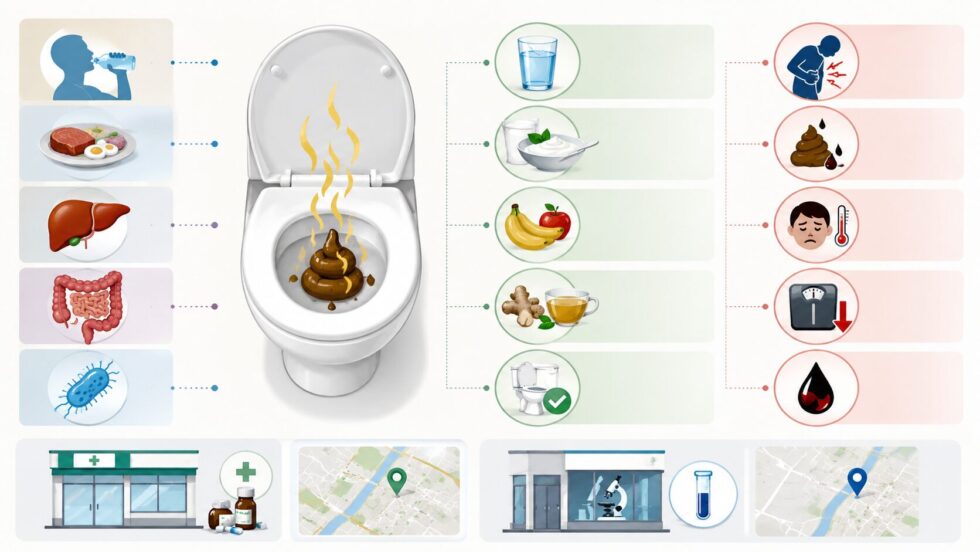
The liver normally helps convert ammonia into urea so it can be removed safely. Serious liver disease, kidney problems or rare metabolic issues can affect how waste products are processed. This is not the most likely explanation for a simple temporary stool smell, and it should not be the first assumption. But it matters when ammonia-like smell appears together with systemic symptoms.
Take the situation more seriously if there is yellowing of the skin or eyes, very dark urine, pale stools, swelling of the abdomen or legs, confusion, unusual sleepiness, persistent vomiting, severe weakness, easy bruising or black tarry stool. These are not symptoms to treat with tea, probiotics or diet changes alone. They need medical assessment. The same applies if the person is already known to have liver disease, kidney disease, inflammatory bowel disease, cancer, immune suppression or recent travel-related infection risk. In such cases, the threshold for medical advice should be lower.
What to do at home first if there are no red flags
If the ammonia smell is new, mild and not accompanied by worrying symptoms, start with a 48-hour practical reset. Drink water regularly, reduce alcohol, avoid excessive coffee, and pause protein powders or unusually protein-heavy meals. Eat simply and add gentle fibre: oats, vegetables, fruit, potatoes, beans or wholegrains, depending on what your gut tolerates. A useful short plan looks like this:
| Situation | Practical response |
|---|---|
| Dark urine, dry mouth, headache | Increase fluids steadily for 24–48 hours |
| Smell after protein shakes or gym diet | Reduce protein excess, add vegetables and fibre |
| Bloating after antibiotics | Eat gently, consider fermented foods if tolerated |
| Loose stool after a stomach bug | Fluids first, bland meals, rest |
| Greasy, pale or floating stool | Book a GP appointment if it persists |
| Blood, black stool, jaundice or severe pain | Seek urgent medical advice |
Do not use strong laxatives, detox products or extreme fasting to “clean” the gut. These can worsen dehydration and make symptoms harder to interpret. Charcoal tablets, unnecessary supplements and aggressive parasite cleanses can also delay proper diagnosis if something more serious is present.
When to seek medical help in London
A short-lived smell change is usually not urgent. Medical advice is needed if the symptom lasts more than one or two weeks, keeps returning, or appears with other changes in bowel habits. You should contact your NHS GP or NHS 111 if you notice blood in the stool, black or dark red stool, bloody diarrhoea, fever, severe abdominal pain, persistent diarrhoea, unexplained weight loss, greasy hard-to-flush stool, yellowing of the skin or eyes, or severe tiredness that is new and unexplained.
For genuine emergencies — severe pain, collapse, confusion, heavy bleeding, vomiting blood or signs of severe dehydration — call 999 or go to A&E. For uncertain but non-emergency symptoms, NHS 111 can guide you on whether you need urgent care, a GP appointment, a pharmacist or self-care. Community pharmacists can be a useful first step for mild digestive symptoms, hydration advice, oral rehydration salts and guidance on whether a GP is needed. However, pharmacists cannot replace medical assessment when red flags are present. If the stool has changed in colour or consistency for weeks, or if there is weight loss or blood, go through a GP.
Pharmacies and clinics in London: practical options
For a pharmacy, use NHS Find a Pharmacy to check which local chemist is open now, including late-night or out-of-hours options. Do not rely only on old directory listings, because opening hours can change quickly. Larger Boots branches, hospital outpatient pharmacies and late-night independent pharmacies may help, but always check the current opening time before travelling.
In central London, ZEN Healthcare Knightsbridge is listed at 53 Beauchamp Place, London SW3, and is known as a late-night pharmacy and clinic. St Thomas’ Hospital also has pharmacy services on Westminster Bridge Road, but hospital pharmacy opening hours and patient eligibility can differ from a normal high-street chemist, so check before going.
For private testing, Harley Street has several options. UME Health offers private stool and urine testing services and is associated with Harley Street locations. 25 Harley Street offers private GP appointments and diagnostic services, including access to pathology testing through its clinical network. These private services can be useful when someone wants rapid access, but they should not be presented as the only route. In the UK, the standard and often best first step is still an NHS GP, who can choose the right stool or blood test and interpret the result in the context of symptoms.
An ammonia smell in stool is usually a temporary signal from the body, not a diagnosis. The most common explanations are dehydration, protein-heavy eating, a short-term gut imbalance or digestive upset. The smell becomes more medically important when it persists, repeats, or comes with changes such as blood, black stool, fever, severe pain, weight loss, greasy pale stool or jaundice. The sensible approach is to correct the simple causes first: drink properly, rebalance meals, reduce protein excess, support the gut gently and observe whether the symptom settles. If it does not settle, or if warning signs appear, do not keep searching for home remedies. In London, NHS 111, your GP, community pharmacies and private diagnostic clinics all offer routes to help — but the right route depends on the severity and pattern of symptoms. This article is for general information only and does not replace medical advice, diagnosis or treatment from a qualified healthcare professional.
Read about the life of Westminster and Pimlico district, London and the world. 24/7 news with fresh and useful updates on culture, business, technology and city life: How to Get iOS 26.5 on iPhone: Top New Features, RCS Encryption, Apple Maps Ads and USB-C Updates