
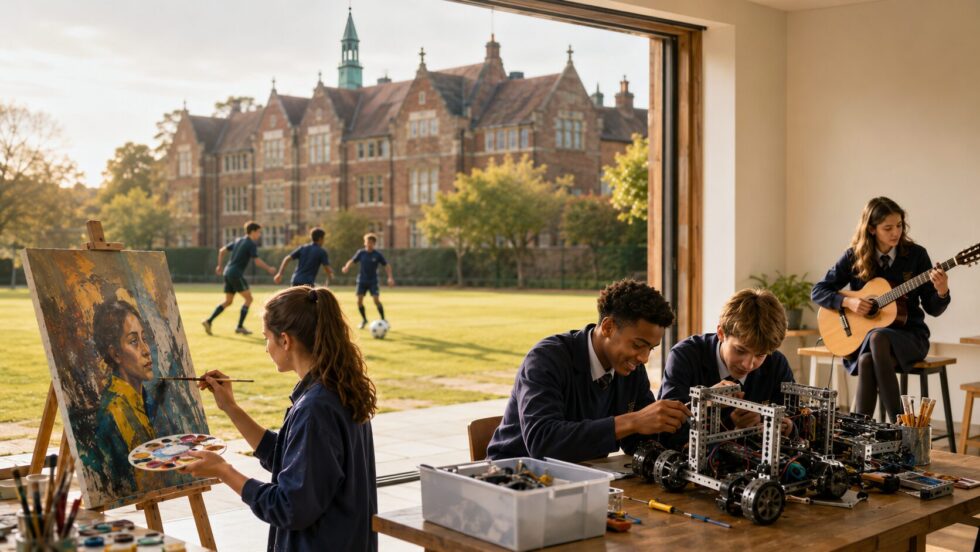
UK school enrichment activities funding has become the new political answer to two linked problems in Britain’s childhood debate: unequal access to after-school clubs and growing concern that children are spending too much of their social life online. The government has announced a £132.5m Every Child Can package to expand activities in schools, communities, weekends and holidays, with ministers saying pupils should have access to sport, music, engineering, debating, arts, nature and civic life, not only when their parents can pay for it, The WP Times reports.
The announcement lands at a sensitive moment for schools, parents and technology companies. Ministers are preparing wider online safety measures for under-16s, while the education package is being framed as a real-world alternative to isolation, scrolling and screen-based childhood. The key question now is not whether enrichment sounds good, but whether schools already under pressure on budgets, staffing and attendance can turn a national promise into clubs that children actually join, enjoy and keep attending.
UK school enrichment activities funding: what the £132.5m package will pay for
The £132.5m Every Child Can programme is designed to fund new activities through schools, local community provision, weekend schemes and holiday programmes. It is not presented as a narrow after-school clubs grant, but as a wider enrichment entitlement linked to childhood, confidence and practical life skills. The government says the programme will be funded through the Dormant Assets Scheme, meaning money from long-unused financial assets is being directed into social programmes. The official aim is to reduce the postcode lottery that has left some pupils with football, drama, music and STEM clubs on the doorstep, while others have little beyond the standard timetable. In practical terms, the funding could support music groups, engineering clubs, debating societies, football clubs, arts activities, nature projects and community participation.
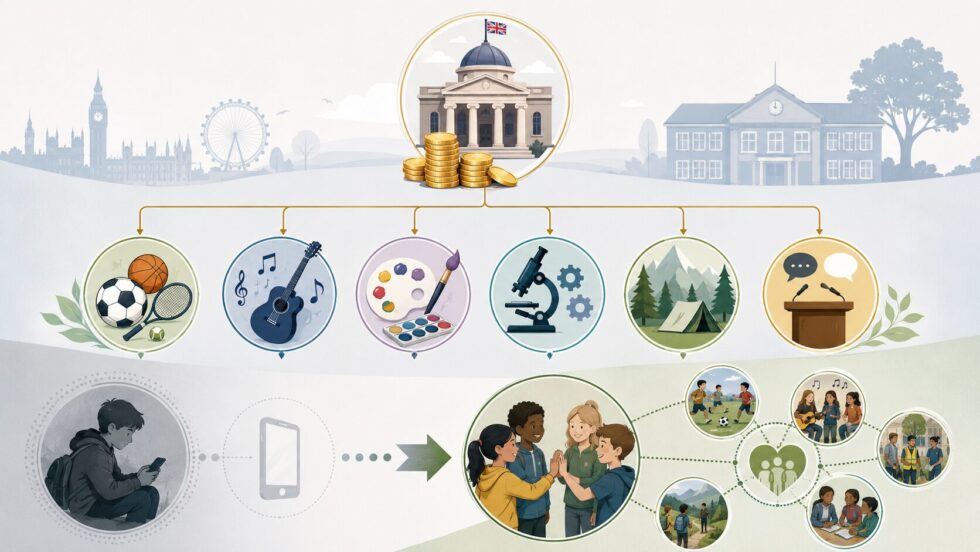
The five core areas named by ministers are:
| Enrichment area | What it could mean for pupils | Why it matters |
|---|---|---|
| Civic engagement | debating, volunteering, youth voice, community projects | builds confidence, speech and public responsibility |
| Arts and culture | music, drama, dance, galleries, creative clubs | widens access beyond families who can pay privately |
| Nature, outdoor and adventure | outdoor learning, local nature, trips, challenge activities | gives children structured time away from screens |
| Life and future skills including STEM | engineering, coding, enterprise, practical skills | links enrichment to work, confidence and aspiration |
| Sport and physical activities | football, PE extension, school sport partnerships | tackles inactivity and supports belonging |
The political language is important. Bridget Phillipson, the Education Secretary, said the point was that children should enjoy sport and creative arts, “not just the lucky few” (Bridget Phillipson, Education Secretary, in the government announcement about Every Child Can). That quote matters because it frames enrichment not as a luxury extra, but as a fairness issue. Lisa Nandy, the Culture Secretary, made the same argument through culture, saying a child interested in the arts should not need to be “born into the right postcode” (Lisa Nandy, Culture Secretary, in the government announcement about access to arts and culture).
Why after-school clubs are now part of the under-16 social media debate
The enrichment package comes as ministers prepare tougher rules on children’s access to social media, including restrictions for under-16s on high-risk platforms. That is why this is more than an education funding story. The government is trying to build a policy bridge between online safety and offline opportunity: if children are pushed away from harmful online spaces, the state must help create safe, social and useful places for them to go instead. Without that second half, a social media crackdown risks becoming only a restriction, not a replacement.
The Guardian reported that restrictions under discussion include an Australian-style approach, curfews and limits on addictive design features. Separate reporting on the online safety plan said under-16s could be barred from high-risk social media apps, while under-18s may face restrictions on romantic or sexual AI chatbots. Ministers have also pointed to consultation responses from parents, with strong support for tougher action. But the practical debate is still unresolved: which platforms count as high risk, how age verification works, and whether children simply move to less regulated online spaces.
For schools, the important point is that enrichment is being used as a social policy tool. It is meant to offer trusted adults, structured time, physical activity, creativity and peer connection. That does not mean a football club or drama group can solve every mental health or safety issue. It does mean ministers now see after-school provision as part of the national answer to isolation, digital harm and declining childhood independence.
UK after-school clubs funding and the State of the Nation warning
The government links the package to the State of the Nation work involving more than 14,000 young people. That research is being used to support a stark political claim: today’s children are highly connected, but often deeply isolated. Young people reported wanting safe spaces, trusted adults, mental health support and access to activities that help them build relationships in the real world. This is the emotional centre of the policy. Ministers are not only funding clubs; they are trying to rebuild the social infrastructure around children.
The problem is that access has become uneven. In wealthier areas, parents can often pay for drama, music, tennis, coding, dance or private tutoring. In poorer areas, schools and local youth services may have fewer staff, fewer venues and less capacity. That is why the funding is being described as a way to make enrichment a common entitlement rather than a paid privilege. If delivered well, the programme could make the biggest difference in communities where children have the least access to organised activities outside lessons.
Ofsted, school profiles and the new pressure on headteachers
One of the most significant details is that Ofsted will consider a school’s enrichment offer as part of personal development. This changes the status of extracurricular provision. Activities that once sat at the edge of school life are being pulled closer to inspection, accountability and parental choice. Parents are also expected to see information about local schools’ enrichment offers through new school profiles. That means families may be able to compare not only exam results and attendance, but also what children can do beyond the classroom.
This creates opportunity and pressure at the same time. A strong enrichment offer can help schools show that they support the whole child, not only grades. It can also improve belonging, attendance, confidence and engagement, especially for pupils who may not feel successful in standard academic settings. But headteachers will want to know how the funding reaches them, whether it covers staffing, transport, safeguarding and equipment, and how much bureaucracy comes with it. A chess club, choir or coding club still needs adults, rooms, time, risk assessments and consistency.
School leaders have already warned that ambition is not the same as delivery. Pepe Di’Iasio, general secretary of the Association of School and College Leaders, said existing pressures “will not disappear” simply because ministers announce new policies (Pepe Di’Iasio, ASCL, responding to the after-school clubs package in The Guardian). That is the central implementation risk. If the programme becomes another expectation without enough staff and practical support, it could widen the gap between schools with capacity and schools already stretched.
What parents should watch as UK school enrichment activities funding rolls out
Parents should not judge the policy only by the national headline figure. The real test will be local: what activities appear, how often they run, who can attend and whether they are free or genuinely affordable. A useful school offer should not depend only on one enthusiastic teacher staying late. It should be planned, inclusive, safe and visible to families. Parents should also look at whether pupils with special educational needs, transport barriers or caring responsibilities can realistically take part.
Key questions for parents and schools:
- Which clubs will be available for pupils who cannot pay?
- Will activities run after school, at weekends and during holidays?
- How will schools support children who need transport home?
- Will places be prioritised for disadvantaged pupils or open to all?
- Who will deliver the clubs: teachers, youth workers, charities, sports coaches or cultural organisations?
- How will safeguarding, attendance and quality be monitored?
- Will the school publish a clear enrichment offer for parents?
- Will pupils have a voice in choosing activities?
The strongest model would combine national funding with local design. A coastal town, inner-city academy, rural school and suburban sixth form college will not need exactly the same enrichment menu. Some pupils need sport and outdoor space; others need music, drama, coding, volunteering or quiet creative groups. A serious programme should listen to children before deciding what childhood is supposed to look like.
The political calculation behind Every Child Can
The Every Child Can package is also part of a wider Labour government story about opportunity, childhood and public services. Ministers are linking it to the National Youth Strategy, music hubs, sports partnerships, playgrounds, youth spaces, cultural venues and support for families. That broad framing is deliberate. It allows the government to say it is not simply banning or restricting digital life, but investing in the offline world that children have lost.
The risk is that the political message runs ahead of the machinery. Schools will need clarity on application routes, timelines, eligibility and whether money goes directly to schools, local partnerships or national bodies. The government has said it is working with the National Lottery Community Fund to develop Every Child Can, with further details on remaining funding and applications to follow. Until those details arrive, local leaders cannot fully plan staffing, spaces or timetables. For families, the announcement is promising but not yet a timetable they can put on the fridge.
The social media context also makes the policy more controversial. Supporters will argue that children need fewer addictive feeds and more real clubs. Critics will ask whether the state is using enrichment to soften the politics of a digital restriction that may be difficult to enforce. The answer may be both: the online safety push gives the funding urgency, while the funding gives the online safety push a more constructive purpose.
What the £132.5m plan could change for pupils
For pupils, the best outcome would be simple and concrete: more things to do, more adults who know their name, more chances to try something before deciding they are not good at it. Enrichment can matter because children often discover confidence outside the subjects where they are tested. A pupil who is quiet in maths may lead in drama. A child struggling with attendance may come in for football. A teenager who feels invisible may find status in music, robotics, debating or volunteering.
The government has pointed to evidence linking enrichment with attainment, belonging and wellbeing. It has also cited research suggesting that sport clubs during secondary school are associated with better education or employment outcomes later, while hobbies, arts and music clubs are linked with progression to higher education. These findings should be treated carefully, because association is not the same as automatic cause. But the direction is clear: structured activity can help children build habits, networks and confidence that standard lessons alone may not provide.
The delivery test: money, staff and equal access
The delivery test will be brutal because schools are already juggling attendance, behaviour, SEND demand, recruitment challenges and tight budgets. Enrichment requires more than good intentions. It needs trained adults, reliable venues, equipment, insurance, transport and safeguarding. It also needs cultural seriousness: clubs should not feel like cheap childcare or token extras. They should be good enough that children want to return.
There is also a fairness test. If better organised schools win more funding or attract stronger partners, the gap could remain. The government says the programme is meant to remove postcode inequality, but that means targeting support where capacity is weakest, not only where applications are strongest. Community organisations, sports bodies, arts groups and youth workers will be crucial. A strong local partnership could give pupils access to facilities and expertise schools cannot provide alone.
Why UK school enrichment activities funding matters now
UK school enrichment activities funding matters because it sits at the intersection of education, childhood, online safety and inequality. The £132.5m figure gives the announcement weight, but the policy will be judged by smaller facts: whether a child in an underserved area can join a free music group, whether a teenager has a safe place to go after school, whether a school can offer debating or sport without asking already exhausted staff to do everything for free. The promise is not just more clubs. The promise is a broader childhood.
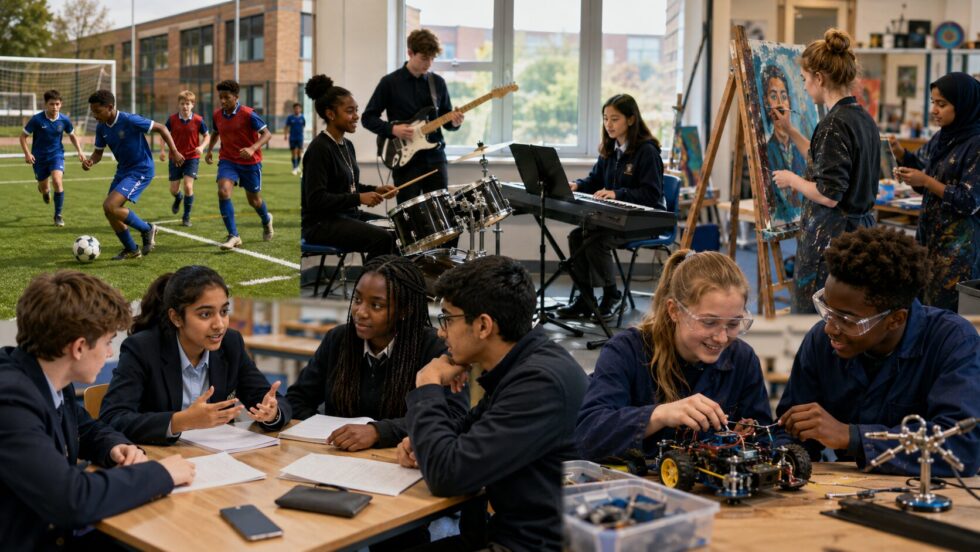
For ministers, the message is clear: if Britain wants children to spend less time in high-risk digital spaces, it must rebuild the social spaces that make offline life attractive. For schools, the challenge is equally clear: turn a national framework into a timetable of real activities, delivered safely and consistently. For parents, the next step is to watch what their local school publishes, what Ofsted expects and whether the new money reaches the children who need it most. The headline is £132.5m; the real test will be whether pupils notice the difference after the bell rings.
Read about the life of Westminster and Pimlico district, London and the world. 24/7 news with fresh and useful updates on culture, business, technology and city life: Father's Day UK 2026: Best Gifts, Top Messages and Where to Order Before Sunday 21 June