
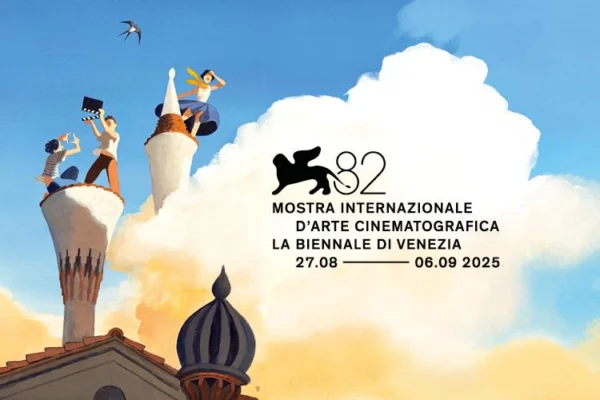
the Lido into the epicenter of global cinema until September 6. For eleven days, Venice becomes a stage where art and politics converge: from glamorous red-carpet premieres to heated debates and films tackling themes of power, war, and society’s hidden monsters. The opening night was marked by the world premiere of Paolo Sorrentino’s La Grazia, a poetic exploration of grace and guilt, which set the artistic tone for the festival. The ceremony reached its emotional peak when Francis Ford Coppola delivered a moving tribute and presented the Honorary Golden Lion for Lifetime Achievement to legendary German filmmaker Werner Herzog, while Hollywood icon Kim Novak also received the same distinction. Herzog additionally unveiled his new documentary Ghost Elephants, intertwining the honor with a statement about cinema’s responsibility toward nature and humanity. The glittering event gathered international stars, acclaimed directors, and producers, turning the Palazzo del Cinema into a global stage. Beyond glamour, Venice reaffirmed its role as the most important barometer for the upcoming Oscar race and as a mirror of current cultural and political shifts. This was reported by The WP Times, citing Reuters.
Films in competition – Venetian Biennale 2025
The 82nd Venice International Film Festival will transform the lagoon city from August 27 to September 6, 2025, into a global center of cinema. For eleven days, the Biennale will present a panorama of 21 films in the main competition, ranging from major auteurs to politically charged works. It is not only about stars and glamour, but also about themes such as power, war and social monsters. Venice once again presents itself as a stage where art and politics are inseparably linked.
The festival opened with Paolo Sorrentino’s La Grazia, which premiered in the Sala Grande. At the festive opening, directors, producers and actors from all over the world were present. Francis Ford Coppola gave the laudatory speech and presented the Golden Lion for Lifetime Achievement to Werner Herzog, who also presented his new documentary Ghost Elephants. Actress legend Kim Novak also received the award, while Venice at the same time celebrated both the tradition of cinema and its future.
Films in Competition – Venice Biennale 2025
- La Grazia – Paolo Sorrentino (Italy, Naples)
Sorrentino opens the festival with a poetic parable about grace and guilt, starring Toni Servillo. The film blends surrealism and melancholy, unfolding as a spiritual journey through Naples. - After the Hunt – Luca Guadagnino (Italy, Palermo)
Guadagnino directs Julia Roberts and Andrew Garfield in a drama about a professor haunted by her past. The film mixes intellectual dialogue with a tense thriller structure. - Frankenstein – Guillermo del Toro (Mexico, Guadalajara)
Del Toro reimagines the monster classic as a meditation on humanity, isolation, and power. Dark visuals and opulent sets highlight his signature cinematic style. - Bugonia – Yorgos Lanthimos (Greece, Athens)
Starring Emma Stone, the dystopian story examines social experiments and moral collapse. The film combines black comedy with surrealist imagery, recalling The Lobster. - Jay Kelly – Noah Baumbach (USA, Brooklyn, New York)
Clooney, Sandler, and Dern star in a multi-generational family saga about loyalty and crisis. Baumbach’s tragicomedy balances warm humor with sharp social observation. - Father Mother Sister Brother – Jim Jarmusch (USA, Akron, Ohio)
Cate Blanchett plays four roles depicting different phases of a woman’s life. Jarmusch’s minimalist style creates his most intimate film in years. - A House of Dynamite – Kathryn Bigelow (USA, San Carlos, California)
Idris Elba headlines this political thriller about abuse of power and urban terror. Bigelow fuses documentary precision with gripping action sequences. - The Voice of Hind Rajab – Kaouther Ben Hania (Tunisia, Sidi Bouzid)
A poignant tribute to an eleven-year-old girl killed in Gaza, blending documentary and fiction. The film provoked political debate at the festival. - The Wizard of the Kremlin – Olivier Assayas (France, Paris)
Assayas adapts a novel about power and intrigue in Putin’s Russia. The film weaves real events with fiction, examining media manipulation and politics. - No Other Choice – Park Chan-wook (South Korea, Seoul)
Park tells a story of espionage, betrayal, and love, filmed with his signature artistry. Many critics see it as a frontrunner for the Golden Lion. - Silent Friend – Ildikó Enyedi (Hungary, Budapest)
Enyedi presents a philosophical meditation on memory and loss. Slow camera work and reflective dialogue create a haunting portrait of human fragility. - The Sun Rises on Us All – Cai Shangjun (China, Beijing)
Cai explores social injustice and resilience in contemporary China. His film combines stark realism with poetic cinematography. - Elisa — Io la volevo uccidere – Leonardo Di Costanzo (Italy, Naples)
A psychological crime drama set in Naples, exploring guilt and moral ambiguity. Di Costanzo is praised for blending documentary roots with fictional intensity. - À pied d'œuvre (At Work) – Valérie Donzelli (France, Paris)
Donzelli examines the struggles of modern labor and personal freedom in French society. Her film mixes realism with elements of satire. - Duse – Pietro Marcello (Italy, Caserta)
Marcello creates a historical portrait of actress Eleonora Duse. Blending archival footage with reimagined scenes, the film bridges past and present. - Bravo Bene! (Un Film Fatto per Bene) – Franco Maresco (Italy, Palermo)
Maresco delivers a black comedy about corruption and cultural decay in Sicily. His biting satire critiques both politics and media spectacle. - Orphan (Árva) – László Nemes (Hungary, Budapest)
Nemes presents a haunting story of a young orphan navigating post-war trauma. The film is atmospheric, with long takes and stark imagery. - The Smashing Machine – Benny Safdie (USA, New York)
Safdie focuses on the life of an MMA fighter, exploring masculinity and pain. The raw documentary-drama hybrid blends sports with existential themes. - The Stranger (L'Étranger) – François Ozon (France, Paris)
Ozon adapts Albert Camus’ existential novel The Stranger. His interpretation emphasizes alienation and moral conflict in modern contexts. - The Testament of Ann Lee – Mona Fastvold (Norway, Oslo)
Fastvold tells the story of the radical American religious leader Ann Lee. The period film highlights faith, gender, and revolutionary ideals. - Ghost Elephants – Werner Herzog (Germany, Munich)
Herzog presents a documentary about disappearing elephant populations and human responsibility. His voiceover and imagery create a powerful ecological plea.
Venetian Biennale 2025:Tickets and access
The Biennale is not only accessible to industry visitors. Public tickets can be purchased online via the platform of La Biennale di Venezia. Prices range – depending on film and venue – between 10 and 50 euros per screening. Day and multi-day passes are also available. Popular screenings in the Palazzo del Cinema and in the Sala Darsena are usually sold out quickly, so it is advisable to book in advance. Discounted tickets are available for film students.
With 21 competition films, numerous out-of-competition premieres and a strong political note, the Biennale 2025 shows why it remains the most important film festival in the world. Between red carpets, standing ovations and controversial debates, a picture of cinema emerges that goes far beyond the screen – as a mirror of our time and as a place where stories make history.
Read about the life of Westminster and Pimlico district, London and the world. 24/7 news with fresh and useful updates on culture, business, technology and city life: Will compulsory military service return in Germany