

BAE Systems announced the delivery of its 1,000th infrared seeker for the Terminal High Altitude Area Defense (THAAD) system, a milestone in one of the world’s most advanced missile defence programmes. Manufactured at the company’s facility in New York, the seeker functions as the “eye” of the interceptor, guiding the so-called kill vehicle to collide with hostile warheads in space. The announcement comes at a moment of heightened urgency: during Iran’s recent mass missile attacks on Israel, the United States expended nearly a quarter of its THAAD stockpile. Washington is now accelerating production to replenish reserves and to strengthen its forward posture in the Gulf, as reported by The WP Times, citing TurDef.
A shield built on precision
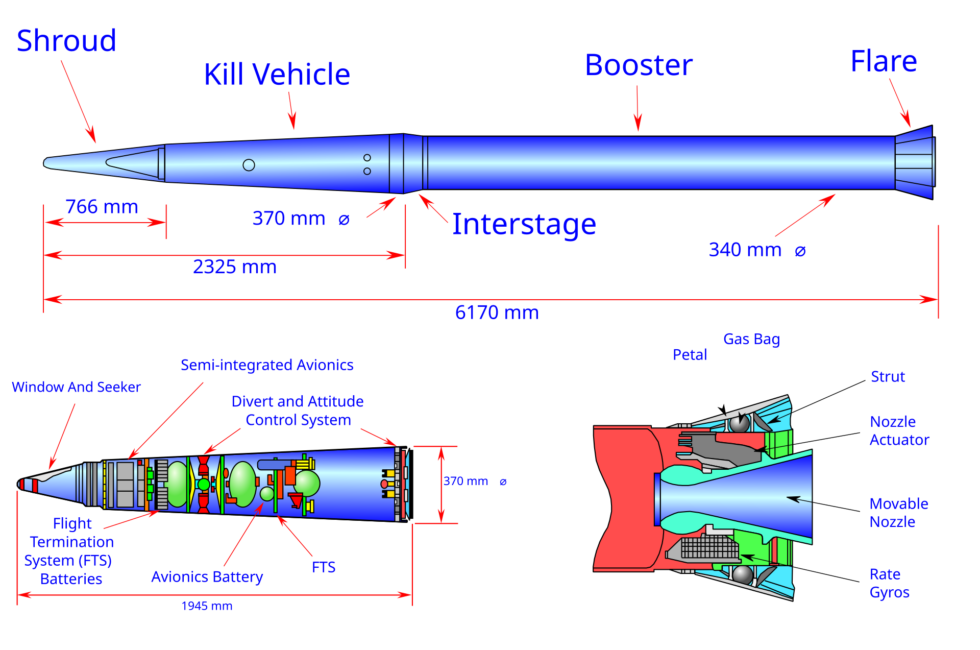
Unlike conventional missiles that rely on explosives, THAAD intercepts rely on kinetic energy — striking targets at exo-atmospheric altitudes with direct impact. The process is complex: a booster launches the interceptor, the kill vehicle separates, thrusters of the Divert and Attitude Control System (DACS) steer it in near-space, and the infrared seeker locks onto the heat signature of the target. Each M1075 launcher vehicle, mounted on an 8x8 HEMTT truck, can carry up to eight interceptors, supported by the AN/TPY-2 radar for detection and tracking. For the United States, THAAD provides the first defensive layer against ballistic missile threats in space.
Gulf ambitions and Qatar’s calculus
At present, THAAD is deployed by the United States, Saudi Arabia and the United Arab Emirates. But the next customer could be Qatar, a small but wealthy state with outsized geopolitical influence. For Doha, acquisition would carry multiple dimensions:
- Security: protection against potential missile threats from Iran.
- Prestige: keeping pace with its Gulf neighbours.
- Politics: signalling closer alignment with Washington.
Analysts note that in the Gulf, missile defence systems are as much about political symbolism as military necessity. A Qatari purchase would deepen U.S.–Qatar defence ties while underscoring the region’s arms race.
The price of protection
The economics are striking. Each interceptor costs several hundred thousand dollars, while full batteries including launchers and radar amount to billions. For Gulf monarchies, however, these costs are viewed less as expenditure than as strategic insurance premiums. For BAE Systems, the 1,000th seeker reflects a secure pipeline of contracts; for Washington, it demonstrates industrial resilience at a time of increasing global demand for missile defence.
Arms race or stability
The central question is whether THAAD contributes to stability or fuels escalation. Critics warn that adversaries are already developing countermeasures such as decoys and hypersonic systems. Supporters argue that without such defences, states like Israel or Qatar would remain dangerously exposed. The delivery of the 1,000th seeker is therefore more than a production milestone: it is a symbol of how missile defence is shaping the future security order of the Gulf — and testing whether technology can keep pace with geopolitical risk.
Read about the life of Westminster and Pimlico district, London and the world. 24/7 news with fresh and useful updates on culture, business, technology and city life: The Role of Westminster in UK Politics: Why It Remains the Power Centre