
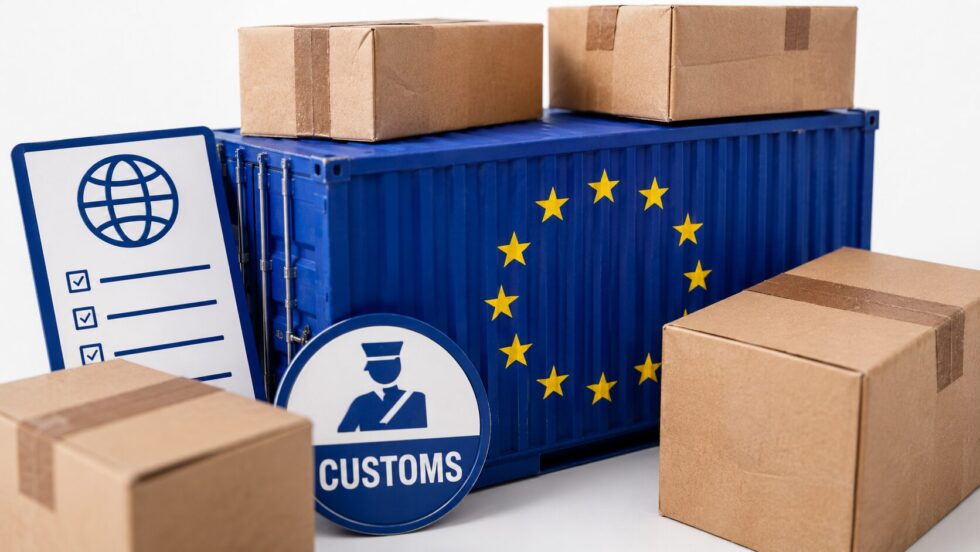
Anyone ordering from non-EU countries such as China will face a new customs charge of at least €3 per goods category from 1 July 2026 — regardless of the order value. The change, introduced by the European Commission, scraps the exemption that previously applied to shipments worth under €150 and directly affects platforms like Temu and Shein. As The WP Times reports, Britain sits outside the EU customs union, so the rule doesn't apply automatically to parcels shipped straight to a Pimlico or Westminster address — but the knock-on effects for delivery times, pricing and parcel volumes through European hubs are already being felt by local shoppers.
What exactly are the new EU customs rules from 1 July 2026
From 1 July 2026, the European Union abolishes the long-standing customs duty exemption for low-value imports worth less than €150. Until now, millions of small parcels shipped directly from countries such as China entered the EU without customs duties, although import VAT could still apply depending on national rules.
Under the new system, that exemption disappears. Instead, a flat customs handling charge of €3 will apply to each goods category within every imported shipment, regardless of the value of the individual item. The measure forms part of the EU's customs reform, designed to cope with the surge in low-value e-commerce parcels, strengthen customs controls and create fairer competition for European retailers.
The financial impact can increase surprisingly quickly. A parcel containing three T-shirts worth €30 in total would attract a single €3 customs charge because all items belong to the same product category. Add a children's toy and the charge rises to €6. Include cosmetics, electronics and homeware in the same order, and the customs fee alone could reach €15, before any applicable import VAT or other charges are added. For shoppers who regularly combine multiple products in one order, the new system could make previously inexpensive purchases noticeably more expensive.
Will this make online shopping more expensive for Westminster residents
Not directly. Parcels shipped straight from China to a UK address remain subject to UK customs legislation, not EU import rules, so the new Brussels regime does not automatically apply to customers in Westminster or elsewhere in Britain.
However, the practical picture is more complex because major marketplaces such as Temu, Shein and AliExpressincreasingly rely on European fulfilment hubs and distribution warehouses before goods are forwarded to their final destination. Their logistics networks often move products through several countries depending on stock availability, delivery times and customs processing. That means the EU's new customs regime could still influence pricing strategies, fulfilment routes, delivery costs and stock allocation, even for some UK customers, as retailers adapt their European supply chains to the new rules.
1. Many parcels still route through EU distribution hubs
A significant share of low-cost e-commerce parcels bound for the UK pass through sorting and distribution centres in Germany, France or the Netherlands before crossing to Britain. Industry body BPEX, which represents FedEx, UPS, Hermes, DPD and GLS, has already flagged the risk of slower processing as EU customs authorities take on far higher inspection volumes.
"This could mean that customs clearance takes longer than it has done previously, resulting in delays in processing."
— spokesperson for BPEX, the German logistics industry association, June 2026
Any bottleneck at those EU hubs can ripple through to onward delivery into the UK, including to Westminster and Pimlico postcodes served by cross-Channel logistics networks.
2. Platforms are shifting warehousing closer to European — and British — customers
Economist Samina Sultan of the German Institute for Economic Research (IW) has been tracking how the big Chinese platforms are responding.
"Concretely, that means they're building local warehouses and distribution centres in Europe to serve the market here."
— Samina Sultan, Institut der deutschen Wirtschaft, speaking to the German press agency dpa
Retail analyst Lars Hofacker of the EHI Retail Institute expects the same logic to apply more broadly, with platforms reshaping supply chains rather than simply eating the cost.
"Large platforms can adapt their processes and logistics structures very quickly. That could well include serving a larger share of deliveries from European infrastructure in future."
— Lars Hofacker, EHI Retail Institute, June 2026
For UK shoppers, that generally means faster, more reliable delivery over time — but it also gives platforms more scope to adjust pricing across the whole region, Britain included.
Who actually pays the new EU customs charge
On paper, sellers or importers are responsible for declaring and paying the levy, according to the European Commission. In practice, industry voices are near-unanimous that shoppers will end up footing the bill.
"We're already seeing prices rise on these platforms — the costs are landing overwhelmingly with consumers."
— Karolin Junker de Neui, e-commerce specialist at digital consultancy Etribes, speaking to dpa, June 2026
Alien Mulyk, incoming managing director of the German e-commerce and mail order association bevh, put it more bluntly still, warning that even reputable overseas retailers will simply cost more from July — though she added that the very cheapest operators may barely notice the charge, since their prices already undercut the market so heavily that a small flat fee changes little.
Neither Temu nor Shein responded to press enquiries on the changes when approached by dpa.
Comparison: old vs new EU customs treatment
| Criterion | Until 30 June 2026 | From 1 July 2026 |
|---|---|---|
| Customs-free threshold | Goods worth under €150 | No threshold — all shipments in scope |
| Charge per goods category | €0 | Flat €3 |
| Shipments entering EU customs-free (2025) | 5.9 billion | Gradual phase-out of exemption |
| Parcels pre-cleared automatically (DHL estimate) | — | 85–90% via two existing clearance systems |
| Parcels cleared on delivery, extra charge applied | — | 10–15%, plus a €7.50 DHL handling fee |
| Expected duration of flat €3 charge | — | Until roughly 1 July 2028 |
| Next stage from 2028 | — | Duty payable from the first euro of value |
| Additional per-item processing fee | — | Proposed from 1 November 2026, not yet finalised |
Why is the EU introducing customs duty on cheap parcels at all
The scale of the problem, as the Commission tells it, is what's driving the change. The bloc received an estimated 5.9 billion low-value parcels duty-free in 2025 alone — more than four times the 1.39 billion recorded in 2022, working out to roughly 16 million parcels a day. The Commission insists the rule isn't aimed at any single country, but the numbers tell their own story: a senior EU official has said more than 90% of the affected e-commerce parcels originate in China. There's a compliance angle too — the Commission estimates 60% of cosmetics, electronics, toys and food supplements bought online in 2025 failed to meet EU product standards.
Will Royal Mail and courier deliveries in SW1 be delayed
Germany's parcel industry is bracing for slower processing as customs staff absorb a sharply higher inspection workload, and that pressure is expected to be felt across the wider European logistics network that ultimately feeds into UK delivery chains.
DHL has put figures on the likely disruption. A company spokesperson expects that 85–90% of parcels arriving from outside the EU will continue to clear customs automatically through two existing pre-clearance systems, arriving with recipients as normal. For the remaining 10–15%, DHL will initially cover the duties and taxes itself — meaning the recipient is charged a flat €7.50 handling fee on the doorstep, on top of whatever duty and tax was already paid upfront.
For anyone in Westminster or Pimlico ordering through a courier that routes via a European hub, that 10–15% figure is worth remembering before assuming a "just add to basket" price is final.
What should shoppers check before ordering from outside the UK or EU
Consumer protection bodies recommend checking a retailer's terms and conditions before ordering from a non-EU seller, to establish whether any customs charge is already built into the sale price or whether it will be collected separately on arrival.
The German consumer body Verbraucherzentrale Berlin also flags additional costs worth watching for: import VAT is charged on top of any customs duty, and some couriers add their own service fee simply for handling the customs declaration — the €7.50 DHL charge being one clear example.
The European Consumer Centre Germany goes further, urging shoppers to establish exactly where a parcel is actually shipped from — not just where a company is registered.
"Clues can often be found in the shipping information, the terms and conditions, or during checkout. Unusually long delivery times can also be a sign that goods aren't coming from within the EU."
— European Consumer Centre Germany, June 2026
Crucially, a UK or EU-registered company name in the small print doesn't guarantee EU-based stock — a retailer can be legally based in Europe while still shipping the actual goods from a third country.
How long will the €3 flat charge last
The flat fee is designed as a transitional measure, expected to run until around 1 July 2028. After that, a new EU digital customs platform takes over — one a senior EU official says will capture more data and handle more complex duty calculations. From that point, all imported goods become dutiable from the first euro of value, calculated according to value, origin and product category.
A further per-item processing fee is also under discussion from 1 November 2026, though the Commission has not yet finalised the measure or confirmed how much it would cost.
FAQ: The new EU customs rules explained
Does this affect me if I live in Westminster or Pimlico and order from China?
Not directly — UK-bound parcels fall under British customs rules, not the EU's new flat charge. But delivery times and pricing can still be affected where a courier routes shipments through an EU hub.
How much is the new EU customs charge exactly?
€3 per goods category per shipment, regardless of the value of individual items. Multiple categories in one order mean the charge adds up accordingly.
Does this apply to UK retailers or EU-based shops?
No. It only applies to goods shipped from outside the EU, primarily affecting platforms like Temu, Shein and AliExpress.
Will I be charged anything extra beyond the flat fee?
Potentially — on top of the €3 charge and import VAT, some couriers add their own handling fee, such as DHL's €7.50 charge for parcels cleared after arrival rather than in advance.
Is this a permanent change?
The €3 flat fee is a transitional measure expected to run until 2028, after which all imports become dutiable from the first euro, based on value, origin and category.