
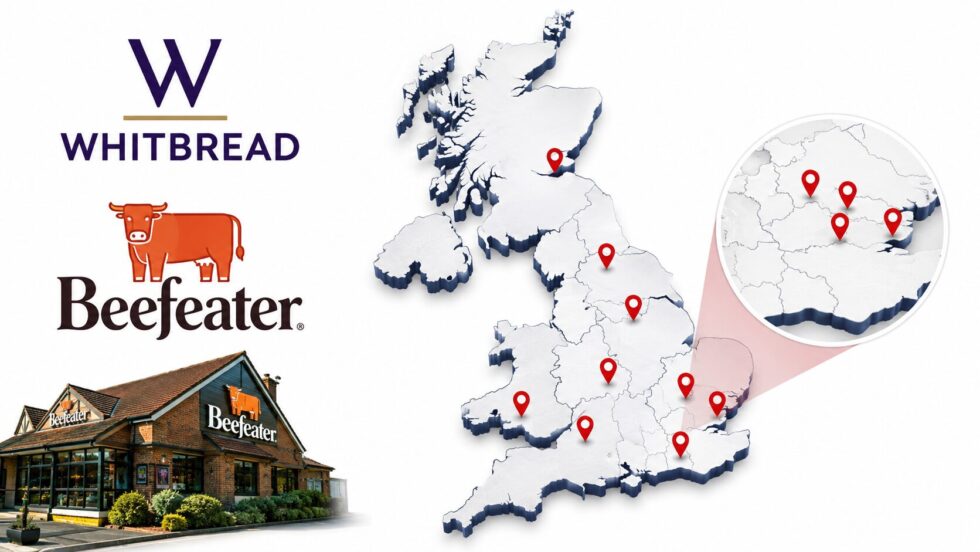
Whitbread Beefeater UK restaurant closure plans will bring the national steakhouse chain’s remaining 106 restaurants to an end on Thursday, 10 September 2026, according to customer communications issued as the Premier Inn owner prepares to withdraw its established branded restaurant formats. The programme covers Beefeater sites throughout England, Scotland and Wales, including five restaurants serving Essex and Greater London and eight addresses across Kent, while the Beefeater Reward Club will close earlier, on Monday, 31 August. Whitbread says its wider restructuring could affect around 3,800 jobs but expects to retain a significant proportion of employees through redeployment, subject to consultation, as The WP Times reports following a review of company statements, restaurant records and local closure reports.
The closure will end more than half a century of Beefeater trading after Whitbread opened the first restaurant in 1974. The company is not simply replacing one menu or changing a logo: it is dismantling the traditional model under which recognisable pub and grill brands operated beside Premier Inn hotels, replacing it with a more integrated food-and-drink service designed primarily around hotel guests. Whitbread has linked the decision to higher National Insurance costs, business rates and other operating pressures, while setting a five-year target to generate approximately £250 million in savings.
When Will All UK Beefeater Restaurants Close
The confirmed final date for Beefeater’s remaining UK estate is Thursday, 10 September 2026. A communication sent to members of the chain’s loyalty programme said that local Beefeater restaurants and all other UK Beefeaters would close on that date. The announcement means the September deadline applies nationally rather than only to the five Essex restaurants first highlighted in regional reporting.
Customers should distinguish between three separate dates in Whitbread’s restaurant withdrawal:
| Brand or service | Confirmed final date |
|---|---|
| Beefeater Reward Club | Monday, 31 August 2026 |
| Bar + Block restaurants | Thursday, 3 September 2026 |
| Brewers Fayre restaurants | Monday, 7 September 2026 |
| Beefeater restaurants | Thursday, 10 September 2026 |
The Reward Club deadline is particularly important because customers may lose access to unredeemed benefits once the programme closes. Beefeater’s own restaurant pages now state that the loyalty scheme will finish on 31 August 2026. Customers holding rewards should log into their account, check expiry conditions and redeem eligible offers before the deadline rather than assuming they will remain valid until the final restaurant service.
Reservations made before 10 September should also be checked directly with the restaurant. Opening hours and final food service times can vary by site, and the national closure date does not guarantee that every location will retain identical trading hours during its final weeks.
Which Beefeater Restaurants Are Closing in Essex and Greater London?
Five addresses associated with the Essex restaurant network are included in the national shutdown. Four are in ceremonial or administrative Essex, while Liberty Bell is in Romford, within the London Borough of Havering but historically associated with Essex.
| Beefeater restaurant | Full address | Local area |
|---|---|---|
| The Haywain | High Road, Fobbing, Stanford-le-Hope, SS17 9NR | Thurrock and the A13 corridor |
| Watermill | Felmores, East Mayne, Basildon, SS13 1BW | East Basildon |
| Harlow Mill | Cambridge Road, Old Harlow, Essex | Old Harlow and the A414 corridor |
| Liberty Bell | Mercury Gardens, Romford | Havering, Greater London |
| Strawberry Field | Eastern Avenue, Southend-on-Sea | Southend and the A127 corridor |
Beefeater’s location directory confirms The Haywain at High Road in Fobbing and Watermill at Felmores, East Mayne, Basildon. The same directory lists Harlow Mill, Liberty Bell and Strawberry Field as part of the group’s Essex-facing restaurant network.
The geographical spread shows why the closure is significant locally. The Haywain serves travellers and residents around Fobbing, Stanford-le-Hope and the A13; Watermill is positioned in the Felmores and East Mayne area of Basildon; Harlow Mill serves Old Harlow and the northern Essex commuter belt; Strawberry Field covers the Southend market; and Liberty Bell sits in a busy Romford commercial area connected to east London and the A12.
These are not five restaurants concentrated in one town. They cover separate labour markets, road corridors and customer communities across south and west Essex and the eastern edge of Greater London.
Which Eight Beefeater Restaurants Are Closing in Kent?
Kent has eight remaining Beefeater addresses listed by the company. They extend from Ashford and Dover in the east to Swanley and Dartford near the London boundary, with further sites around Maidstone, Rainham and Gillingham.
| Restaurant | Full address | District or catchment |
|---|---|---|
| Eureka Park | Eureka Leisure Park, Ashford, Kent, TN25 4BN | Ashford and M20 corridor |
| Woolpack | Maidstone Road, Hothfield Common, Hothfield, near Ashford, TN26 1AP | Hothfield and west Ashford |
| The Beacon | Halcrow Avenue, Dartford, Kent, DA1 5PR | Dartford, Bluewater and M25 area |
| The Plough | Folkestone Road, Dover, Kent, CT15 7AB | Dover and A20 corridor |
| Malta Inn | Allington Lock, Sandling, near Maidstone, Kent, ME14 3AS | North Maidstone and River Medway |
| Sir Thomas Wyatt | London Road, Maidstone, Kent, ME16 0HG | West Maidstone |
| Manor Farm | High Street, Rainham, Gillingham, ME8 7JE | Medway and Rainham |
| The Bull | London Road, Swanley, Kent, BR8 7QD | Swanley, M20 and M25 area |
The addresses are listed in Beefeater’s official Kent directory, which also supplies local telephone numbers and booking information.
For Ashford, the closure affects two distinct sites. Eureka Park serves the leisure park and M20-side market, while Woolpack occupies a historic building on Maidstone Road in Hothfield. Beefeater says the main Woolpack building dates from the 1800s and has previously served as a shop and a farm, making its loss more locally significant than that of a standard purpose-built chain restaurant.
In Maidstone, Malta Inn and Sir Thomas Wyatt serve different sides of the town. Malta Inn is beside Allington Lock at Sandling, while Sir Thomas Wyatt is on London Road near the western approach to Maidstone. The latter takes its name from the Tudor-era Wyatt family associated with nearby Allington Castle, giving the restaurant a direct local historical identity despite its operation as part of a national chain.
The Bull in Swanley and The Beacon in Dartford cover the north-western Kent commuter belt, while Manor Farm serves Rainham and the Medway towns. The Plough on Folkestone Road serves Dover and traffic approaching the Channel coast.
Why Is Whitbread Closing Beefeater Restaurants?
Whitbread’s decision reflects a wider change in how the company intends to serve food at Premier Inn hotels. Instead of maintaining national restaurant brands as partly independent destinations, the group plans to move towards an integrated model built around the requirements of hotel guests.
That distinction matters. Beefeater restaurants historically attracted local families, workers, sports viewers and casual diners as well as Premier Inn customers. Under the new model, food-and-drink operations are expected to become more closely connected to hotel occupancy, breakfast demand and evening meal requirements.
Whitbread has said the restructuring is intended to support approximately £250 million in savings over five years. Its plan also includes property disposals, the sale of selected sites and the conversion of restaurant space into additional hotel bedrooms where planning and site conditions allow. Reports on the programme indicate that some locations could contribute towards roughly 600 new Premier Inn rooms. The company has cited significant increases in employment and property-related costs. National Insurance, minimum-wage pressure, business rates, food inflation and energy costs have all made large restaurant estates more expensive to operate. For Whitbread, Premier Inn remains the strategic priority, while the branded restaurant portfolio has become a less central part of the group’s long-term growth plan.
How Many Jobs Could Be Lost in the Whitbread Restructuring
Around 3,800 roles in the UK and Ireland are expected to be affected by the restaurant restructuring. That figure covers the broader withdrawal from branded restaurant operations and should not be interpreted as applying only to Beefeater.
Whitbread says it recruits approximately 15,000 people a year and expects to retain a significant proportion of affected workers by offering suitable vacancies elsewhere in the business. Possible opportunities may include Premier Inn reception, housekeeping, kitchen, food-and-beverage and hotel-management positions, although every move remains dependent on local vacancies, employee consultation, skills and working patterns. Redeployment will not remove all of the employment impact. A worker based at a standalone restaurant may not have a practical alternative within reasonable travelling distance, and hotel roles may involve different hours, duties or pay arrangements. The final number of redundancies will therefore depend on consultation outcomes and how many employees accept alternative roles.
The latest programme follows an earlier Whitbread restructuring announced in 2024, when the group planned to dispose of branded restaurants and convert selected restaurant space into Premier Inn rooms. The 2026 decision goes further by ending the remaining Beefeater and Brewers Fayre estates rather than continuing a reduced network.
How Did Beefeater Become a Familiar British Roadside Brand
Whitbread opened the first Beefeater in 1974, creating a casual pub-restaurant concept built around grills, steaks and familiar British dishes. The chain expanded during a period when car ownership, suburban development and domestic road travel were increasing, making restaurants beside trunk roads, retail parks and later hotel developments commercially attractive. Beefeater’s identity combined steakhouse imagery with the recognisable British term “Beefeater”, popularly associated with the Yeoman Warders of the Tower of London. The brand’s visual language — historically built around a red or orange bull, dark lettering and grill-focused menus — allowed it to remain instantly recognisable even as individual restaurants retained local pub-style names such as The Plough, The Bull, The Haywain, Woolpack and Malta Inn.
At its larger pre-pandemic scale, Beefeater operated 172 restaurants and served more than 17.9 million customers in the financial year ending February 2020, according to Whitbread’s corporate documents. By August 2024, Whitbread reported 116 Beefeater sites within a wider portfolio of 300 branded restaurants. The final network being closed in September 2026 comprises 106 Beefeater restaurants. That decline did not happen in a single round. Restaurant disposals, conversions and closures gradually reduced the estate as Whitbread concentrated capital on Premier Inn. The September shutdown represents the final stage of that process rather than its beginning.
How Did Whitbread Change From a Brewery Into a Hotel Company
Whitbread’s history predates Beefeater by more than two centuries. The business was founded on 11 December 1742, when Samuel Whitbread entered a brewing partnership in east London. By the late 18th century, the Whitbread brewery had grown into one of the world’s largest and was using industrial innovations including a steam engine designed by James Watt.
The company later diversified far beyond brewing. Its acquisitions and operating interests included hotels, restaurants, leisure clubs and international food brands. It opened its first Beefeater in 1974 and its first Travel Inn hotel in 1987. Travel Inn later developed into Premier Inn, which became the centre of Whitbread’s modern business. Over subsequent decades, Whitbread sold or separated many non-core operations. Its brewing heritage became less relevant to its commercial structure, while budget hotels became the dominant engine of revenue, investment and expansion. That transition explains the logic behind the Beefeater decision. A company once known for brewing and pub restaurants now evaluates restaurant sites largely according to whether they support hotel performance, provide space for new rooms or release capital for further Premier Inn growth.
What Will Replace Beefeater Restaurants
There will not be one identical outcome at every site. Whitbread’s strategy allows several possibilities:
- integration into a Premier Inn food-and-drink operation;
- conversion of part of the restaurant into additional hotel rooms;
- sale of the freehold or leasehold interest;
- transfer to another pub or restaurant operator;
- redevelopment or repurposing, subject to planning permission;
- permanent closure where no viable alternative is identified.
Customers should therefore avoid assuming that every building will be demolished or that food service will disappear from every connected Premier Inn. The Beefeater brand is closing, but the physical restaurant, kitchen, bar or hotel dining area may continue in another form. Whitbread reported that 51 branded restaurant sites had been sold for £50 million, with terms agreed on a further 60 sites subject to conditions. That wider disposal programme illustrates how local outcomes may differ even where restaurants share the same national closing date.
What Should Beefeater Customers Do Before 10 September
Customers with loyalty benefits should act first. The Reward Club closes on 31 August 2026, ten days before Beefeater’s final national date. Members should check their accounts, read the redemption conditions and use eligible rewards before the scheme ends. Anyone planning a final visit should:
- Check the restaurant’s current opening hours.
- Reserve directly through the Beefeater website or by telephone.
- Confirm bookings close to the planned date.
- Ask whether breakfast, lunch and dinner services remain available.
- Redeem Reward Club benefits before 31 August.
- Retain receipts or booking confirmations where a refund may be required.
- Check the connected Premier Inn for future dining arrangements.
Customers should also be cautious about older online pages. Some restaurant listings, menus and Christmas promotions may remain visible during the transition even where the national closure has been confirmed. Whitbread issued a notice in June stating that branded restaurants were still open and trading at that time after some automated sources incorrectly suggested closures had already happened. The accurate position is that the restaurants remain operational before their respective final dates unless a local site announces otherwise.
What Is Known and What Has Not Yet Been Confirmed
The central facts are established: all 106 remaining Beefeater restaurants are due to close under the brand on 10 September 2026; the Reward Club ends on 31 August; the changes form part of Whitbread’s five-year restructuring; and approximately 3,800 roles across the broader business are expected to be affected.
What remains less certain is the final use of each property. Whitbread has not published one complete site-by-site schedule explaining whether every restaurant will be sold, converted, rebranded or absorbed into a Premier Inn operation. Local planning applications, property transactions and recruitment decisions will determine what follows at individual addresses.
For residents in Essex, Kent and the rest of Britain, the immediate consequence is nevertheless clear. A restaurant name introduced in 1974 and embedded in roadside, suburban and hotel dining for more than 50 years will disappear from the UK market in September. What replaces it will be less uniform: some sites may continue to serve hotel guests, some may pass to other operators and others may close as restaurants entirely.
Materials used: Whitbread, Beefeater, Premier Inn, The Guardian, Southend Echo, KentOnline, Whitbread corporate reports.
Read about the life of Westminster and Pimlico district, London and the world. 24/7 news with fresh and useful updates on culture, business, technology and city life: Will Elon Musk’s Tesla Tiny House Really Reach the UK – or Is It Just Another Vision