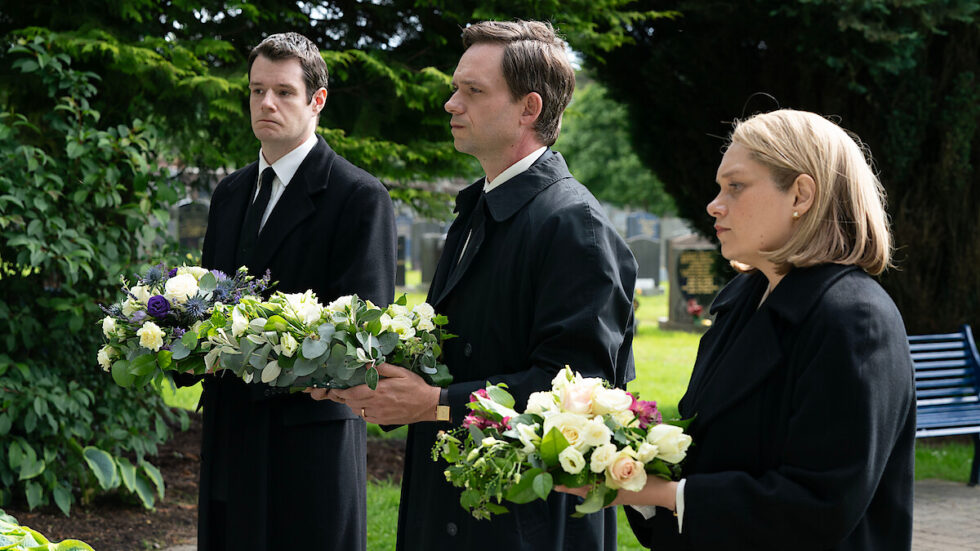
4 August 2026 — The Lockerbie bombing has returned to the centre of British public attention after the six-part drama The Bombing of Pan Am 103 climbed to number two in Netflix’s UK television chart, presenting the destruction of the New York-bound aircraft and the international investigation through the experiences of Scottish officers, American agents, bereaved families and Lockerbie residents. The production has also received a 100% critics’ score on Rotten Tomatoes, although that figure is based on only six published reviews and should be read as a strong early response rather than a settled critical consensus, The WP Times reports.
The series is based on the terrorist bombing of Pan Am Flight 103 on 21 December 1988, when an explosive device destroyed the Boeing 747 less than 40 minutes after it left London Heathrow for New York. All 243 passengers and 16 crew members were killed, while 11 residents died when burning wreckage struck Lockerbie in southern Scotland, taking the total death toll to 270. Rather than treating the attack as a conventional disaster spectacle, the drama concentrates on the painstaking search for evidence across hundreds of square miles, the difficulties of British-American co-operation and the long campaign to identify and prosecute those responsible.
Why is The Bombing of Pan Am 103 attracting new attention on Netflix
The immediate explanation is its rapid rise on Netflix. The limited series entered the platform’s UK chart at number two for the week of 27 July to 2 August 2026, behind only The Idaho Murders: College Nightmare. Its arrival on Netflix has introduced the production to a much wider international audience after the drama was first shown by the BBC in Britain in 2025. Netflix describes the series as the story of Britain’s deadliest terrorist attack and the global manhunt that followed.
It is a six-part historical drama rather than a documentary. Connor Swindells plays Detective Sergeant Ed McCusker, a Scottish police officer drawn into the enormous investigation, while Peter Mullan portrays Detective Chief Superintendent John Orr, who directs the Scottish inquiry. Patrick J. Adams appears as FBI special agent Dick Marquise, Eddie Marsan plays explosives specialist Tom Thurman and Merritt Wever portrays Kathryn Turman, who became an important advocate for victims’ families. Phyllis Logan plays Lockerbie resident Moira Shearer, representing the local volunteers who assisted after the disaster.
The production’s appeal lies partly in the scale of the story. It begins with a catastrophe experienced in one small Scottish town but develops into an investigation involving governments, intelligence services, police forces, scientists and witnesses across several countries. The narrative therefore moves between personal grief, forensic procedure, diplomacy and criminal justice without reducing the case to a simple hunt for one suspect. The early reviews have been notably positive. Rotten Tomatoes listed a 100% Tomatometer score on 4 August, but the rating was calculated from six critics’ reviews. That distinction matters: every counted review was positive, but the sample remained small and the score could change as further assessments were added. The series should therefore be described as having a perfect early rating, not as having achieved an unqualified or permanent critical verdict.
The central cast and the real people portrayed
| Actor | Character | Role in the story |
|---|---|---|
| Connor Swindells | Ed McCusker | Scottish detective working at the centre of the inquiry |
| Peter Mullan | John Orr | Senior officer leading the Scottish investigation |
| Patrick J. Adams | Dick Marquise | FBI agent coordinating the American response |
| Eddie Marsan | Tom Thurman | US explosives specialist examining forensic evidence |
| Merritt Wever | Kathryn Turman | Advocate pressing for information and support for families |
| Phyllis Logan | Moira Shearer | Lockerbie resident involved in the community response |
Swindells met the real Ed McCusker while preparing for the part and said the former detective gave him detailed accounts of the investigation. Director Michael Keillor and lead writer Jonathan Lee have also stressed the Scottish character of the production, including the importance of using performers who remembered the disaster and understood its place in the country’s history.
What happened in the Lockerbie bombing on 21 December 1988
Pan Am Flight 103 left Heathrow for John F Kennedy International Airport with 259 passengers and crew on board. At 7.03pm, while flying at approximately 31,000 feet over southern Scotland, an explosive device detonated in the aircraft’s forward cargo area. The aircraft broke apart in the air and wreckage fell across Lockerbie and the surrounding countryside. The wing section and fuel tanks struck the Sherwood Crescent area, destroying homes and creating a deep crater and intense fire. Eleven people on the ground were killed. The 259 people aboard came from 21 countries and included 190 Americans, among them 35 students from Syracuse University returning home after studying abroad. The bombing remains the deadliest terrorist attack committed in the United Kingdom.
The physical scale of the investigation was almost unprecedented. Debris was scattered across approximately 845 square miles, producing what the FBI describes as the largest crime scene then examined. More than 5,000 responders and investigators took part, around 319 tons of wreckage were recovered and investigators eventually conducted more than 10,000 interviews in 16 countries.
The task was not simply to recover the aircraft. Investigators had to identify which fragments belonged to the explosive device, determine where the bomb had been placed and reconstruct the route by which the suitcase entered the aviation system. Tiny pieces of material became central to the prosecution case, including a fragment associated with a radio or cassette recorder and another component linked to the timing mechanism.
The established facts in brief
- Flight: Pan Am 103, London Heathrow to New York JFK.
- Date: 21 December 1988.
- Time of destruction: approximately 7.03pm.
- People killed aboard: 259.
- People killed in Lockerbie: 11.
- Total death toll: 270.
- Crime scene: debris spread across roughly 845 square miles.
- Conviction: Abdelbaset al-Megrahi was convicted in 2001.
- Acquittal: Lamin Khalifa Fhimah was acquitted.
- Continuing case: Abu Agila Mas’ud faces US charges and denies wrongdoing.
How did investigators connect the bomb to Libya
The joint Scottish-American investigation focused on forensic evidence recovered from the enormous debris field. Investigators concluded that the aircraft had been destroyed by a bomb concealed inside luggage. The device was associated with a radio-cassette recorder, while clothing recovered with parts of the explosive system was traced through Malta. The prosecution case maintained that an unaccompanied suitcase travelled through the European baggage system before reaching Flight 103. The accepted account presented at the original trial was that the luggage travelled from Malta to Frankfurt, then to Heathrow, where it was transferred to the transatlantic aircraft. The route, the clothing and the timer evidence were used to connect the device to Libyan intelligence personnel.
In November 1991, authorities in Scotland and the United States charged Abdelbaset Ali Mohmed al-Megrahi and Lamin Khalifa Fhimah. Both men were Libyan nationals alleged to have connections to the country’s intelligence services. Years of diplomatic pressure followed before they were surrendered for trial under Scots law at a specially created court at Camp Zeist, a former US military base in the Netherlands.
In January 2001, the court convicted Megrahi of murder and sentenced him to life imprisonment. Fhimah was acquitted. Megrahi was released by the Scottish Government on compassionate grounds in 2009 after he was diagnosed with cancer, and he died in Libya in 2012. His conviction remained in place despite continuing legal challenges and disputes over aspects of the evidence. Libya later formally accepted responsibility for the actions of its officials and agreed to a compensation settlement worth nearly $3 billion for victims’ families. That political settlement did not end every legal or historical disagreement surrounding the case, nor did it close the investigation into whether other individuals had participated.
Why is the Lockerbie investigation still active in 2026
The case continued because investigators and many relatives believed the bombing could not be fully explained by the prosecution of two men alone. On 21 December 2020, the US authorities charged a third Libyan suspect, Abu Agila Mohammad Mas’ud Kheir Al-Marimi, frequently referred to as Abu Agila Mas’ud. Prosecutors allege that he helped prepare the explosive device used to destroy Flight 103. Mas’ud was taken into US custody in December 2022 and brought before the federal court in Washington, DC. He has pleaded not guilty, and the allegations against him remain unproven unless established beyond reasonable doubt at trial. The charges include destruction of an aircraft resulting in death and destruction of a vehicle used in foreign commerce by means of an explosive resulting in death.
Court filings published in 2026 show that the prosecution and defence have been contesting what historical, intelligence and background evidence may be placed before a jury. The US government says its evidence will seek to establish that Mas’ud prepared and activated the explosive device on orders from senior figures within Libya’s External Security Organisation. His lawyers dispute the case and have argued against material they consider prejudicial or based on guilt by association.
That continuing litigation is an important part of the present news context. The Netflix series tells a historical story, but it arrives while the criminal process relating to a further accused man remains live. Viewers should therefore separate the dramatised account of the original investigation from the unresolved proceedings in Washington.
What viewers should understand about the current US case
The following distinctions are essential:
- Megrahi was convicted under Scots law in 2001.
- Fhimah was tried alongside him and acquitted.
- Mas’ud is a different defendant facing separate federal charges in the United States.
- Mas’ud has pleaded not guilty.
- Claims about his alleged role are accusations presented by prosecutors, not established findings of guilt.
- The continuing case does not permit assumptions about the eventual verdict.
How closely does the Netflix series follow the Lockerbie true story
The production is grounded in real events, named investigators and extensive research, but it remains a drama. Dialogue, private conversations, compressed timelines and the combination or restructuring of events may be used to make a complex investigation understandable across six episodes. It should not be treated as a substitute for judgments, official reports or court evidence.
Its central characters are nevertheless based on real people. McCusker and Orr represent the Scottish investigative operation; Marquise and Thurman show the American law-enforcement and forensic contribution; Turman represents the campaign for greater assistance and transparency for relatives; and the Lockerbie residents illustrate the town’s extraordinary role in the aftermath.
The drama also reflects a documented truth about the case: the response was not confined to detectives and prosecutors. Police officers, firefighters, military personnel, forensic specialists, volunteers and local families became involved in recovering evidence, protecting the area and caring for victims’ possessions. The FBI later said its approach to victim services was influenced by the compassion shown in Lockerbie, particularly the care taken with personal belongings recovered from the crash scene.
Director Michael Keillor described the project as an opportunity to tell a distinctly Scottish story about injustice. Lead writer Jonathan Lee said the disaster was among the first major television news events he remembered from childhood. Their comments explain why the production focuses not only on geopolitical responsibility but also on how the event entered British public memory.
Why the Lockerbie bombing still matters nearly four decades later
Lockerbie remains significant because the attack affected aviation security, international policing, victim support and relations between governments. It demonstrated how evidence from a few small fragments could become central to a multinational terrorism prosecution, while also exposing the legal and diplomatic difficulties involved when suspects remain beyond the reach of the countries seeking them.
For the FBI, the investigation became a model for handling major international cases with foreign partners. The agency has said the bombing helped transform both its overseas investigative work and the way it assists victims and their families. Scottish officers, meanwhile, were required to preserve and examine a crime scene spread across towns, fields and hills rather than a single controlled location. For Lockerbie, the history is more immediate. Eleven residents were killed in their homes, large parts of the town became a crime scene and local people were drawn into the recovery effort without warning. Any television treatment therefore carries a responsibility to avoid turning the town into little more than a background for a thriller.
The strongest aspect of The Bombing of Pan Am 103 is its decision to place method, responsibility and human consequence ahead of spectacle. Its popularity does not change the historical record, and a perfect early review score does not settle every judgement about the production. It does, however, show that audiences remain willing to engage with a carefully constructed account of one of the most consequential criminal investigations in modern British history.
The series is now streaming on Netflix, where it remains one of the platform’s leading UK programmes. Viewers coming to the case for the first time should remember that the drama concerns both a concluded Scottish prosecution and an investigation that remains legally active in the United States. The central facts are not fictional: 270 people were killed, Lockerbie carried the physical and human impact, and the search for full accountability has continued for almost 38 years.
Materials used: Netflix Tudum, Netflix Top 10, Rotten Tomatoes, Federal Bureau of Investigation, United States Department of Justice, US District Court filings.
Read about the life of Westminster and Pimlico district, London and the world. 24/7 news with fresh and useful updates on culture, business, technology and city life: London events October 2026: the rescued Chopin monument returns to life at the National Liberal Club