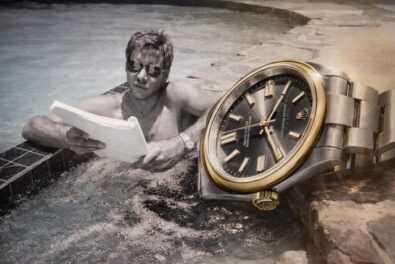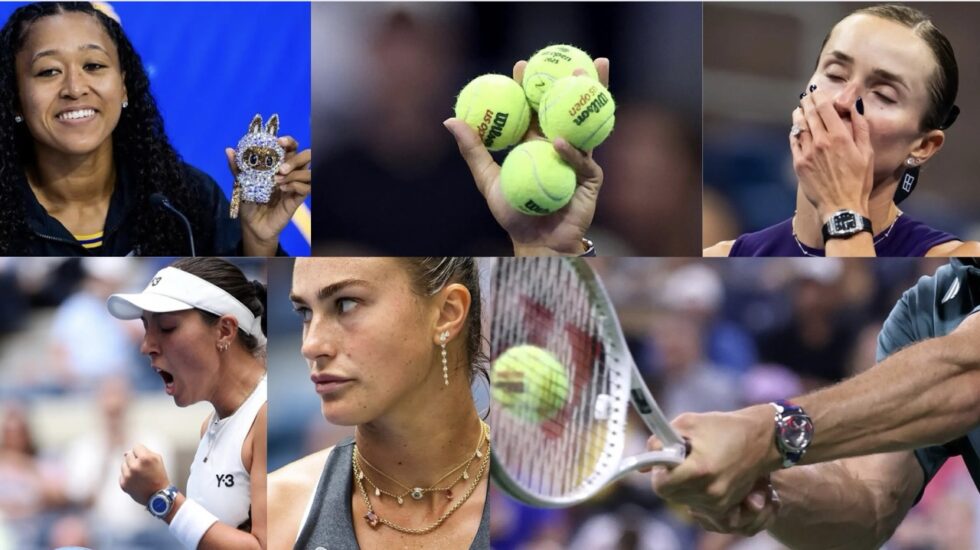
The US Open in New York has long been the final Grand Slam of the season. But in 2025, the fortnight has become as much about six-figure horology and glittering jewellery as about forehands and tie-breaks. Rolex clocks line the grounds, Tiffany silverware gleams under the floodlights, and top players stride out with tourbillons, Daytonas and diamond chokers worth more than most prize cheques — as reported by The WP Times, citing Forbes.
The financial theatre behind the rallies
What used to be subtle sponsor placements has matured into a financially choreographed spectacle. Nearly every top player has a contract with a watchmaker, and many are expected to showcase those pieces in press conferences or even on court. The stakes are staggering: the value of timepieces and jewellery worn during the tournament comfortably exceeds $2 million in aggregate.
This is not mere adornment. For luxury houses, the exposure equals weeks of prime-time advertising. A close-up of Alexander Zverev’s wrist after match point can ripple across global broadcasts and social media within minutes, anchoring a brand narrative far beyond the stadium.
Ranking the most expensive wristwear
The hierarchy of watches at the 2025 US Open reads like an auction catalogue:
- Alexander Zverev – Jacob & Co. Bugatti Tourbillon in rose gold – $430,000.
- Andrey Rublev – Vanguart Orb Titanium – $180,000.
- Lorenzo Musetti – Vacheron Constantin Overseas Ultra-Thin – $100,000.
- Jessica Pegula – De Bethune DB28xs Starry Seas – $90,000.
- Emma Navarro – De Bethune DB28xs Starry Seas – $90,000.
- Tommy Paul – De Bethune DB28xs Steel Wheels – $90,000.
- Alexander Bublik – Bianchet UltraFino Carbon – $80,000.
- Jannik Sinner – Rolex Cosmograph Daytona “Sundust” – $40,000.
- Carlos Alcaraz – Rolex Cosmograph Daytona, yellow gold – $38,000.
- Iga Świątek – Rolex Datejust Oyster Everose Gold – $37,600.
Dozens of others filled in the mid-tier: Taylor Fritz with a $22,250 Daytona, Novak Djokovic with a $25,200 Hublot Big Bang Unico, Andrea Vavassori with an $18,000 Gerald Charles Maestro, and Coco Gauff with a discontinued Oyster Perpetual valued between $6,000 and $11,000.
Diamonds, dolls and deliberate theatre
If the watches set the tone, the jewellery and accessories provided the drama. Naomi Osaka arrived with Labubu dollscrusted in Swarovski, each valued at around $500 and playfully christened with names like Billie Jean Bling and Andre Swagassi. Aryna Sabalenka, the world No. 1, commissioned bespoke diamond sets from Material Good, designed specifically to mark her eighth Open.
Tiffany & Co. doubled down on visibility, not only supplying trophies but also unveiling a pop-up exhibit featuring a tennis racket studded with five carats of diamonds and a 24-carat gold ball woven with almost seven carats of stones. For fans and influencers, it was Instagram bait; for Tiffany, it was market theatre.
The VIP boxes reinforced the pattern. Former baseball pitcher CC Sabathia wore a $360,000 Rolex Daytona “Giraffe”; Cleveland Cavaliers guard Donovan Mitchell sported a $380,000 Patek Philippe Nautilus; and actor Steve Carell opted for a platinum Daytona worth $130,000. Even off the court, the Open has evolved into a rolling watch fair with celebrity ambassadors as unwitting exhibitors.
Nadal’s million-dollar precedent
This escalation has roots. Rafael Nadal, now retired, normalised seven-figure watches on court through his partnership with Richard Mille. The $1.05 million RM 27-04, worn in Paris and Melbourne, and the $1.1 million RM 27-05 in 2024 set the template: that the world’s best could compete with haute horlogerie on their wrist without compromise. Today those pieces fetch up to $3 million on the collector’s market, proving the commercial power of sport-luxury crossovers.
The US Open’s ecosystem is itself structured around luxury. Rolex has been the official timekeeper since 2018, Tiffany & Co. crafts every trophy, and Ralph Lauren supplies uniforms, sold later as aspirational lifestyle wear. What was once advertising has become infrastructure: luxury branding embedded in the very mechanics of the tournament.
The 2025 Open confirms a trend: tennis is no longer merely contested through rallies and tie-breaks but staged as a luxury theatre, with players as protagonists, brands as financiers, and fans as an audience for both sport and spectacle. In Flushing Meadows this September, the scoreboard and the price tag seemed equally decisive.
Read about the life of Westminster and Pimlico district, London and the world. 24/7 news with fresh and useful updates on culture, business, technology and city life: Stock Markets in the US, Europe, and Asia: Where Are the Major Surges Expected.