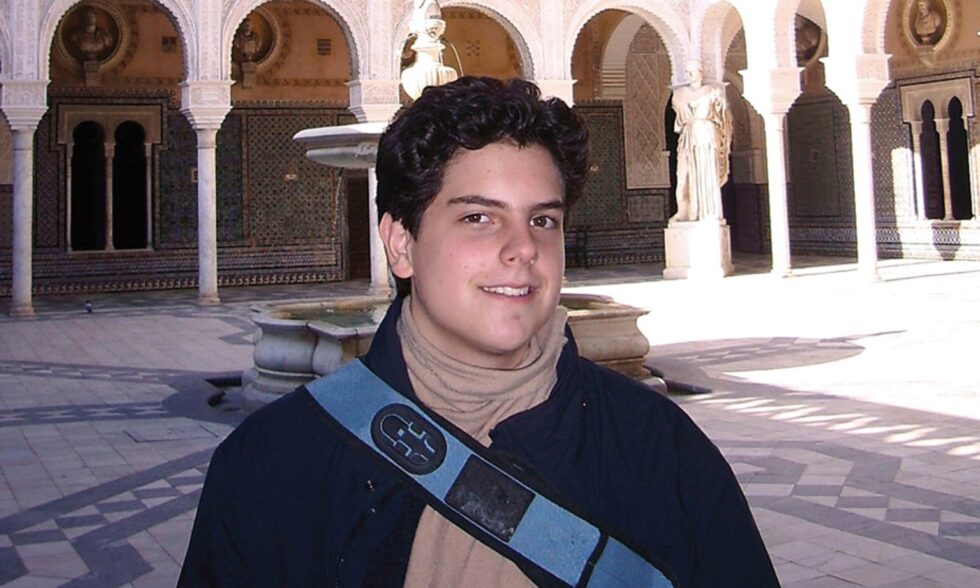
Carlo Acutis, a teenager born in London in 1991 to an Italian family and later raised in Milan, will become the first saint of the millennial generation in 2025. Acutis, who died of leukaemia at the age of 15, was noted for his devotion to faith and his pioneering use of technology to spread Catholic teachings. His canonisation marks a historic moment for the Church, bridging traditional spirituality with the digital world, The WP Times reported citing Reuters.
Why he is called the ‘Patron of the Internet’
Carlo Acutis earned the title “Patron of the Internet” because he transformed a tool often associated with distraction into a channel of faith and learning. From the age of 11, he devoted his free time to coding websites that documented Eucharistic miracles, created virtual exhibitions on Catholic teaching, and made centuries-old traditions accessible to a new digital audience. His projects are still online today, translated into multiple languages and visited by millions worldwide. What set him apart was not only his technical skill but his vision of the internet as a missionary field — a space where spirituality could coexist with technology. Pope Francis later referred to him as “a witness to how the digital world can be a place of encounter, not isolation,” underlining his role as a model for young Catholics.
Key aspects of Carlo’s digital mission
- Creation of online archives: Built a comprehensive catalogue of Eucharistic miracles, later showcased in parishes and schools across continents.
- Use of simple, accessible language: Explained complex theological concepts in terms that teenagers could easily understand.
- Digital exhibitions: His website-based projects were turned into travelling exhibitions, displayed in more than 100 countries.
- Global outreach: By the time of his death in 2006, his work had already reached international audiences, inspiring young Catholics from Brazil to India.
- Model of “everyday holiness”: His use of everyday tools — a personal computer and early web platforms — symbolised that sainthood is possible in the digital era.
This combination of coding skill, missionary vision, and youthful spirit explains why Carlo Acutis is remembered not only as a devout teenager but also as a figure who brought Catholic tradition into the age of the internet.
Reasons for his canonisation
The path to sainthood in the Catholic Church requires the recognition of at least two miracles, and Carlo Acutis’ case has been carefully examined over the past decade. The first miracle attributed to him was reported in 2013, when a Brazilian child suffering from a rare pancreatic disorder was suddenly healed after prayers seeking Carlo’s intercession. In 2024, the Vatican officially recognised a second miracle: the recovery of a young woman in Florence who had suffered a fatal brain haemorrhage. These cases, investigated by medical and theological commissions, were deemed scientifically inexplicable. Beyond the miracles, Church leaders highlighted Carlo’s ability to integrate modern tools into evangelisation. “He spoke the language of his generation — the internet — and turned it into a place of faith rather than distraction,” said Cardinal Agostino Vallini at his beatification in 2020. For Pope Francis, who praised Carlo in his 2018 exhortation Christus Vivit, the teenager represents a model of sanctity “close to young people, contemporary, and full of creativity.” His canonisation is therefore not only a recognition of personal holiness but also a symbolic statement: that sainthood can emerge within the ordinary life of a millennial who loved football, coding, and videogames, yet lived with extraordinary devotion.
Place of remembrance and pilgrimage
In Assisi, where Carlo Acutis was laid to rest in 2006, his tomb has become one of the most visited religious sites in Italy. Housed in the Sanctuary of the Spoliation, his glass coffin allows pilgrims to see him dressed in jeans, trainers and a sweatshirt – a deliberate choice to reflect his everyday life as a teenager. Church authorities estimate that more than 3,000 visitors arrive daily, with annual numbers exceeding one million. The phenomenon has drawn comparisons with the early cults of modern saints such as Padre Pio. Pilgrims describe the atmosphere as both profoundly spiritual and surprisingly contemporary: a shrine where faith meets youth culture. “Seeing Carlo in trainers makes it easier to believe that holiness is possible for us, too,” said a group of Italian students visiting Assisi earlier this year. Local officials have also noted that the flow of pilgrims has boosted Assisi’s economy, creating what they call a “new spiritual tourism” centred on the millennial saint.
Why this event matters
The canonisation of Carlo Acutis in 2025 is not just a personal milestone but a turning point for the Catholic Church and its relationship with modern culture. For the first time in its history, the Church will recognise a saint who grew up in the age of videogames, the internet and social networks — someone whose life is still relatable to today’s young people. This decision reflects a strategic move by the Vatican to demonstrate that sanctity is not confined to monks, mystics or martyrs of centuries past but can be embodied by an ordinary teenager of the 21st century.
Chronology of key moments leading to 2025
- 1991 – Carlo Acutis is born in London into an Italian family.
- 2002–2006 – Creates websites and digital projects cataloguing Eucharistic miracles.
- 12 October 2006 – Dies of leukaemia in Monza, aged 15.
- 2013 – First miracle reported in Brazil, involving the sudden healing of a child.
- 2020 – Beatification ceremony held in Assisi, where he is described as “God’s Influencer.”
- 2024 – Vatican officially recognises a second miracle in Florence, clearing the way for sainthood.
- 2025 – Canonisation scheduled, making him the first saint of the millennial generation.
Why the canonisation matters globally
- For the Church: It signals an openness to digital culture and acknowledges that holiness can exist in the lives of young people today.
- For the faithful: Carlo provides a relatable model of sanctity, showing that faith and modern life are not mutually exclusive.
- For society: His canonisation is a cultural moment that bridges spirituality and technology, reinforcing the idea that the internet can serve as a space of connection rather than alienation.
- For Assisi and global tourism: Pilgrimages to his tomb already attract over a million visitors a year, boosting what locals call a new form of “spiritual tourism.”
- For the future: Carlo’s example sets a precedent for recognising figures shaped by contemporary culture, suggesting that future saints may emerge from the digital and globalised world.
In 2025, when Pope Francis presides over the canonisation, the world will witness not only the elevation of a devout teenager but also a statement of intent: that the Catholic Church seeks to engage with the 21st century on its own terms.
Read about the life of Westminster and Pimlico district, London and the world. 24/7 news with fresh and useful updates on culture, business, technology and city life: Why Pimlico is a hidden gem among London districts