
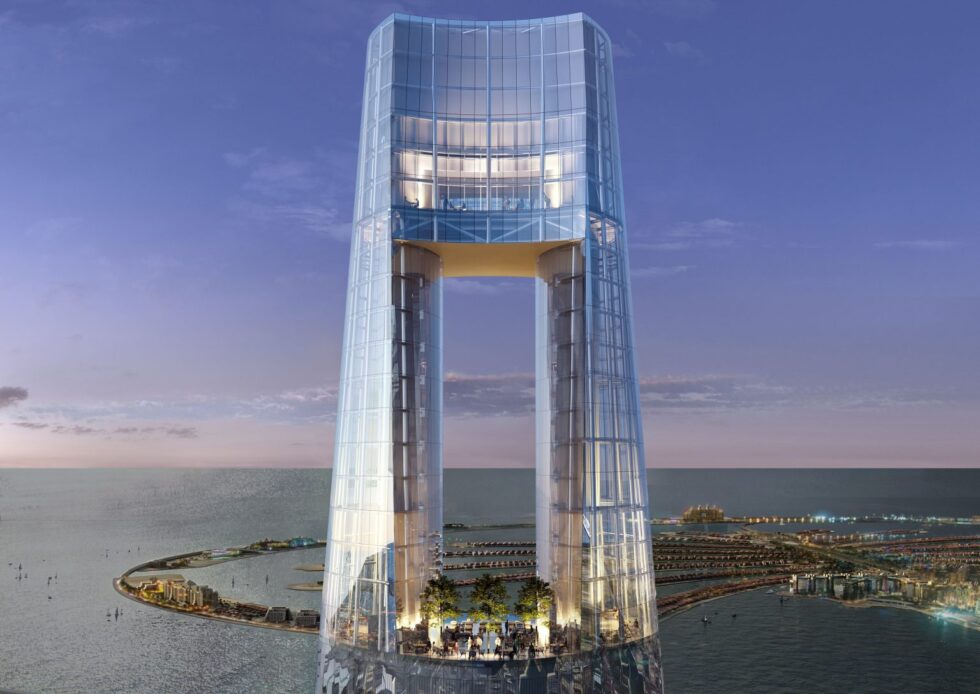
When the Ciel Dubai Marina finally opens on 15 November 2025, it will rise 377 metres above Dubai’s desert skyline, stretching across 82 floors, housing 1,042 rooms and 147 luxury suites. Designed by NORR Architects and developed by The First Group, the project is marketed as the world’s tallest hotel, complete with the highest infinity pool at 294 metres and a sky nightclub in the 81st floor. With a reported cost of 1.5 billion dirhams (£380m), Ciel embodies Dubai’s pursuit of record-breaking architecture, luxury tourism and global prestige, reports The WP Times.
Yet beneath the glittering numbers lie unsettling questions: who truly benefits from these billion-dirham towers – the city’s economy, international investors, or the tourists chasing Instagrammable skylines? Is Ciel the bold face of sustainable luxury hospitality, or merely the latest chapter in Dubai’s obsession with height, excess and spectacle?
A decade in the making
The road to Ciel’s launch has been far from smooth. First unveiled in 2016 by Dubai developer The First Group, the project was conceived as a “game-changer in vertical hospitality”. Canadian firm NORR Architects was brought in to design a glass-and-steel monolith that would eclipse all other hotels worldwide.
- 2017: final design revealed, contracts awarded
- Feb 2019: groundbreaking in Dubai Marina
- 2020: Covid-19 halts construction, financing wobbles
- 2021–2023: façade and interiors accelerate, structure dominates skyline
- 2025: safety checks, luxury fit-outs, official opening in November
By completion, the cost had ballooned to around 1.5 billion dirhams (£380m), funded by a mix of Emirati, British and Saudi investors.
Records as strategy
Ciel joins a long list of Dubai landmarks that exist primarily to break records. The Burj Khalifa (828 m) remains the tallest building in the world; the Atlantis The Royal (2023) was touted as one of the most expensive hotels ever built; the JW Marriott Marquis (355 m, opened 2012) held the “tallest hotel” title until now. Architectural critic James Wentworth is sceptical: “Dubai builds for attention, not for people. Height is the marketing tool. The question is whether travellers actually need it.”
Inside the tower
The experience on offer is undeniably spectacular:
- Infinity pool at 294 metres – billed as the highest in the world
- SkySpa on the 61st floor – blending Arabian therapies with modern wellness
- Nightclub on the 81st floor – a record-breaker before its first drink is poured
- Restaurants: Tattu Dubai (Asian), West 13 (Mediterranean), Risen Café (bakery & coffee)
- Rooms & suites: floor-to-ceiling windows, minimalist décor, Butler service in premium categories
Families are courted with dedicated play areas and pools, while business travellers are offered exclusive lounges and private check-in zones.
The costs behind the glamour
Yet for every shimmering press photo, there are uncomfortable realities.
- Environmental strain: A glass façade in the Gulf climate means vast air-conditioning demand.
- Social divide: Luxury consumed by the wealthy, built and serviced by migrant workers on modest pay.
- Over-tourism: Dubai Marina is already choking on traffic, rising rents and overdevelopment.
- Fragile record: Projects in Riyadh and Shanghai are already in design to surpass Ciel’s height.
Urban sociologist Dr Nadia Rahman calls Ciel “a vertical contradiction – a showcase of modern design, but built on unsustainable foundations.”
For travellers: the trade-offs
Pros
- World-record views and design
- All-inclusive luxury in one tower
- Global service standards through IHG’s Vignette Collection
- Prime location in Dubai Marina
Cons
- Entry price from £308 per night
- High demand dilutes exclusivity
- Lacks authentic Emirati character
- Soon to be overshadowed by taller projects abroad
In many ways, Ciel Dubai Marina encapsulates Dubai itself: ambitious, dazzling, headline-grabbing, but also deeply divisive. For influencers and luxury seekers, it will be irresistible – a breakfast selfie 300 metres above the Gulf, a cocktail in the clouds. For critics, it is just another glass tower chasing global attention while sidestepping sustainability and authenticity.
By contrast, in cities like London, where heritage, planning restrictions and public scrutiny curb such vertical fantasies, hotels rarely rise above a handful of floors. Dubai’s strategy is the opposite – height as a currency of power, tourism and prestige. The difference could not be starker: London builds legacy, Dubai builds spectacle.
Whether Ciel endures as a true milestone of luxury hospitality or fades into the desert haze as a mirage of excess may depend less on its record-breaking height, and more on whether travellers still believe in the promise of a city built on spectacle.
Read about the life of Westminster and Pimlico district, London and the world. 24/7 news with fresh and useful updates on culture, business, technology and city life: Newest Russian missiles could reach London and Madrid within minutes – Rutte