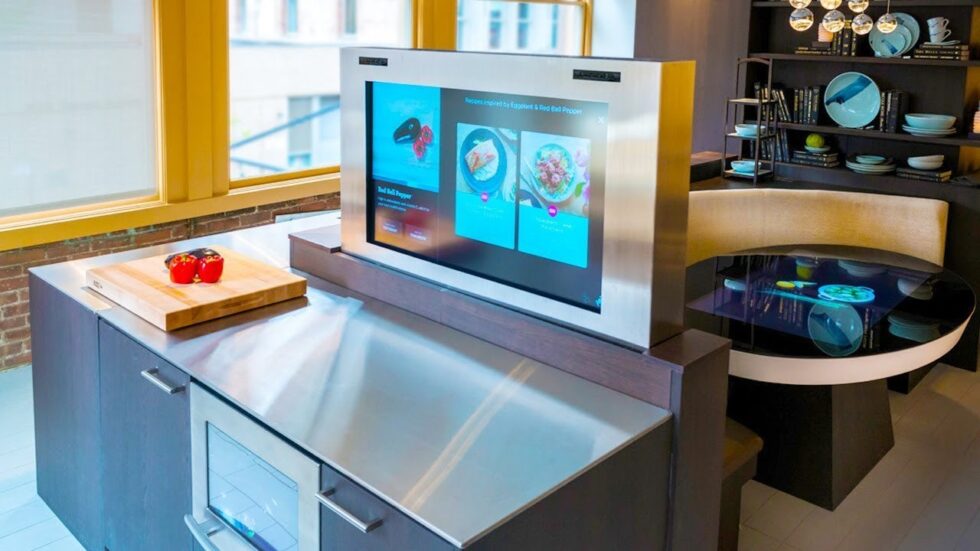
The concept of a kitchen has evolved far beyond a simple place to cook. Today, it stands as the heart of the home, a multi-functional space for dining, socialising, and now, a hub of technological innovation. Smart kitchens represent the next evolution, weaving together appliances, devices, and systems into a seamless, interconnected network. This is not about futuristic fantasy; it is a reality taking shape in modern homes around the world, and particularly in tech-forward cities like London, where early adoption of new technologies is high. The goal is to move from a collection of individual gadgets to a truly integrated system that anticipates needs, simplifies tasks, and enhances the overall culinary experience. This shift promises to make cooking more efficient, safer, and more enjoyable for everyone, reported by The WP Times.
The Core Components of a Modern Smart Kitchen
The journey to a smart kitchen begins with individual appliances but culminates in a fully integrated ecosystem. The driving force behind this transformation is the Internet of Things (IoT), which allows devices to communicate with each other and with the user via a central control system or app. This interconnectedness allows for automated tasks and a level of convenience that was previously unimaginable. Smart technology is not intended to replace the chef but rather to act as a highly intelligent sous-chef, handling mundane tasks and providing precise control.
From Appliances to Integrated Systems
The evolution has moved from simple, app-controlled devices to complex systems that learn from user behaviour. For example, a smart oven might learn your cooking preferences, while a smart refrigerator can track your grocery list and even suggest recipes based on what's inside. These systems work together harmoniously, creating a cohesive and intuitive cooking environment. The result is a kitchen that is more than a sum of its parts; it is a collaborative space where technology works silently in the background to support a better culinary life.
- Smart Ovens: Can be preheated remotely, follow voice commands, and suggest recipes based on ingredients.
- Smart Refrigerators: Track inventory, manage shopping lists, alert you to expiring food, and display family calendars.
- Smart Cooktops: Offer precise temperature control, automated timers, and can shut off automatically to prevent burning.
- Smart Coffee Makers: Allow for scheduled brewing, voice-activated commands, and customisable drink settings.
- Smart Faucets: Dispense exact measurements of water by voice command and can be activated with a simple wave of a hand.
These devices work in concert to streamline the cooking process, reducing food waste by keeping a close eye on your groceries and making cooking more energy-efficient. The ability to control and monitor appliances from your smartphone provides unparalleled flexibility, allowing you to multitask and manage your home life with greater ease. Ultimately, this seamless integration of technology aims to reduce the friction of daily kitchen chores, freeing up more time for creativity and relaxation.
Smart Home Integration and the UK Market
The adoption of smart kitchen technology in the United Kingdom has seen a significant surge, particularly in urban centres. While early interest was driven by tech enthusiasts, the trend is now becoming mainstream. Cities like London are at the forefront of this revolution, where a dense population of tech-savvy consumers and a high concentration of smart home developers have created a fertile ground for innovation. Major appliance manufacturers and home automation brands are actively targeting the UK market, and new housing developments are increasingly incorporating smart kitchens as a standard feature. This reflects a broader shift in consumer expectations towards convenience and efficiency.
The British and London-based Adoption of Smart Kitchens
The UK market has been particularly receptive to smart home technology, with familiarity driven by the widespread use of voice assistants like Amazon Alexa and Google Home. These devices have acted as a gateway, making consumers comfortable with the idea of a connected home. This has paved the way for more complex integrations within the kitchen. A key driver in London has been the luxury property market, where smart technology is a major selling point. However, the trend is now filtering down to a broader audience, with many homeowners choosing to "retrofit" older homes with smart appliances and systems.
| Feature | Adoption Rate in UK | Key Players/Brands |
| Smart Lighting | High | Philips Hue, Hive, LIFX |
| Smart Assistants | Very High | Amazon (Alexa), Google (Home), Apple (HomeKit) |
| Smart Appliances | Growing | Samsung, LG, Bosch, Neff |
| Smart Home Security | High | Ring, Nest, Arlo, Yale |
The table above illustrates how smart kitchen adoption in the UK is building on the foundation of existing smart home technologies. The strong e-commerce infrastructure in Britain has made these products easily accessible, while increasing competition has led to more affordable entry-level options. As a result, homeowners across the country are able to integrate smart appliances into their existing kitchens piece by piece, rather than having to commit to a full-scale renovation all at once. The British market is now a key barometer for the growth of the smart kitchen industry worldwide.
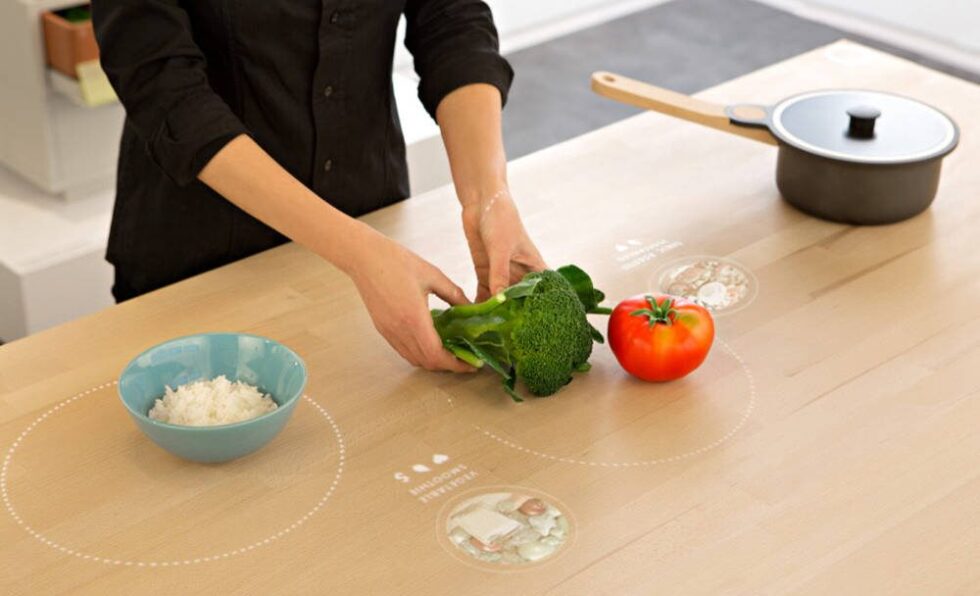
The Future of Cooking: Benefits and Challenges
Beyond convenience, smart kitchens offer tangible benefits that address some of the most pressing modern challenges, from food waste to energy efficiency. By providing precise control over cooking temperatures and monitoring ingredients in the fridge, smart technology can significantly reduce energy consumption and prevent food from spoiling. This contributes to both a more sustainable lifestyle and significant cost savings. However, the rise of smart kitchens is not without its challenges. The high initial cost, potential privacy concerns, and cybersecurity risks are all factors that need to be addressed.
Enhancing Safety, Efficiency, and Health
The benefits of a connected kitchen extend beyond simple automation. Safety is a major advantage, as smart cooktops can automatically shut off when left unattended, and smart smoke detectors can send instant alerts to your phone. Healthier cooking is also made easier, as precise temperature controls allow you to achieve perfect results every time, ensuring food is cooked to the right doneness without losing nutrients. Yet, the technology’s reliance on data collection and network connectivity raises important questions about privacy and security.
- Benefits: Food waste reduction, enhanced energy efficiency, improved safety features, and simplified healthy cooking.
- Challenges: High initial investment cost, privacy and data security concerns, and potential technical dependency.
As the industry matures, manufacturers are increasingly prioritising user security and developing robust protocols to protect personal data. The cost of smart appliances is also expected to decrease as the technology becomes more widespread. The long-term success of smart kitchens hinges on their ability to overcome these challenges and prove their value beyond mere novelty.
The smart kitchen is transforming homes by integrating technology to create a more efficient, convenient, and safe environment. The UK, with London at its heart, is a key market driving this revolution, fueled by a tech-savvy population and a robust ecosystem of innovators. While challenges related to cost and privacy exist, the benefits of reduced food waste, enhanced safety, and greater efficiency are undeniable. The kitchen is rapidly becoming the central hub of the modern home, a smart and intuitive space that is here to stay.
Read about the life of Westminster and Pimlico district, London and the world. 24/7 news with fresh and useful updates on culture, business, technology and city life: The Unseen Revolution: How 5G and 6G are Reshaping Our World.