
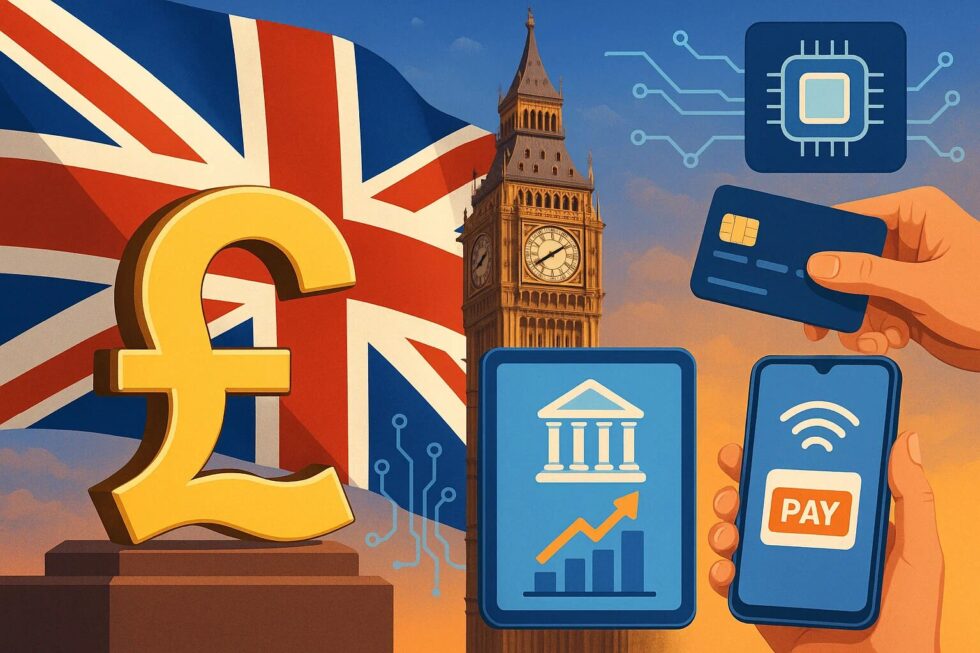
FinTech and Open Banking have become central to the financial landscape of the United Kingdom, reshaping how millions of people pay, save, and interact with their money. Over the past five years, the UK has positioned itself as a European leader in innovation, regulatory experimentation, and consumer adoption. Digital wallets, API-driven platforms, and instant peer-to-peer transfers are no longer fringe experiments; they are daily tools for both consumers and businesses. The competition between traditional banks and fintech startups is driving rapid transformation, with customer expectations and trust at the heart of the debate. At the same time, questions of security, regulatory oversight, and cross-border standards remain. As adoption accelerates, the UK offers a glimpse into the global future of digital finance, shaping trends that go far beyond its borders. For more insights, visit The WP Times.
How Are UK Consumers Responding to Open Banking Services
British consumers have been both enthusiastic and cautious in their adoption of open banking solutions. According to the UK’s Open Banking Implementation Entity (OBIE), more than 7.5 million individuals and businesses were using open banking services by mid-2025. This represents a sharp rise from just 1 million in 2020, showing exponential growth in trust and daily use. However, adoption rates differ by age group: millennials and Gen Z are driving the bulk of usage, especially for budgeting apps and real-time payment services, while older demographics remain more attached to traditional online banking. Consumer surveys reveal that convenience and cost savings are the primary drivers for switching, while data security remains the biggest concern.
- Over 65% of users say they use open banking apps at least once a week.
- More than 45% report cost savings by using budgeting and switching services.
- About 30% still express concern over data sharing with third parties.
- Younger users (18–34) are nearly twice as likely to adopt fintech solutions compared to over-50s.
What Are the Main Security Challenges in Open Banking
Security is the defining factor for the long-term success of digital finance. Open Banking in the UK is based on strong customer authentication (SCA) under the EU’s PSD2 regulations, requiring multi-factor authentication for every transaction. Despite this, phishing and social engineering attacks remain a major risk. Criminals increasingly target consumers with fake fintech apps or fraudulent APIs designed to capture login credentials. To counter this, UK regulators have introduced tighter rules for API testing, monitoring, and certification. Banks and fintechs must now share real-time data about fraud attempts, making security a collective effort.
Financial watchdogs highlight three primary areas of concern:
- Phishing and malware targeting fintech apps.
- API vulnerabilities that expose transaction data.
- Consumer awareness gaps in recognizing fraudulent platforms.
The British Banking Association also notes that banks spend over £1 billion annually on cyber defense systems, while fintech startups often lack the same scale of resources, leaving them more exposed.
How Do Regulations Shape the FinTech Market
The UK’s regulatory framework is widely considered one of the most advanced in Europe. The Financial Conduct Authority (FCA) has established regulatory sandboxes where startups can test new digital products under supervision. This has attracted foreign companies seeking a safe yet flexible environment. According to government data, over 200 fintech firms have passed through FCA sandboxes since 2016.
Regulation has also focused on consumer data rights, making it mandatory for banks to provide standardized API access. This gives smaller fintechs an equal playing field to compete with legacy institutions. However, ongoing debates focus on how much liability banks should carry for third-party data misuse. Critics argue that current rules put too much burden on consumers to understand complex data-sharing agreements.
- FCA sandbox programs attract startups from over 40 countries.
- UK fintechs raised over £11 billion in investment in 2024, more than any other European market.
- Consumer protection laws require clear data usage consent, yet many users admit they “accept terms without reading.”
Competition Between Traditional Banks and FinTech Startups
Competition has become one of the defining features of the UK’s fintech scene. Traditional banks like Barclays, HSBC, and Lloyds have launched their own mobile-first platforms to retain younger users. Meanwhile, challengers such as Monzo, Starling Bank, and Revolut continue to expand aggressively. By 2025, Monzo reached 9 million customers, while Revolut surpassed 40 million global users.

The lines between traditional banking and fintech are blurring:
- Major banks are partnering with startups for payment and identity verification.
- Challenger banks are offering mortgages, business accounts, and even investment services.
- Price competition has intensified, with many fintech accounts offering zero monthly fees compared to traditional £5–£15 fees.
- Customer experience is the key battleground, with mobile apps setting the standard for personalization.
For consumers, this translates into more choice, lower fees, and faster innovation. But for regulators, the pace of competition raises questions about financial stability if a major fintech were to collapse.
Digital Payments: The Everyday Driver of FinTech Growth
Digital payments are the most visible success story of fintech in the UK. Contactless transactions, once considered a novelty, now account for over 60% of all card payments. Digital wallets such as Apple Pay, Google Pay, and PayPal are widely accepted across retail, transport, and hospitality. Meanwhile, QR-based payments are gaining traction in smaller businesses, driven by cost-effective solutions like SumUp and Square.
Key payment adoption trends include:
- Contactless payment limit increased to £100 in 2021, boosting transaction volumes.
- Over 90% of London public transport rides are paid digitally.
- UK businesses save an estimated £1.2 billion annually by reducing cash handling.
- Cryptocurrency payments remain niche but are increasingly accepted by online retailers.
This rapid digitalization also raises questions about cashless society risks, including financial exclusion for older and rural populations.
The Future of FinTech and Open Banking in the UK
Looking forward, the UK is likely to remain at the forefront of fintech innovation. Analysts predict that by 2030, more than 80% of all banking interactions will take place via digital channels. Artificial intelligence will drive smarter credit scoring, fraud detection, and personalized offers. At the same time, international collaboration is expected to grow, with the UK setting global API standards for cross-border banking.
However, the sector’s growth is not guaranteed. Startups face increasing competition, rising compliance costs, and pressure from big tech companies entering the finance space. Consumers will ultimately decide which services thrive, based on trust, transparency, and convenience. The UK’s role as a testing ground will remain critical, influencing not only Europe but global markets.
Comparative Overview of UK FinTech vs. EU Counterparts
The UK continues to outpace most European countries in fintech adoption, but competition is rising.
| Country | FinTech Investment 2024 | Open Banking Users | Regulatory Sandbox Availability |
|---|---|---|---|
| United Kingdom | £11.1 billion | 7.5 million+ | Yes, FCA Sandbox |
| Germany | £5.4 billion | 3.2 million | Limited pilot projects |
| France | £3.8 billion | 2.7 million | Yes, but smaller scale |
| Poland | £1.2 billion | 0.9 million | Developing framework |
| Spain | £2.6 billion | 1.8 million | Early stage programs |
Read about the life of Westminster and Pimlico district, London and the world. 24/7 news with fresh and useful updates on culture, business, technology and city life: How Will the UK’s Demand for Apple User Data Redefine Privacy and Tech Law