

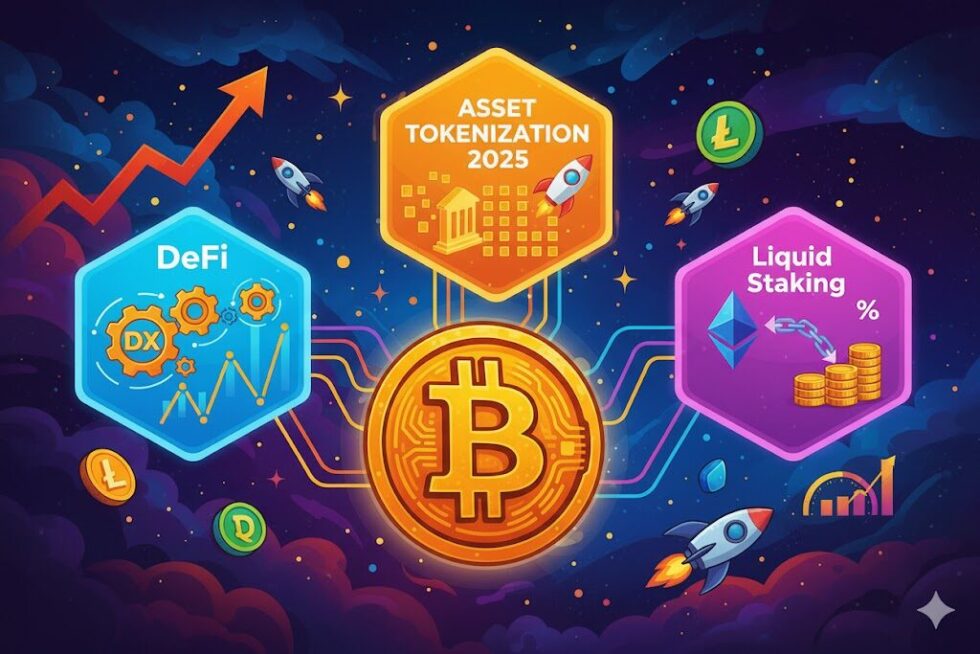
Crypto market trends 2025 are reshaping the financial landscape as decentralized finance (DeFi), real asset tokenization, and liquid staking gain mainstream adoption. Investors are increasingly looking beyond traditional cryptocurrencies, exploring tokenized real estate, artwork, and bonds as new avenues for diversification. Blockchain protocols are integrating more sophisticated smart contracts, enabling seamless interaction between digital and real-world assets. Liquid staking platforms are offering higher yields while maintaining liquidity, attracting institutional players seeking flexible opportunities. DeFi adoption continues to expand globally, with innovative platforms providing lending, borrowing, and yield farming solutions. Regulatory clarity is slowly improving, helping bridge traditional finance with blockchain innovations. Understanding these trends is crucial for both retail and professional investors to ensure informed decision-making. As The WP Times notes, staying updated on these developments is key for navigating this rapidly changing market.
The Rise of DeFi in 2025
The DeFi sector has grown exponentially in 2025, with total value locked (TVL) surpassing $300 billion according to industry reports. Decentralized exchanges (DEXs) and lending protocols are becoming more sophisticated, offering cross-chain solutions and enhanced security features. Automated market makers (AMMs) now support multi-asset pools, improving liquidity efficiency and reducing slippage. Institutional participation is rising, with large funds deploying capital through regulated DeFi gateways. Risk management tools such as decentralized insurance and yield hedging are gaining traction among professional investors. Smart contract auditing has become standard practice to minimize vulnerabilities. User interfaces are increasingly intuitive, making DeFi accessible for retail users. Integration with traditional banking systems allows fiat on-ramps into the DeFi ecosystem, bridging the gap between conventional finance and blockchain solutions.
Top DeFi Platforms in 2025:
| Platform | Key Feature | TVL 2025 ($B) | Notes |
|---|---|---|---|
| Uniswap V5 | Multi-asset AMM pools | 35 | Cross-chain support |
| Aave Protocol | Lending/Borrowing | 45 | Institutional adoption |
| MakerDAO | Collateralized stablecoins | 28 | Risk management innovations |
| Lido | Liquid staking integration | 32 | ETH and Solana support |
Tokenization of Real-World Assets
Tokenization allows physical assets to be represented as digital tokens on a blockchain, creating liquidity and accessibility. In 2025, sectors like real estate, art, and bonds are leading this trend. Real estate tokenization enables fractional ownership, allowing investors to buy portions of high-value properties without the traditional barriers. Artwork and collectibles are being tokenized, granting provenance verification and fractional investment opportunities. Bonds and fixed-income securities are entering blockchain markets, providing real-time settlement and transparency. Platforms bridging traditional and digital assets are emerging in Europe and the US, offering compliant investment channels. Legal frameworks are evolving to recognize digital ownership rights, enhancing investor confidence. Combining tangible assets with blockchain technology is creating a hybrid financial ecosystem, integrating traditional investments with modern digital tools.
Examples of Tokenized Assets:
- Real estate: Fractional ownership of commercial buildings in Warsaw, Krakow, and Berlin.
- Art: Digital tokens representing shares in fine art collections; NFT certificates of authenticity.
- Bonds: Government and corporate bonds issued via blockchain for instant settlement.
- Commodities: Tokenized gold and silver with verified custody.
Liquid Staking as a Game Changer
Liquid staking enables crypto holders to earn staking rewards while keeping assets liquid for other investments. In 2025, liquid staking protocols support major proof-of-stake networks like Ethereum, Solana, and Polkadot. Investors can stake tokens and simultaneously use staked derivatives for lending, trading, or liquidity provision. This innovation reduces opportunity costs associated with traditional staking, offering more flexible capital allocation. Platforms such as Lido, Rocket Pool, and StakeWise dominate the market, offering high yields and reliable security. Liquid staking enhances network security by increasing the total staked amount while maintaining liquidity. Risks remain, including smart contract vulnerabilities and derivative liquidity challenges, but ongoing audits and decentralized governance mechanisms are mitigating these concerns. For investors, liquid staking provides a balance between yield generation and portfolio flexibility, attracting both retail and institutional participants.
Top Liquid Staking Protocols (2025):
| Protocol | Supported Network | Estimated Yield (%) | Notes |
|---|---|---|---|
| Lido | Ethereum, Solana | 4–7 | Large institutional adoption |
| Rocket Pool | Ethereum | 5–6 | Decentralized validator network |
| StakeWise | Ethereum | 4.5–6 | Flexible staking derivatives |
Regulatory Landscape and Market Integration
The regulatory environment in 2025 is gradually catching up with blockchain innovations. Countries like Germany, Switzerland, and Singapore have introduced clear frameworks for tokenized assets and DeFi platforms. Regulatory clarity is critical for attracting institutional investors and ensuring compliance with AML/KYC standards. European Union directives, such as MiCA (Markets in Crypto-Assets), aim to harmonize digital asset rules across member states. Compliance-focused platforms now integrate automated reporting tools to meet global standards. Market integration between traditional finance and blockchain ecosystems is accelerating, enabling banks to offer tokenized investment products. Legal and technical audits are becoming mandatory for projects seeking mass adoption. These measures collectively increase trust, reduce systemic risk, and provide a stable environment for investor participation.
Key Regulatory Trends:
- MiCA (EU) framework adoption for digital assets.
- AML/KYC compliance automation on DeFi platforms.
- Custodial partnerships with traditional banks.
- Legal recognition of tokenized real-world assets.
Future Outlook and Investor Strategies
Experts predict sustained growth for DeFi, tokenized assets, and liquid staking in 2025 and beyond. Investors should diversify portfolios across multiple platforms and asset classes to mitigate risks. Risk assessment must include smart contract audits, regulatory compliance, and network security. Staking derivatives and tokenized real-world assets can serve as hedges against market volatility. Technological adoption will continue accelerating, with cross-chain solutions improving interoperability. Platforms offering transparent reporting and real-time analytics will gain competitive advantages. Collaboration between regulators and crypto innovators is expected to reduce legal uncertainty. A strategic approach combining education, due diligence, and diversified investments will maximize returns while minimizing risk exposure.
Investor Strategies for 2025:
- Diversify across DeFi protocols and tokenized assets.
- Monitor yield trends and staking rewards.
- Verify regulatory compliance before investing.
- Use cross-chain solutions for liquidity optimization.
- Stay updated with market and protocol innovations.
Read about the life of Westminster and Pimlico district, London and the world. 24/7 news with fresh and useful updates on culture, business, technology and city life: How Will Market Abuse Regulations Affect Cryptoassets in the UK