
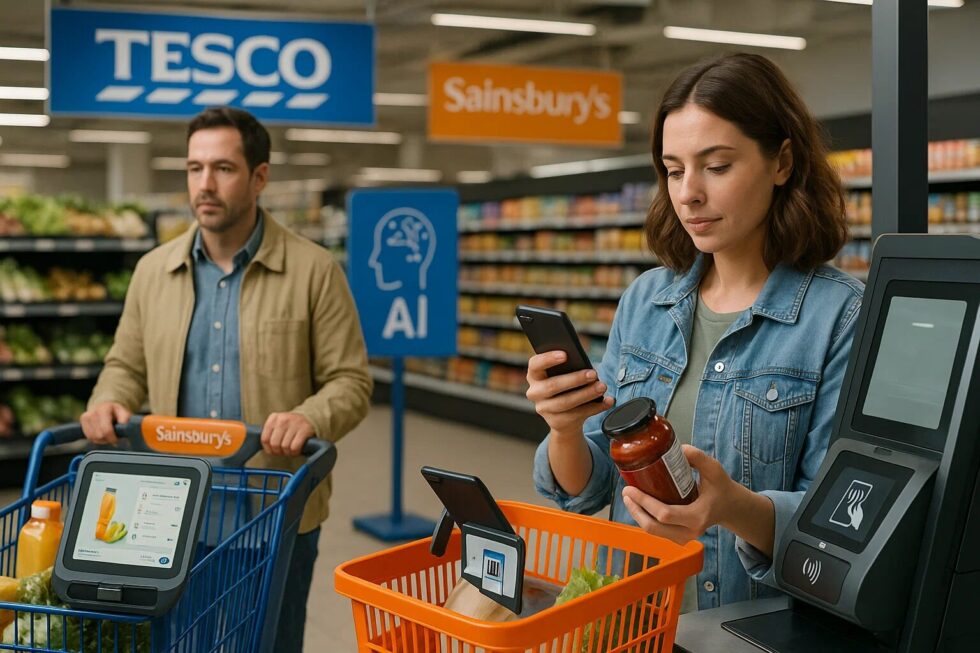
Smart retail is revolutionizing how people shop in the UK. With the rise of AI-powered checkouts, cashierless stores, and robotic warehouses, retailers like Tesco and Sainsbury’s are leading the transformation of the grocery sector. These technologies not only cut operational costs but also improve customer experience through faster service and personalized offers. In London, Manchester, and Birmingham, customers can already walk into a store, pick up what they need, and leave without ever scanning a barcode. The integration of computer vision, sensors, and AI analytics is making this seamless experience possible. As consumer expectations evolve, automation is becoming essential to stay competitive in the retail industry. As noted by The WP Times, this shift represents one of the biggest technological transformations in Europe’s supermarket sector.
The rise of cashierless stores: How Tesco and Sainsbury’s are redefining shopping
Over the past three years, Tesco’s GetGo stores and Sainsbury’s SmartShop Pick & Go have turned the idea of cashierless retail into reality. Tesco opened its first AI-powered store in High Holborn, London, in 2021, allowing customers to check in via an app, shop freely, and leave without visiting a till. Cameras, weight sensors, and computer vision systems track the products customers take from shelves, automatically charging their accounts after they exit. Sainsbury’s quickly followed with its own solution developed in partnership with Amazon’s Just Walk Out technology.
The main benefit is speed — the average shopping trip in such stores takes under 5 minutes. However, the companies also emphasize hygiene and data-driven efficiency. Each transaction provides valuable information on customer behavior, helping to optimize stock and reduce waste. While privacy concerns exist, UK regulators have set strict guidelines for data protection in AI-assisted environments.
Key benefits of cashierless retail in the UK include:
- Shorter queues and faster checkout times
- Reduced labor costs and higher efficiency
- Improved stock management through real-time data
- Enhanced customer satisfaction
- Lower waste and better sustainability metrics
- Real-time AI analytics for predicting demand
- Integration with loyalty programs and digital receipts
Inside robotic warehouses: Automation and logistics at Tesco and Sainsbury’s
Behind the scenes, automation is transforming how products move from suppliers to shelves. Tesco and Sainsbury’s have heavily invested in robotic warehouses, where AI-controlled systems pick, pack, and dispatch groceries at record speed. Tesco’s Ocado-powered fulfillment centers in Hatfield and Andover are equipped with thousands of autonomous robots that can complete an order in less than five minutes. Similarly, Sainsbury’s has introduced automated sorting systems to handle high-demand items and streamline deliveries.
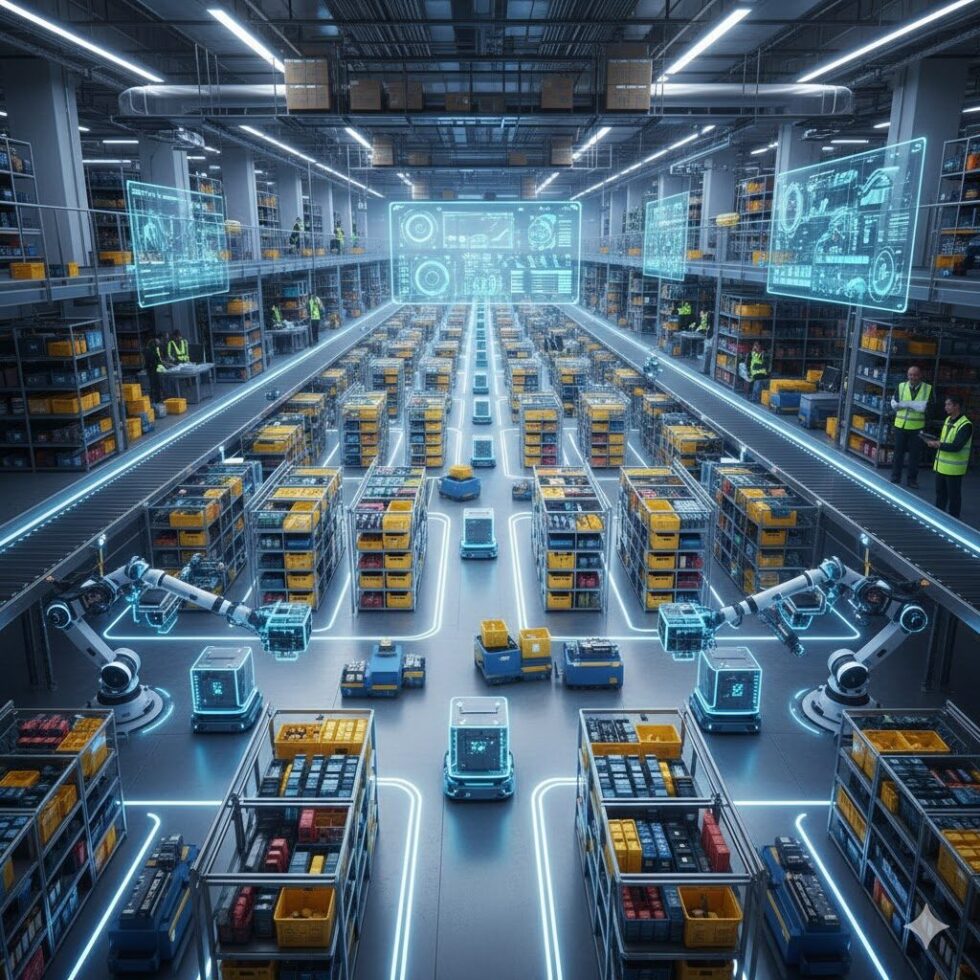
These innovations are not only about speed but also about resilience. During the pandemic, automated warehouses allowed both retailers to maintain supply chains despite staff shortages. The precision of robotic systems also reduces human error, leading to fewer returns and higher customer satisfaction. Analysts estimate that full automation can cut logistics costs by 20–30%, giving UK supermarkets a strong competitive advantage against discount chains.
Main technologies used in modern UK retail logistics:
| Technology | Function | Retailer | Efficiency Gain |
|---|---|---|---|
| Automated Picking Robots | Collect and pack items | Tesco, Sainsbury’s | +30% speed |
| AI Predictive Analytics | Forecast demand | Tesco | +25% accuracy |
| Smart Sorting Systems | Organize deliveries | Sainsbury’s | +40% efficiency |
| IoT Shelf Sensors | Monitor stock in real-time | Tesco | -15% waste |
| Delivery Drones (pilot) | Last-mile logistics | Tesco | Under testing |
AI-driven checkout and computer vision: From frictionless shopping to smarter data
AI checkout systems use a combination of machine learning, computer vision, and weight sensors to identify what shoppers pick up. This technology doesn’t just streamline transactions — it generates valuable insights about consumer habits. Tesco’s and Sainsbury’s AI systems can identify purchase patterns, analyze which shelves customers visit most, and adjust product placement in real time.
Retailers argue that such systems can make shopping “invisible but intelligent.” For example, Tesco’s AI detects when a customer lingers near a new product and may later suggest personalized offers through the Tesco Clubcard app. AI also improves inventory management by automatically predicting which products will sell out first during weekends or holidays. These technologies reduce overstocking and allow more sustainable use of storage space.
Examples of AI applications in UK retail:
- Real-time object recognition and product tracking
- Automatic pricing updates based on supply and demand
- Fraud detection through facial and behavioral analysis
- Integration with digital wallets and mobile banking
- AI assistants for in-store navigation and recommendations
Personalized marketing: How data creates custom shopping experiences
Personalization has become the next big frontier in retail. Tesco and Sainsbury’s use AI analytics to study millions of transactions and provide tailored promotions. Tesco’s Clubcard program is one of the largest loyalty schemes in Europe, with more than 20 million active users. AI algorithms track purchase history, time of visit, and preferences to generate personalized coupons and email campaigns.
Sainsbury’s applies similar techniques through its Nectar loyalty system, offering individualized deals that increase engagement and spending. According to market data, personalized marketing campaigns improve conversion rates by 35% and increase basket size by 20%. Furthermore, predictive AI can anticipate when a customer might run out of a product and send a timely discount offer.
Most common personalization strategies in UK supermarkets:
| Strategy | Description | Example |
|---|---|---|
| Predictive Offers | Suggesting items before the customer runs out | Tesco Clubcard reminders |
| Behavioral Targeting | Ads based on in-store movement | SmartShop tracking |
| Dynamic Pricing | Adjusting prices in real-time | AI-linked shelves |
| Email Customization | Tailored weekly promotions | Nectar program |
Challenges and ethical concerns in AI retail
Despite the advantages, the AI-driven retail model raises serious ethical and operational questions. Consumer privacy remains a key issue. While Tesco and Sainsbury’s claim that all facial recognition data is anonymized and stored securely, advocacy groups warn about the potential for misuse. Additionally, automation reduces the need for cashiers, which may affect employment levels in local communities.
Another challenge lies in technology reliability. Any malfunction in AI systems can cause billing errors or incorrect stock reporting. Furthermore, some customers feel uncomfortable being constantly tracked by cameras and sensors. Retailers have responded by improving transparency and ensuring customers can opt out of data collection.
Main challenges for AI-driven retail in the UK:
- Data protection and privacy compliance (GDPR)
- Job reduction and social impact
- System maintenance costs
- Customer trust and acceptance
- Dependence on high-quality network infrastructure
What’s next: The future of AI and automation in British supermarkets
Experts predict that within the next five years, AI-powered retail will become mainstream across the UK. Tesco plans to expand its GetGo network nationwide, while Sainsbury’s is testing new hybrid models that combine traditional tills with AI-assisted systems. By 2030, over 60% of all supermarket logistics could be automated.
Emerging technologies such as voice assistants, augmented reality shopping, and autonomous delivery robots are also gaining traction. The combination of AI and 5G networks will further improve real-time data sharing between stores and warehouses. Analysts suggest that UK retailers investing early in smart technologies could see profitability increase by up to 50% by the end of the decade.
Predicted future trends in UK smart retail:
- Expansion of AI-driven micro-fulfillment centers
- Growth of self-learning pricing systems
- Integration with smart home devices
- Autonomous delivery vehicles
- Zero-waste digital supply chains
Read about the life of Westminster and Pimlico district, London and the world. 24/7 news with fresh and useful updates on culture, business, technology and city life: What Drives the New India–UK Tech Alliance? How £1.3 Billion Could Reshape Britain’s Digital Future