
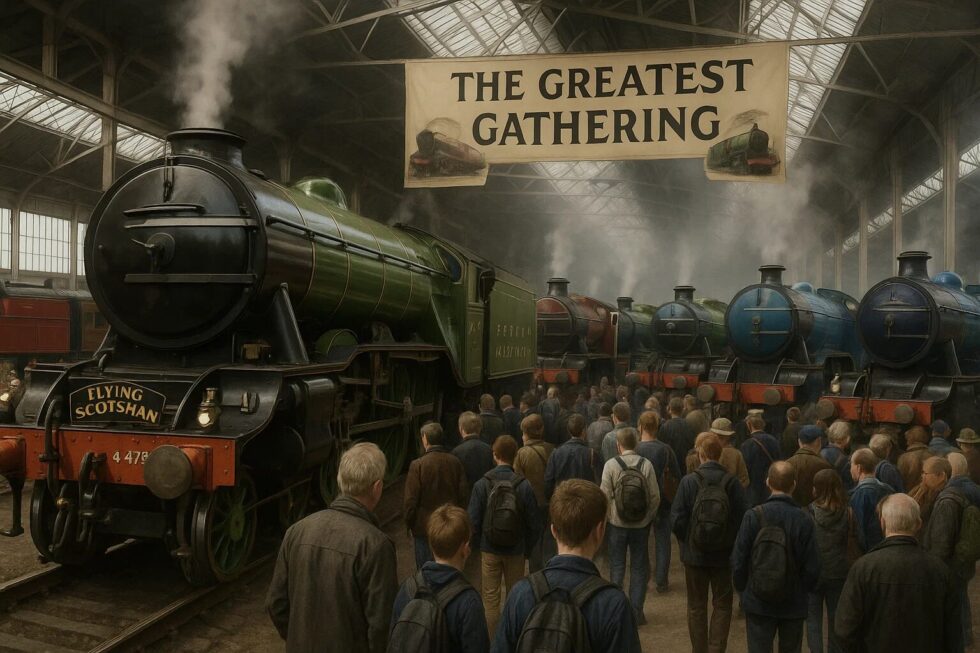
The Greatest Gathering was a spectacular three-day railway exhibition held from 1 to 3 August 2025 at Derby’s historic Litchurch Lane Works. This event brought together more than 140 locomotives and carriages—from the earliest steam machines to cutting-edge modern electric and battery trains—to create the largest ever assembly of railway rolling stock in UK history. As the flagship celebration of the Railway 200 bicentenary, it drew tens of thousands of visitors eager to explore both heritage and innovation in rail transport. As notes the editorial team at The WP Times, this event marked a turning point in how the public engages with railway heritage and future mobility. Across the sprawling 90-acre site, visitors enjoyed live train rides, interactive STEM exhibits, music and culture events, and unique behind-the-scenes factory tours. The scale, ambition, and execution drew comparisons with major world festivals—and even for railway enthusiasts it was unprecedented. In this article we delve into the full story: how it was organized, what was displayed, and what lasting legacy it may leave in Britain’s railway story.
The Vision and Organization of The Greatest Gathering
Alstom, the global rail manufacturer, organized the event in partnership with heritage groups and the Railway 200 campaign. Litchurch Lane Works, Derby, the venue, was opened in 1876 by Midland Railway and has been building trains continuously since 1839. It was the first time in almost 50 years that the factory was opened to the public in this way. The event formed a centrepiece of the nationwide Railway 200 celebrations, marking 200 years since the Stockton & Darlington Railway of 1825.
Ticketing was intense: in January 2025, some 10,000 tickets per day were released; the event quickly sold out. Prices were set at £30 for adults, £15 for children (ages 5–15), and a family ticket (2 adults + 2 children) for £65. Children under five entered free. Logistics were formidable: some 800 internal shunting moves were required to position all rolling stock inside the site. A VIP opening took place on 31 July 2025, preceding the public opening, with speeches by railway dignitaries and performances.
Below is a breakdown of the organizational pillars:
| Organizational Pillar | Key Details |
|---|---|
| Venue | Derby Litchurch Lane Works, DE24 8AD, 90 acres |
| Partner Campaign | Railway 200 bicentenary of modern rail (since 1825) |
| Exhibits | Over 140 vehicles spanning steam, diesel, electric, modern units |
| Ticketing | Sold out; adult/child/family pricing structure |
| Logistics | 800 shunting moves, internal site traffic, display layouts |
| Supporting Events | STEM hub, music, street food, model railways, test track rides |
With its scale and scope, The Greatest Gathering was engineered to be more than a static exhibition—it was a living festival of rail.
What Visitors Saw: Icons, Innovation, and Interactive Experiences
Over 140 locomotives and carriages were exhibited, from the oldest surviving examples to futuristic modern units. Key steam displays included Locomotion No. 1 (built 1825), Furness Railway No. 20 (1863), and the Derby-built Midland Railway 1000 Class No. 1000 (1902) Perhaps the most celebrated locomotive was the Flying Scotsman (LNER A3 No. 60103), which took centre stage during the event. On Saturday 2 August, Flying Scotsman briefly hauled the Belmond British Pullman special charter train as part of a cavalcade. Modern and future rail tech was also present: Alstom displayed new units such as the Class 720 Aventra, and a Derby-built Class 345 EMU ran on the internal test track (1.4 km) during the event.
In the workshops, interactive zones included a STEM Hub showcasing rail engineering, and a model railway village with elaborate OO-gauge displays (including Pete Waterman’s Making Tracks 3).
Visitors could ride on steam, diesel, and electric-hauled trains, even the Victorian narrow-gauge locomotive Prince (1863 vintage) offered rides. Talks, performances, documentary premieres (including An Unlikely Fandom: The Impact of Thomas the Tank Engine), and music programs complemented the static displays.
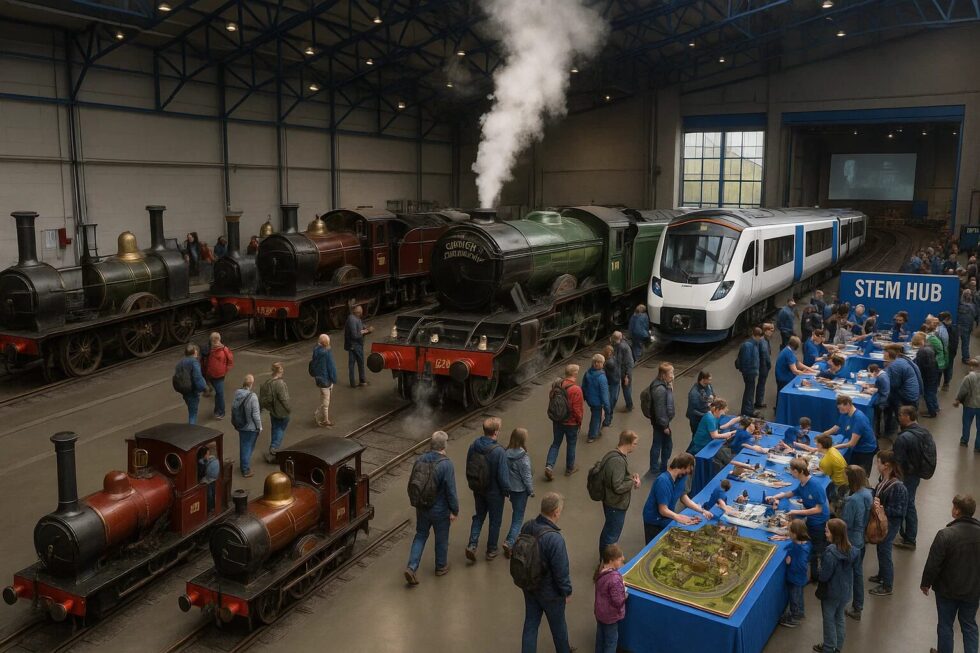
Here is a summarised list of exhibit categories and visitor experiences:
- Heritage steam and early locomotives
- Diesel and electric traction from mid to late 20th century
- Cutting-edge new units and prototypes
- Test-track rides (1.4 km loop)
- STEM interactive displays
- Model railway layouts and villages
- Music, talks, cultural events
- Factory tours, behind-the-scenes access
This breadth allowed attendees of all ages to engage—from history buffs to young STEM enthusiasts.
Attendance, Impact, and Public Reaction
The event is estimated to have drawn nearly 40,000 visitors across the three days.
This far exceeded initial modest projections (which originally envisaged just 5,000 visitors and 30–50 exhibits). The event sold out in advance, and public demand overloaded the ticketing system at times.
Attendees came from across the UK and abroad, drawn by the rare opportunity to see so many railway icons in one place. Local and trade media offered extensive coverage, with drone footage capturing sweeping views of the locomotives arrayed across the yard. Social media was full of visitor photos and enthusiasm: many commented on the visual spectacle of steam and modern trains side by side.
The event also drew interest as a window into Derby’s industrial heritage—reviving public appreciation for historical factory spaces. Government and industry figures participated and praised the event; the UK Rail Minister called it “entering the history books as the largest exhibition of railway equipment ever staged in the UK.”
Impact highlights in bullet form:
- 40,000 visitors across 3 days
- Wide national and international media exposure
- Renewed public awareness of Derby’s rail legacy
- Strong social media amplification
- Political and industry endorsement
The Greatest Gathering proved that railway heritage still commands mass appeal when presented at this scale.
Challenges, Logistics, and Lessons Learned
Bringing together 140+ locomotives on one site posed massive logistical challenges.
The 800 internal shunting moves, track reconfiguration, and yard layout design demanded months of planning. Site safety, crowd management, and access to workshops had to be carefully engineered, including visitor routes through working railway spaces. The internal test track (1.4 km) was used to run demonstration rides, requiring scheduling coordination with exhibit movements. Power supply, signaling, and event infrastructure (e.g. lighting, staging, sound systems) had to integrate with railway operational standards. Ticketing systems struggled under heavy demand; initial online sales had to be paused temporarily due to system overload. Weather risk across early August in Derby would always have been a factor; contingency planning was essential for outdoor exhibits. (While no major disruptions are reported, large outdoor events always require weather buffers.)
Lessons for future events: earlier ticket scaling, modular layout flexibility, redundant IT systems for ticketing, and more buffer for last-minute shunting or operational delays.
In summary, the scale was ambitious—but largely successful, and upcoming rail heritage events now have a benchmark to aspire to.
What The Greatest Gathering Means for the Future of UK Rail Heritage
This event set a new standard in presenting railway history as immersive festival rather than static museum.
It demonstrated that heritage and future rail can be integrated in a single narrative—bridging steam, diesel, and modern EV traction.
Public engagement is revived: many young people were drawn to STEM hubs and model displays, potentially inspiring future railway professionals.
For Derby and Alstom, it reaffirmed the industrial and cultural significance of Litchurch Lane Works to Britain’s rail identity.
The event also underlined rail’s role in sustainable mobility narratives, especially as the UK transitions to greener transport.
Profits from the event were allocated to Railway 200 charity partners (e.g. Alzheimer’s Research UK, Railway Benefit Fund, Railway Children).
Media coverage and social buzz may help spur greater government and public investment in heritage rail infrastructure.
Finally, this expo may become a template: future gatherings could rotate among regional heritage sites across Britain, tying local history into national rail narratives.
Practical Tips & Advice for Railway Enthusiasts and Organisers
If planning to attend such a gathering in future:
- Book early — tickets will sell out; premium experiences often require premium booking windows.
- Plan your days — some exhibits or rides may run only certain times — check daily schedules in advance.
- Arrive early — avoid queues, get best vantage for dynamic displays or cavalcades.
- Layer your exploration — balance static exhibits, rides, and talks rather than trying to see everything superficially.
- Prepare for weather — bring rain gear and sun protection; some areas may be exposed tracks or yards.
- Engage with STEM and model zones — great for younger visitors and deeper understanding of rail tech.
- Use shuttle services — such events often provide transport links from train stations or parking sites.
- Document but respect safety zones — photography is welcomed, but stay within visitor-approved routes.
For event organisers or heritage bodies:
- Allow ample lead time (12–18 months) for planning site layout and logistics.
- Modular track and yard design can allow for adaptable positioning.
- Redundant ticketing infrastructure is a must under heavy demand.
- Integrate interactive zones (STEM, VR, augmented reality) to appeal to younger audiences.
- Communicate clearly about access, schedules, and safety.
- Build partnerships with heritage societies, charity groups, and media for broader reach.
- Ensure legacy plans: after the event, keep public engagement through exhibits, touring shows, or follow-up content.
Read about the life of Westminster and Pimlico district, London and the world. 24/7 news with fresh and useful updates on culture, business, technology and city life: Why Is Compass Music Festival 2025 Becoming Kent’s Most Influential Cultural Event