
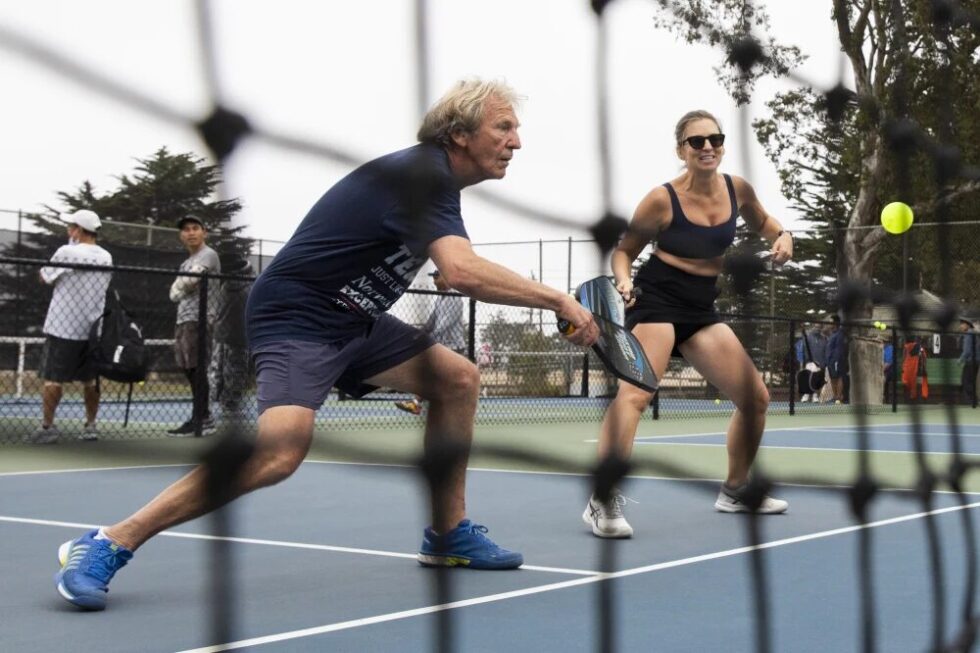
Pickleball London is rapidly emerging as a dominant sport trend across the capital, drawing players of all ages and backgrounds into its fold. Pickleball courts are being added more frequently in leisure centres, parks and multi-use sports halls, often converting existing tennis or badminton space. Compared to tennis and padel, pickleball offers lower cost of entry – beginners can rent paddles and balls, and court hire tends to be cheaper, especially off-peak. The game requires less physical strain than tennis, making it appealing to older players, mixed-age groups, or those seeking social sport with lower injury risk. It is also easier to learn: the rules are simpler, the court is smaller, and rallies begin faster, giving new players immediate feedback and enjoyment. Many clubs across London are organising weekly social games and mini-tournaments that don’t require prior experience, which helps build community and momentum. As sport participation in the UK continues to grow for racket sports like padel and pickleball, London appears to be leaning more heavily toward pickleball because of its convenience, cost-effectiveness, and social appeal. As highlighted by The WP Times, the pattern in many European cities mirrors what’s happening in London, where infrastructure and demand are aligning to favour pickleball.
Rapid Growth of Pickleball Infrastructure in London
London has seen a notable uptick in infrastructure dedicated to pickleball over the past few years. Multi-use courts in sports centres such as Chelsea Sports Centre, Swiss Cottage Leisure Centre, and Battersea Sports Centre have added pickleball sessions to their schedules, often out of necessity to meet demand. Many of these courts are shared spaces – badminton or tennis courts adapted with temporary nets and lines – but pressure is increasing to build dedicated indoor and outdoor pickleball courts. Local councils have started exploring dual-use tennis courts where pickleball lines are painted alongside tennis markings; for instance, Wandsworth Park has already considered this. Booking data from leisure centres show that many time slots for pickleball are filling up, with waiting lists forming, especially during evenings and weekends. Organised competitive play is also emerging: in 2023, London hosted regional qualifiers for the English National Pickleball Championships. Costs of court hire in these multi-use venues are generally lower than padel – new players in London often pay £12-£15 per session for pickleball, though prices vary heavily by location, time, and membership status. Some indoor venues charge more during peak hours, but even then, the cost remains lower compared to padel courts in similar areas. These factors combine to make pickleball more accessible, especially to casual players or those who want to try racket sports without committing large sums for membership or expensive equipment.
How It Compares: Tennis, Padel, and Pickleball in London
London faces constraints in space, cost, and usage patterns that favour sports with smaller courts, adaptable formats, and lower setup time. Tennis, while long established with many public courts, suffers from higher maintenance, larger court size, more demanding physical requirements, and higher court hire fees in private venues. Padel, although growing rapidly across the UK, is still relatively expensive: its courts are larger than pickleball courts, enclosed with walls (glass or mesh), which raises construction and maintenance costs. The booking demand for padel in London tends to be strong, but peak times and high membership fees can put off beginners. Equipment for padel is generally costlier (rackets, balls), and access to padel courts is still far more limited than for tennis or pickleball. Pickleball, by contrast, uses simpler equipment, smaller courts (a pickleball court is approximately 6.10m × 13.41m), can repurpose existing indoor courts, doesn’t require walls, and provides a gentler learning curve. All of that makes pickleball more flexible, affordable, and inclusive in the London context where space and costs are at a premium.
Barriers Still Facing Padel and Tennis
Even though tennis has legacy infrastructure and a cultural history, it is facing challenges in London: aging courts, high fees for private clubs, the difficulty of getting lessons or coaching at affordable price, and physical strain for older or less fit players. Padel, while trendy, has high cost barriers: for example, padel court hire in London private or rooftop or premium gym venues can cost £50-£75/hr peak or more. Equipment cost is also higher for padel rackets. Also, because padel requires enclosed courts (glass walls or mesh), weatherproofing and structure are necessary, increasing overheads. The limited number of padel courts in London means booking is competitive, which further raises perceived cost. Conversely, tennis still remains popular in parks and public courts, with many free or low-cost options, but the larger court size, slower pace for beginners, and perceived intimidation by competitive play keep some potential players away. For many people, pickleball lowers those barriers: less intimidation, cheaper gear, smaller court, faster rallies, more social interaction.
Cost, Accessibility, and Social Appeal
Below is a comparison of costs, learning curve, and other practical features of Pickleball vs Padel vs Tennis in London or UK broadly. (These numbers are approximate and vary by venue, but reflect typical ranges as of 2025.)
| Feature | Pickleball | Padel | Tennis |
|---|---|---|---|
| Court size required | ~6.10m × 13.41m, can repurpose badminton/tennis courts | ~20m × 10m enclosed courts with walls | 23.77m × 8.23m (singles), or more for doubles |
| Court hire cost (private venues, peak) | £12-£25/hour (multi-use courts, smaller venues) | £50-£75/hour (private, rooftop, premium gyms) | £20-£40/hour (private courts), public courts cheaper |
| Equipment cost (starter set) | Paddle ~£30-50, balls few pounds | Racket ~£80-200, balls similar but sometimes higher pressure | Racket ~£50-150, balls standard |
| Learning curve | Low – simple rules, smaller court, fast rallies | Medium – wall play, positioning, tactical | Higher – more physical, variety of surfaces, technique |
| Physical demand (impact, injuries) | Lower to moderate | Moderate | High (especially on joints grass/clay/hard courts) |
| Social & community appeal | High – casual formats, social games easily organised | High – doubles, club culture, trendy hubs | Very high historically, but more competitive or club-oriented |
Where to Play Pickleball in London: Top Clubs and Venues
As pickleball grows across the city, more venues are opening or adapting to host regular play. Below are some of the most active and accessible options where Londoners can join games, book sessions, or even take lessons.
Pickleball in London can be played in a variety of formats — social, league, or coached sessions — and most locations welcome beginners. Many facilities offer rental paddles and balls, while others are BYO (bring your own). Bookings are typically handled via their websites or via Playfinder, Better UK, or Clubspark. Players are encouraged to check schedules online, as pickleball time slots often fill up fast.
Popular places to play Pickleball in London (updated for 2025):
- Pickleball England – London Directory – official list of active venues in every borough
- Chelsea Sports Centre – weekly indoor sessions, paddles available for hire
- Battersea Sports Centre – social play and drop-in games twice a week
- Swiss Cottage Leisure Centre – hosts beginner coaching and league play
- Wimbledon Leisure Centre & Spa – offers indoor pickleball during evenings
- Play Pickleball London Meetup Group – informal games organised around zones like Hackney, Shoreditch, and Fulham
- The Park Club Acton – one of the first private clubs to introduce dedicated pickleball courts
- London Pickleball Club – hosts tournaments, leagues, and membership-based play near Shepherd’s Bush
- Lee Valley Hockey & Tennis Centre – trialing pickleball sessions since 2024
- Pickleball Social UK – growing community offering pop-up pickleball events in parks and gyms
These locations cover all corners of London, from central zones to suburban boroughs, making it easy to find a nearby court regardless of postcode. Most charge around £10-15 for social sessions, with membership discounts available for regulars.
The Future Outlook: Is Pickleball Poised to Overtake Other Racket Sports in London
Judging by current trajectories, pickleball in London may soon rival or outpace growth in padel or even challenge tennis at the community level. Factors supporting this include: the relative ease and low cost to convert existing space; strong growth in registered players and venues nationally; rising demand for social, inclusive, and low-impact sports; increasing visibility through events, media, and local clubs; and willingness of councils and leisure providers to adapt infrastructure. On the flip side, tennis enjoys institutional legacy and funding, and padel is benefitting from its novelty and social cachet. But as padel’s higher costs and limited court supply create access bottlenecks, pickleball is benefiting from being more accessible and scalable. If current growth percentages continue, pickleball could become the most accessible racket sport in London for serious amateurs and casual players alike.
Read about the life of Westminster and Pimlico district, London and the world. 24/7 news with fresh and useful updates on culture, business, technology and city life: Victoria Beckham on Netflix: From Spice Girl to Paris Powerhouse Redefining British Fashion