
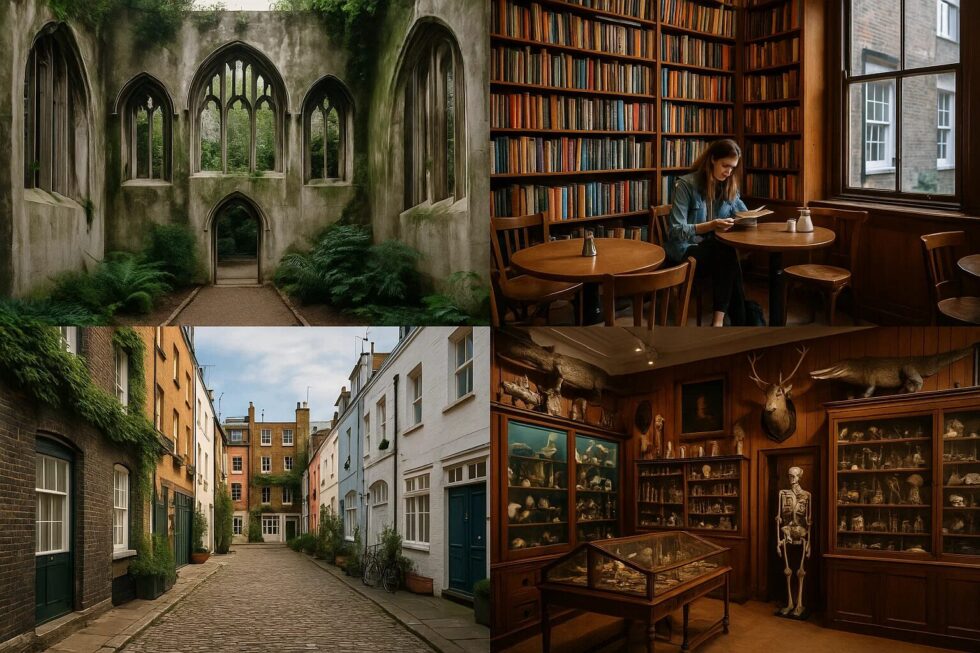
While tourist throngs relentlessly stream toward Buckingham Palace, the London Eye, and Tower Bridge, the true magic of London often hides around unassuming corners, in quiet recesses, and even within peculiar basements. These spots—architectural anomalies and whimsical cabinet rooms—offer not just a break from the noise, but a genuine journey into the hidden history and unique aesthetic of the British capital. The difference between a tourist and a true explorer lies in finding these unique places, where the city’s past and its eccentricities converge. They remind us that London is not just a collection of landmarks, but a millennia-old tapestry woven with resilience, romance, and the delightfully bizarre.
Here are four "secret" locations that challenge stereotypes about London and deserve the attention of those seeking not only grandeur but also mystery in the city. As noted by The WP Times
1. Gothic Whispers: St Dunstan in the East Church Garden
Location: Midway between London Bridge and the Tower of London, in the City of London.
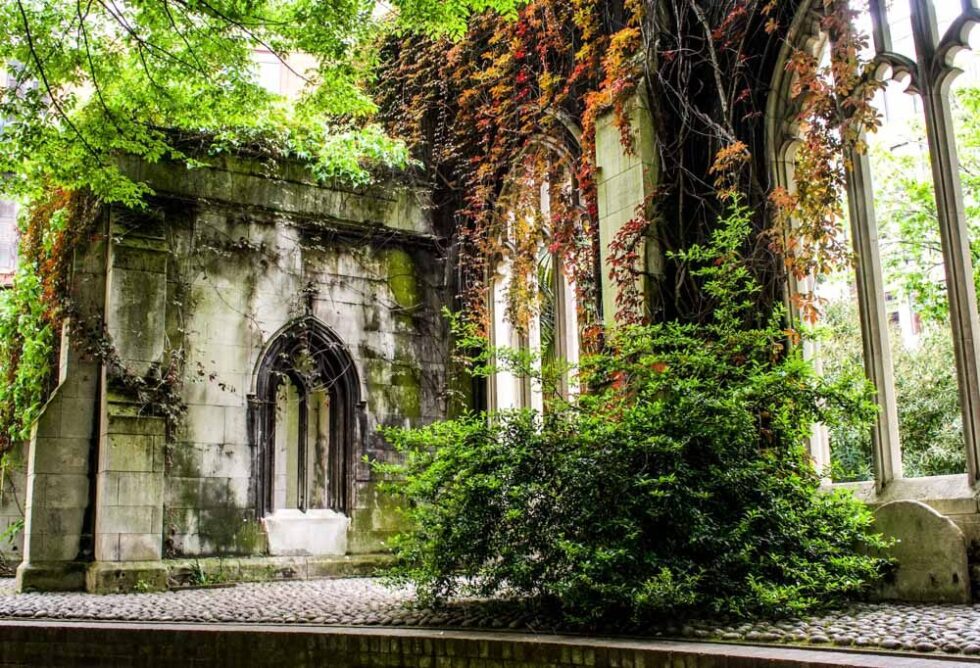
This site is a living testament to the city's astonishing resilience against devastating historical forces. The church, originally founded circa 1100, was nearly destroyed by the catastrophic Great Fire of London in 1666, yet Sir Christopher Wren managed to salvage and rebuild its striking steeple. After this miraculous survival, the newly restored structure stood for centuries until the Blitz during World War II delivered the final, crippling blow, leaving little more than exterior walls and Wren’s famous tower intact. Rather than undertaking another expensive and complex reconstruction, the City of London Corporation decided in 1970 to simply stop, transforming the empty shell into a tranquil public garden. This deliberate choice is what gives the location its deeply unique and poignant character. Today, the result is a breathtakingly surreal oasis where nature has claimed the remnants of human architecture. Palm trees, climbing vines, and ferns grow vigorously from the former nave, reaching towards the sky through the open, Gothic archways, creating a feeling of discovery and ancient mystery. Visitors often describe the silence here as profound, offering a rare moment of contemplative peace in the very heart of the frantic financial district. It is arguably London's most photogenic secret spot, capturing the essence of "Wabi-Sabi"—finding beauty in imperfection and impermanence. The contrast between the rigid, old stone and the lush, untamed greenery makes it a compulsory stop for any urban explorer.
2. The Macabre Cabinet: The Viktor Wynd Museum of Curiosities, Fine Art & UnNatural History
Location: Hackney, East London.
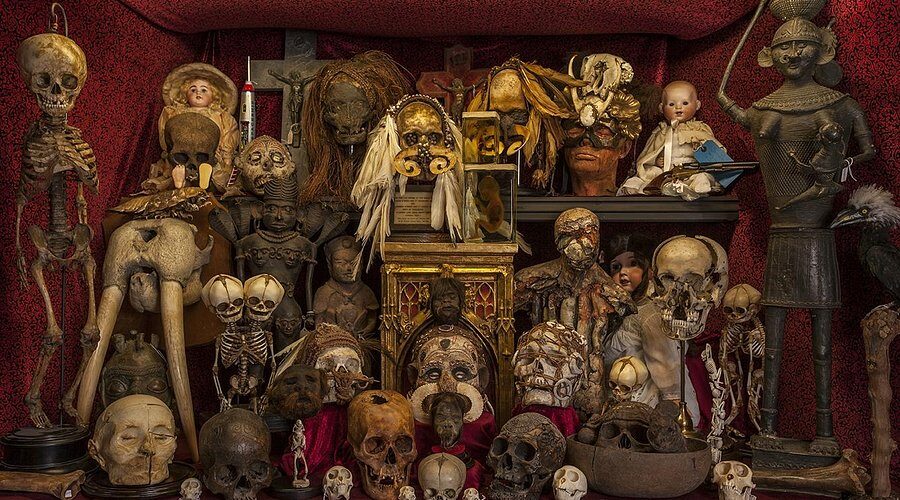
Prepare to have your perception of a "museum" radically redefined by this dense, dark, and wonderfully overwhelming collection of the bizarre. The Viktor Wynd Museum, found in the basement of The Last Tuesday Society, is not organised chronologically or thematically; rather, it is arranged according to the subjective and often mischievous taste of its founder, Viktor Wynd, echoing the classic European Wunderkammer (cabinet of curiosities). The entrance itself is a ritual, requiring you to descend a narrow spiral staircase into a subterranean space saturated with history and strangeness. Here, you will find genuine, often macabre, oddities that include a two-headed lamb skeleton, elaborate Victorian taxidermy, erotic sketches by infamous artists, and, most famously, a purported mermaid skeleton, all crammed into dusty glass cases. The atmosphere is intentionally unsettling and deeply intimate, inviting visitors to confront the bizarre, the forgotten, and the uncomfortable truths of biology and history. For an added layer of immersion, the museum often includes an Absinthe Parlour, encouraging a mood of fin-de-siècle decadence and exploration of the subconscious. This chaotic, high-density arrangement is the point, reflecting the endless, unclassifiable oddity of the world. It is a necessary pilgrimage for those weary of clean, modern, didactic exhibitions, offering instead a pure, unadulterated exploration of the strange and the beautiful.
3. The Romantic Ruin: The Hill Garden and Pergola
Location: Hampstead Heath, North London.
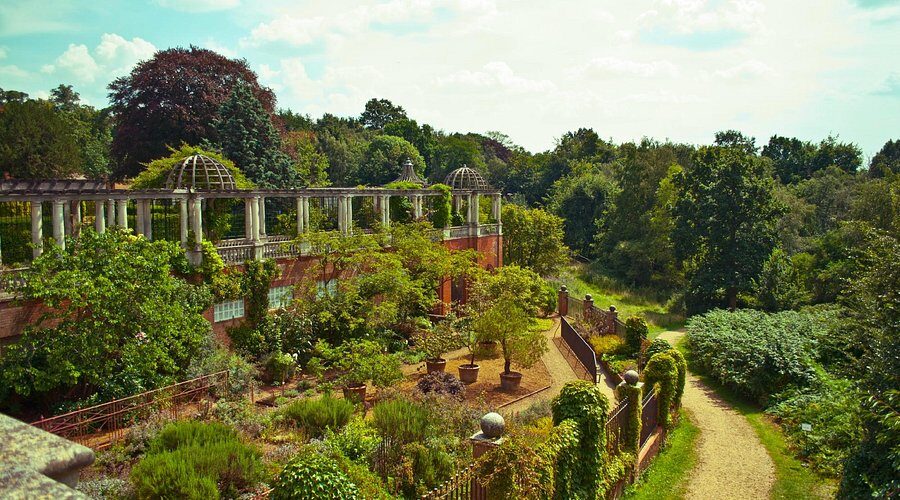
Perched majestically on the outskirts of the sprawling and wild Hampstead Heath, The Hill Garden and Pergola is a breathtaking piece of Edwardian landscaping that often surprises first-time visitors with its scale and beauty. This is a place steeped in the glamour and melancholy of a bygone era. The Pergola itself is a stunning, elevated walkway supported by long, weathered stone pillars and wooden beams, originally constructed in the early 1900s by Lord Leverhulme, a wealthy soap magnate. Leverhulme used this dramatic structure as the setting for lavish garden parties and social gatherings, creating a sense of theatrical grandeur for his guests. Today, the wooden beams are gloriously covered with thick, intertwining vines, wisteria, and roses, making the structure look like a magnificent, yet slowly decaying, classical ruin. This deliberate overgrowth is key to its romantic appeal, creating stunning tunnels of natural shade and light. It truly feels like walking through a forgotten film set, far removed from the urban environment. The Pergola’s elevated position also offers spectacular, though often partially obscured, views over the gardens below and parts of North London. It is the perfect spot for a tranquil and extended walk, particularly beautiful in the late spring when the wisteria blooms, and a must-see for anyone seeking London's most elegant escape.
4. London's Smallest Mystery: The Tiny House on Adam Street
Location: Adam Street, Adelphi area (near The Strand).
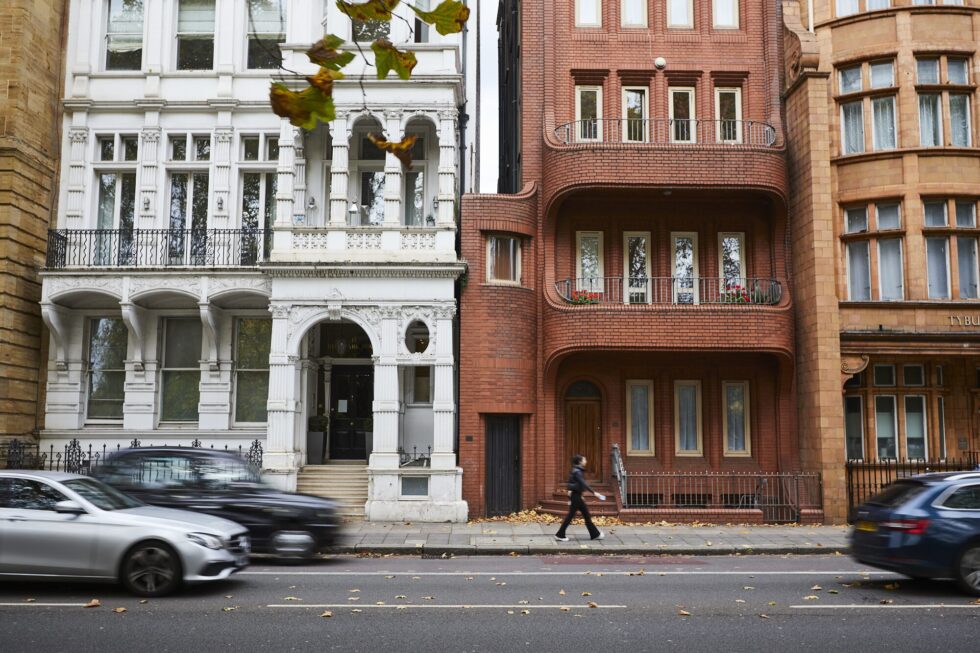
While London boasts several sites vying for the title of "smallest police station," the tiny, curious structure at Number 10 Adam Street is a prime example of the city’s architectural eccentricity and hidden history. This is not a functional building, but a remarkable piece of architectural camouflage. Built into the corner of the grand, uniform, Georgian terraced housing of the Adelphi area, it is so small that a casual passer-by might easily mistake it for a decorative chimney base or a misplaced stone safe. Its purpose was highly specialized: it was used as a discreet watchman's hut or observation post to monitor the activities of the residents and servants in the surrounding affluent area. This allowed security personnel to maintain vigilance without being overtly visible or breaking the elegant uniformity of the street. Although the historical plaque now sometimes redirects to the other famous tiny police box in Trafalgar Square, the structure on Adam Street retains its status as a historical curiosity and a testament to the importance of discreet surveillance in the 19th-century elite London. Finding this minuscule structure requires a keen eye and offers a delightful reward to those who appreciate that the capital's deepest secrets often lie in its smallest details. It serves as a unique visual joke, tucked away in an area known for its theatrical heritage and elegant, understated design.
Read about the life of Westminster and Pimlico district, London and the world. 24/7 news with fresh and useful updates on culture, business, technology and city life: Why Is London the Top Travel Destination in 2025 According to Tripadvisor