Historic fortresses across the United Kingdom, from the imposing Norman architecture of the Tower of London to the volcanic prominence of Edinburgh Castle, have long functioned as meticulously preserved relics of a brutal and often opaque past, yet their primary attraction shifts dramatically each October. The annual convergence of All Hallows’ Eve transforms these solemn state monuments into lucrative theatres of terror, where documented historical fact is deliberately—and profitably—intertwined with centuries of chilling folklore. This specialized market, capitalizing on the human fascination with death and the unexplained, offers a sharp, high-demand contrast to standard daytime tours, featuring special night excursions into the deepest dungeons and most infamous execution sites, illuminated only by torchlight and the promise of spectral encounters. The financial and operational planning behind these highly sought-after Halloween events, which often sell out weeks in advance, reveals a sophisticated mechanism that leverages historical tragedies—such as the imprisonment of Anne Boleyn or the disappearance of the Princes in the Tower—to generate substantial revenue, raising serious journalistic questions about the balance between historical preservation, entertainment, and the responsible handling of human misery. This commercialization of the macabre has become an annual logistical challenge, demanding a high degree of security and crowd control in structures never designed for mass night-time tourism, a phenomenon tracked closely by our correspondents, as noted by the editorial team at The WP Times.
The Tower of London: A $39.50 Ticket to the Tudor Afterlife
The Tower of London, officially Her Majesty's Royal Palace and Fortress, stands as a chilling 900-year-old monument on the north bank of the River Thames, its history stained by regicide, torture, and the ghosts of its most famous prisoners. While standard adult admission, inclusive of a donation, currently costs approximately £39.50 (around $48.80 USD, based on a typical exchange rate for 2024), the specific Halloween night tours, when offered, often involve a significant premium, sometimes double the standard price for a focused, limited-access experience. The key narrative for these special events revolves around the Tower's most documented resident specters, notably the headless apparition of Anne Boleyn, executed in 1536, who is reportedly seen in the Chapel Royal of St Peter ad Vincula, or near the site of her beheading on Tower Green. The chilling success of these night tours is not merely due to theatrical lighting; it is rooted in the verifiable history that proves the site was a stage for extreme political violence.
The sheer volume of reported sightings, often detailed in official Yeoman Warder logs dating back to the 19th century, lends an unusual authority to the claims of the paranormal. One frequently cited incident from 1864 describes a sentry challenging a "whitish, female figure" near the Lieutenant's Lodgings, a spot later identified as close to Boleyn's execution site. Furthermore, the sorrowful figures of the two young Princes, Edward V and his brother Richard, Duke of York, who vanished in 1483, are often said to haunt the Bloody Tower or the White Tower, adding a layer of heartbreaking mystery to the historical record. The Halloween experience transforms these factual historical footnotes into a palpable, atmospheric journey, exploiting the public's appetite for the sensational.
Edinburgh Castle's Eerie Tunnels: The Quest for the Lost Piper
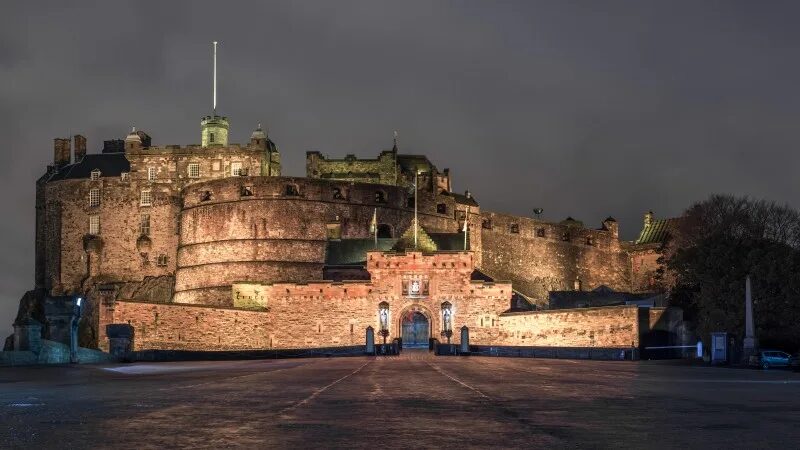
Edinburgh Castle, perched atop an extinct volcano, is not only Scotland’s most-visited paid attraction but also a central hub for chilling ghost lore, deeply integrated into its geological and military history. The Halloween tours here frequently focus on the castle’s infamous dungeons and the hidden, sealed tunnels rumored to run underneath the Royal Mile. The most enduring and financially viable ghost story is that of the Lost Piper Boy, a tragic figure believed to have been sent down into the newly discovered subterranean passages centuries ago, playing his pipes to map his route for those above, only for the music to abruptly stop halfway down. His mournful, ghostly pipes are allegedly still heard echoing in the tunnels, providing a perfect soundtrack for the atmospheric night tours.
While specific Halloween night tours at the castle itself are sometimes highly limited, the commercial "Edinburgh Dungeon" (located separately on East Market Street) uses the castle's grim history, including tales of the castle's use as a wartime prison and the nearby public burning of alleged witches, to stage interactive, dramatic historical horror experiences. Standard admission to the Dungeon, which may include special seasonal shows like 'Mary Shelley's Monster' for a period running into November, is typically around £20-£30 (approx. $25-$37 USD), but tickets must be booked at least two weeks in advance due to demand. The castle itself, however, occasionally hosts specialized 'Whispers of the Past' events or similar historical-ghost storytelling tours, often priced similarly to general admission or slightly higher for members of Historic Scotland (around £12 for members, $14.80 USD). The stark reality is that the castle’s history is demonstrably violent, having been under siege or attack 26 times in its 1,100-year history, making it arguably the most besieged place in Great Britain.
| Historical Site | Featured Ghost Story | Historical Basis for Horror | Typical Night Tour Focus/Price (Est.) |
| Tower of London | Anne Boleyn (headless), The Princes in the Tower | Executions (2 Queens, 3 Earls, 1 Lord), Royal murders/disappearances | Beheading site, Bloody Tower, White Tower. Premium Price: $50-$80 USD. |
| Edinburgh Castle | The Lost Piper Boy, The Headless Drummer Boy | Wartime Prison/Dungeon use, Proximity to Witch Burnings (Castle Hill) | Underground tunnels, Prison of War Dungeons. Limited Availability: $45-$60 USD. |
| Warwick Castle | The Ghost of Sir Fulke Greville | Civil War battles, Political assassinations (Greville was stabbed by his servant) | Dungeon attractions and special 'Haunted Castle' shows. Included in high-tier admission/Seasonal Pass. |
The Architecture of Fear: Fact-Checking the Phantom Bear and The Grey Lady
The enduring appeal of these Halloween spectacles lies in their grounding in verifiable, though sensational, historical facts. The narrative is carefully constructed to bridge the gap between documented history and outright folklore. Consider the Phantom Bear of the Tower of London. Historical records confirm that the Tower housed a Royal Menagerie for over 600 years, a collection started in 1235 with a gift of three leopards from Emperor Frederick II, followed by a polar bear in 1251. Therefore, the historical presence of large, dangerous animals is a fact. The subsequent ghost sighting—such as the widely reported 19th-century incident where a guard allegedly charged a spectral bear with a bayonet near the Martin Tower, only to see the weapon pass straight through—provides the chilling, undocumented theatrical element.
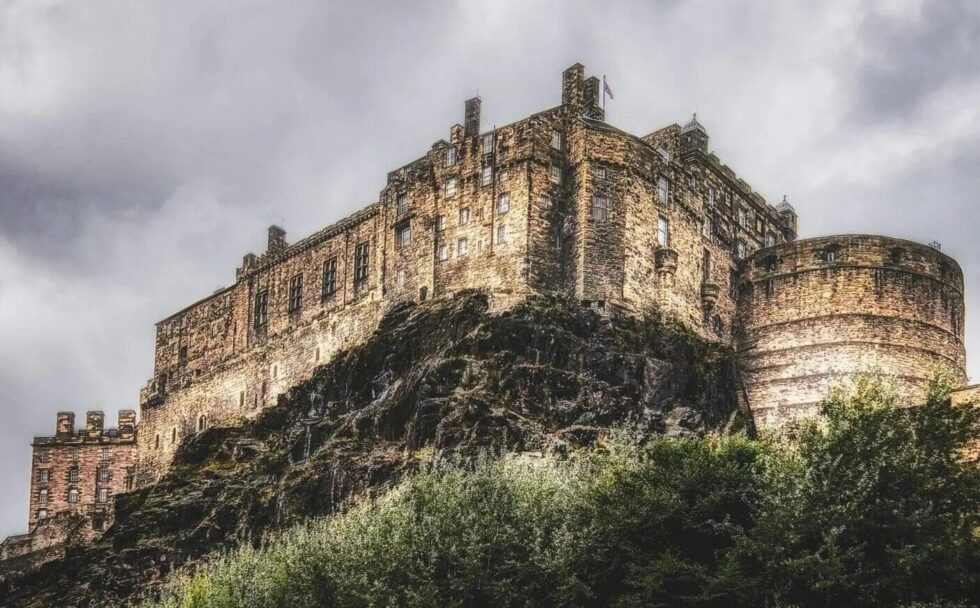
Similarly, the Grey Lady of Edinburgh Castle is often identified as Janet Douglas, Lady of Glamis, a noblewoman accused of poisoning her husband and plotting to murder King James V, who had a demonstrable political grudge against the Douglas family. She was subsequently burned at the stake on Castle Hill in 1537. The existence of Janet Douglas, her political persecution, and her execution are all matters of historical record. The post-execution sightings of a weeping 'Grey Lady' walking through the castle halls, however, are the unproven supernatural echoes that drive the Halloween tours. In essence, the success of these events rests on a strategic 70% fact to 30% fiction ratio, offering a historically informed psychological experience rather than mere jump scares. The sites are leveraging authentic historical horror.
The Economics of Terror: Logistics and Security in Medieval Structures
Beyond the chilling narratives, the logistical complexity of hosting night-time, high-volume tours in ancient, grade-listed structures presents a significant operational challenge. The Tower of London, for instance, with its uneven cobblestones, low archways, and centuries-old defensive walls, requires specialized lighting and security protocols that differ vastly from daytime operations. A core issue is crowd flow; the narrow, winding staircases of the White Tower or the confined spaces of the Bloody Tower were never designed for the movement of large, panicked groups.
Furthermore, the legal and ethical responsibility for the sites, managed by bodies such as Historic Royal Palaces (for the Tower) and Historic Environment Scotland (for Edinburgh Castle), dictates that preservation must always trump performance. This means lighting fixtures must be non-invasive, theatrical effects must not compromise stonework, and the Yeoman Warders (at the Tower) or castle guides must maintain an unshakeable sense of historical authority, even while recounting tales of the supernatural. The restricted access during night tours, focusing only on specific 'haunted' zones, is often a matter of pragmatic risk management as much as thematic selection. For example, a maximum group size of 20-30 people per tour guide is a frequent requirement to manage the movement through sensitive, dark areas.
- Operational and Safety Protocols for Halloween Castle Tours:
- Limited Group Size: Maximum 20-30 guests per guide for safe movement through restricted areas (e.g., dungeons, spiral staircases).
- Emergency Lighting: Installation of temporary, low-impact emergency lighting systems that are independent of the main theatrical lighting.
- Dedicated Security Teams: Deployment of additional, often plain-clothed, security personnel to monitor guest behavior and prevent unauthorized access to off-limits areas.
- Footwear Advisory: Explicit warnings to patrons regarding uneven medieval flooring, cobbles, and the requirement for sturdy, closed-toe shoes.
- Historical Interpretation Training: Guides undergo specialized training to distinguish between documented historical events (executions, imprisonments) and folklore (ghost sightings), maintaining historical integrity.
Case Study: The Jack the Ripper Connection and Localized Horror
The Halloween tourism ecosystem around these ancient landmarks is not limited to the castles themselves. Surrounding areas, particularly in London, exploit the proximity to sites of historical brutality to create highly marketable specialized tours. The Jack the Ripper tours, focusing on the dark alleyways and Victorian pubs of Whitechapel and the East End—a mere short distance from the Tower of London—see a massive surge in bookings around October 31st. These tours, such as the 'Original Jack the Ripper Coach Tour of Haunted London' (estimated price around $82 USD), leverage the Victorian-era horror to create an immersive, historically specific fright.
The connection to the Tower, though indirect, lies in the sheer weight of historical grimness; tourists are drawn to a concentrated geography of death and political intrigue. Similarly, in Edinburgh, the tours focusing on the underground vaults of the Old Town and the deeds of infamous body snatchers Burke and Hare provide the localized, documented horror that complements the castle’s medieval tales. These localized tours provide an essential economic and narrative feeder system, expanding the Halloween tourism window far beyond the castles' immediate walls and creating a multi-million-pound industry based on the macabre. The market is demonstrably driven by the historical credibility of the surrounding area’s horrific past.
Read about the life of Westminster and Pimlico district, London and the world. 24/7 news with fresh and useful updates on culture, business, technology and city life: Why Does the UK Still Burn Effigies? Bonfire Night 2025 History, Tradition, and Safety