
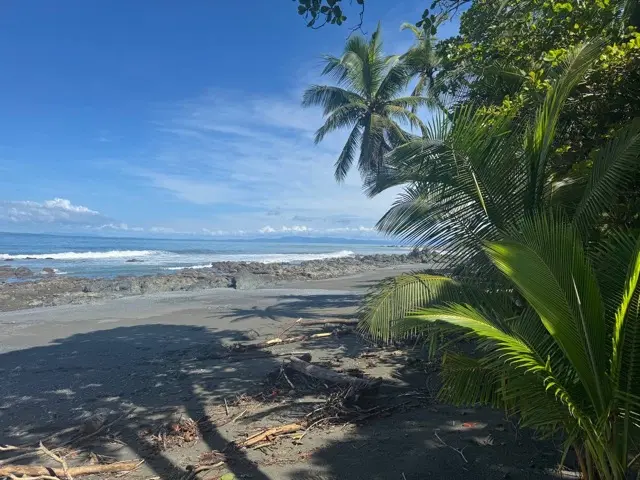
Few phrases have travelled as far, or carried as much quiet power, as Costa Rica’s “Pura Vida.”Two words that have become both a national mantra and a global emblem of the slow life. Literally translating to “pure life,” the phrase is far more than a tourist slogan — it reflects a deliberate philosophy of simplicity, gratitude and emotional balance, reports The WP Times, citing the psychology portal GlückID.
The term first appeared in the 1950s, after the Mexican film Pura Vida! reached Costa Rican cinemas. Its message of lightness and humour resonated deeply with local audiences, and within a decade, the phrase had entered everyday speech. What began as a casual expression gradually transformed into a collective mindset — a way of being rather than saying.
Today, Pura Vida defines the essence of Costa Rica’s global image: a nation without an army, powered by renewable energy, wrapped in rainforest, and consistently ranked among the happiest countries on earth.
As the psychology portal Glück ID notes, Pura Vida represents “a living form of emotional intelligence — a philosophy that teaches presence over perfection and gratitude over growth.”
Origins and deeper philosophy of Pura Vida
The Pura Vida mindset evolved alongside Costa Rica’s political choices. In 1948, the country abolished its military and redirected funds into education, healthcare, and the environment — planting the roots of social wellbeing. Over the decades, this vision created not just a democracy, but a culture of calm self-confidence. At its heart, Pura Vida is a humanist philosophy. It teaches that life’s value is measured not in possessions but in presence. It’s about breathing before reacting, appreciating small joys, and trusting the rhythm of nature.
Psychologist Dr. Araya Solís from the University of Costa Rica explains:
“Pura Vida isn’t about escaping reality. It’s about living inside it with peace.”
This blend of mindfulness and pragmatism has made Costa Rica a model for sustainable happiness — a term now used in international wellbeing studies.
The five principles of Pura Vida
| Principle | Meaning | Effect on Life |
|---|---|---|
| Simplicity | Living with less and choosing what matters | Reduces anxiety and clutter |
| Presence | Attention to the moment | Improves mental clarity |
| Community | Relationships over competition | Strengthens emotional resilience |
| Nature | Respect and coexistence | Stabilises mood and health |
| Gratitude | Appreciation for small things | Builds long-term happiness |
This balance forms the foundation of Costa Rica’s lifestyle philosophy — a blueprint for emotional and ecological harmony.
How Pura Vida differs from Bali’s spirituality
Both Costa Rica and Bali attract those searching for meaning, yet they stand on different philosophical ground.
| Aspect | Pura Vida (Costa Rica) | Tri Hita Karana (Bali) |
|---|---|---|
| Origin | Modern, secular culture | Ancient Hindu tradition |
| Focus | Emotional simplicity, gratitude | Ritual harmony and devotion |
| Expression | Daily language and behaviour | Prayer, ceremony, offering |
| Goal | Balance in ordinary life | Union with the divine |
| Tone | Calm realism | Spiritual transcendence |
Where Bali spirituality seeks sacred connection through ritual, Pura Vida finds peace through awareness. On Bali, one prays to align with gods; in Costa Rica, one breathes to align with life itself.
“Pura Vida replaces perfection with acceptance,” says Dr. Solís.
“It’s spirituality without religion — ethics without ego.”
The science behind the happiness (2025 update)
Recent research by the Instituto Costarricense de Turismo and the Universidad de Costa Rica (2025) confirms what travellers often sense instinctively: the Pura Vida mindset is not poetic myth but measurable psychology. Costa Ricans consistently rank among the most satisfied and emotionally stable populations in the world.
According to the World Happiness Report 2025, Costa Rica remains firmly within the top 15 happiest nations, maintaining exceptional levels of life satisfaction despite moderate income levels. Analysts attribute this resilience to a cultural triad — trust, community, and ecological balance — which together form what scientists describe as collective wellbeing.
Key indicators of the “Pura Vida” effect:
- 25.6 % of the national territory is legally protected as nature reserves and parks.
- 99 % of electricity originates from renewable sources — hydro, wind and geothermal.
- Life expectancy now exceeds 80.2 years, one of the highest in the Americas.
- Depression and burnout rates remain significantly below the OECD average.
But numbers only hint at the essence. What Costa Rica proves, sociologists argue, is that mental health and environmental care are not separate fronts — they evolve together. The stability of the ecosystem reflects the inner stability of its citizens.
The Pura Vida philosophy therefore operates like an invisible social contract: it transforms simplicity into a public health model. By embedding gratitude, slowness, and ecological responsibility into daily life, Costa Rica has created not merely a lifestyle, but a sustainable psychology — one that turns contentment into infrastructure.
“Happiness here isn’t an emotion,” writes researcher María Campos from UCR’s Department of Social Psychology.
“It’s a civic habit — cultivated like the land itself.”
How to live “Pura Vida” anywhere
The true power of Pura Vida lies in its universality. It doesn’t belong to Costa Rica alone — it belongs to anyone willing to slow down, simplify, and see clearly. You don’t need palm trees or ocean air; you need presence.
1. Begin your day without urgency.
Before touching a phone or inbox, sit in silence. Breathe deeply, three times. Costa Ricans call this respirar con sentido— “breathing with meaning.” It sets the nervous system to calm before the world demands reaction.
2. Reclaim small moments of nature.
Even in Berlin, London or Tokyo, there is always a patch of green, a bird, a changing sky. Studies by the Universidad de Costa Rica show that two minutes of conscious observation of natural light lowers cortisol. Pura Vida is not about landscape — it’s about attention.
3. Speak slower — and listen fully.
In Costa Rica, conversation is not a transaction. “Pura Vida” often ends every exchange — not as filler, but as a gentle reminder: this connection matters. Practice it in your own language. Say something kind without expecting return.
4. Consume less, experience more.
A Costa Rican proverb says, “El que tiene menos, vive más” — “He who has less, lives more.” Replace possessions with sensations: a walk instead of a purchase, a call instead of a scroll, a homemade meal instead of fast food.
5. Treat time as life itself.
Western culture treats time as currency. Pura Vida reverses the logic — time is not to be spent, but inhabited. Try leaving five unscheduled minutes between appointments. Notice how peace re-enters through that gap.
Every “Pura Vida” spoken in Costa Rica is both a greeting and a philosophy — a small act of acceptance whispered into a restless century. It means: Everything is fine, exactly as it is.
“The world doesn’t need more speed,” writes sociologist Julio Arce from San José.
“It needs more pauses — and people brave enough to keep them.”
That is the real practice of Pura Vida: not escape, but awareness; not perfection, but balance. It can begin anywhere — with one slow breath, and the courage not to rush.
The meaning of “Pura Vida” in daily life
In Costa Rica, Pura Vida isn’t just a phrase — it’s the most spoken form of optimism. It appears everywhere: in markets, on mountain roads, at school gates, between strangers and friends. The two words are a linguistic handshake, a national heartbeat.
“¡Pura Vida!” can mean almost anything, depending on tone and context:
- “Hello” – the friendly opening of any encounter.
- “All good” – a calm reassurance when things go wrong.
- “Take it easy” – an encouragement to slow down.
- “Thank you” – gratitude expressed with warmth instead of formality.
- “Goodbye” – said with a smile, never with urgency.
This fluidity is the essence of Pura Vida. It’s not about literal meaning — it’s about emotional temperature. A simple “Pura Vida” can soften tension, close a deal, or comfort a friend.
Linguists at the Universidad de Costa Rica call it a ritual of reconnection: each repetition returns people to the present moment. The phrase works like a verbal meditation — grounding, equalising, and inclusive.
“When you say Pura Vida, you breathe before you speak,” explains cultural historian Carlos Murillo.
“It’s not language; it’s tempo.”
That’s why Costa Ricans say it dozens of times a day — on the phone, at a café, in traffic, even to themselves.
Each “Pura Vida” is a small act of mindfulness disguised as small talk. It transforms conversation into calm.
In the end, these two words capture an entire philosophy of coexistence: life is imperfect, but it is enough — and that is pure life.
A global philosophy for a restless century
The 21st century moves faster than any human nervous system was designed to endure.
Notifications replace silence, ambition replaces reflection, and exhaustion has become a global language. In this velocity, Pura Vida stands like a quiet rebellion — a reminder that slowness is not weakness, but wisdom. It is not escapism, and it is not tropical romanticism. It is structure — a cultural technology that teaches equilibrium in a world addicted to acceleration. Pura Vida does not tell us to withdraw from life; it tells us to inhabit it fully, without panic.
“Those who live in a rush, live less,” says an old Costa Rican proverb.
To live Pura Vida is to live rhythmically — not constantly producing, but participating. It’s the psychological art of replacing noise with nuance, tension with tempo, and speed with sense.
In Costa Rica, people still pause to watch rain instead of escaping it, to talk instead of scroll, to rest instead of apologise for it. This simplicity is not poverty of ambition — it is clarity of purpose.
The world today measures success in motion. Pura Vida measures it in meaning.
It offers an alternative formula for modern existence:
Less movement, more presence.
Less achievement, more awareness.
Less perfection, more peace.
That is the quiet revolution of Costa Rica — a country that, without preaching, has given the world a living proof that happiness is not an emotion but an ethic.
Pura Vida is not a slogan.
It is the philosophy of the pause — the science of being enough.
Read about the life of Westminster and Pimlico district, London and the world. 24/7 news with fresh and useful updates on culture, business, technology and city life: Where to find the best pumpkin soup & pumpkin spice latte in London this autumn 2025