
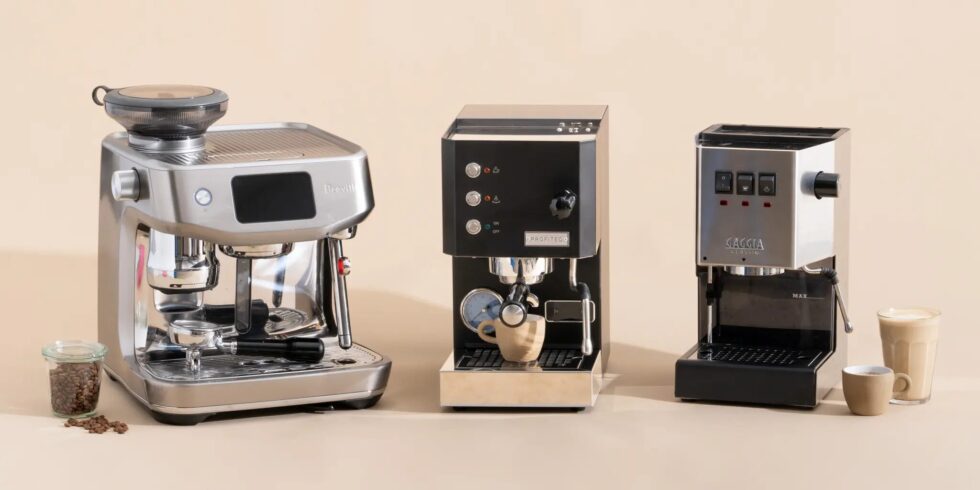
Coffee culture has dramatically evolved, pushing consumers beyond simple drip brewers towards sophisticated equipment that delivers barista-level quality at home. Navigating the vast market requires understanding that your purchase is not just a machine, but an entire system, demanding a balance between price, skill level, and desired control. The decision of what to buy hinges on whether you prioritize the intense concentration of espresso, the clean clarity of filter coffee, or the sheer convenience of a fully automatic model. Consulting expert advice is essential to make a sound investment and transform your kitchen into a quality coffee station. The complexity of this investment is a key topic for consumers worldwide, reports The WP Times.
Defining Your Coffee Philosophy: Espresso vs. Filter vs. Automatic
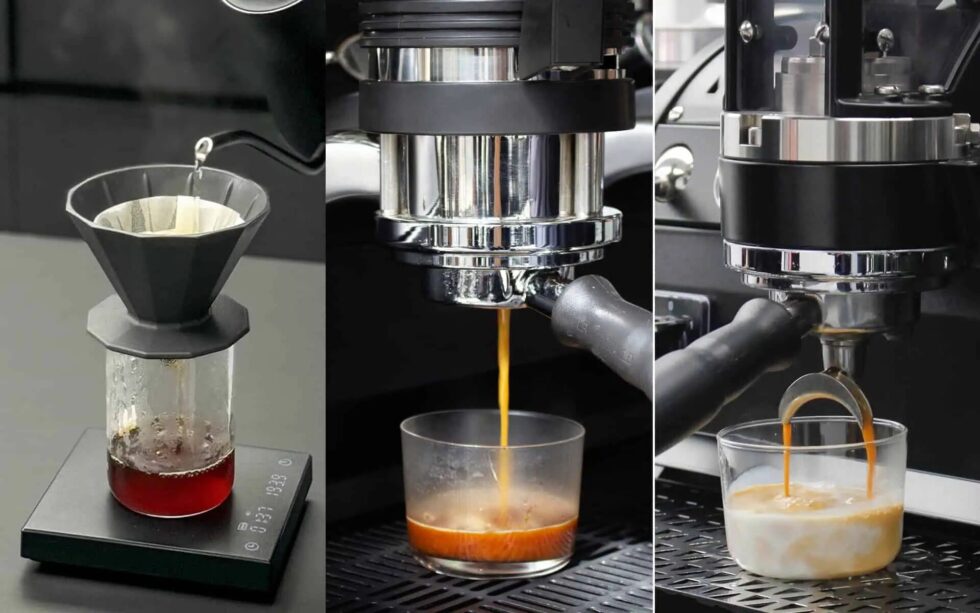
The first critical step is determining the type of coffee you primarily want to make, as this dictates your equipment budget and complexity. True espresso requires a dedicated machine capable of high pressure and a short, precise extraction time, serving as the necessary base for all milk drinks. Filter coffee, conversely, emphasizes clarity and aroma through slower gravity-driven extraction using a coarser grind. Fully automatic (bean-to-cup) machines offer push-button simplicity and speed but sacrifice the granular control needed for top-tier flavour. Your daily routine and willingness to dedicate time to the brewing ritual should determine the right category.
Comparison of Primary Home Coffee Machine Types
- Semi-Automatic Espresso:
- Key Characteristics & Skill Level: Manual grinding, tamping, and steaming. Requires high skill and time commitment.
- Cost Range (USD): $400 - $3,000+
- Best For: Dedicated home baristas prioritizing maximum quality and control (e.g., Rancilio Silvia, Gaggia Classic Pro).
- Fully Automatic (Bean-to-Cup):
- Key Characteristics & Skill Level: Push-button operation for grinding, brewing, and milk frothing. Minimal skill required; maximum speed and consistency.
- Cost Range (USD): $600 - $2,500+
- Best For: Busy households prioritizing convenience and speed (DeLonghi Dinamica Plus).
- Filter/Pour-Over:
- Key Characteristics & Skill Level: Simple drip system; uses medium-ground beans. Low skill required, focuses on clean flavour.
- Cost Range (USD): $50 - $300
- Best For: Users who prefer clean, milder black coffee, highlighting single-origin beans (Chemex, V60).
Espresso Machine Mechanics: Why Pressure and Temperature are King
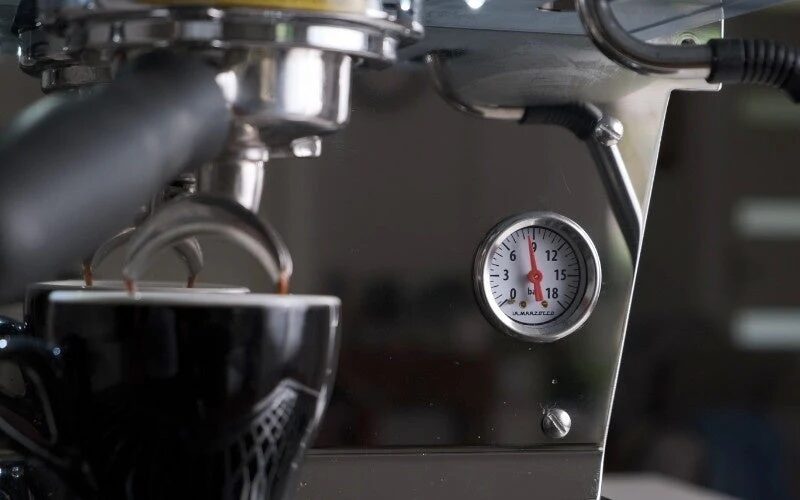
For semi-automatic machines, achieving high-quality espresso hinges entirely on pressure stability and thermal stability. The industry standard for extraction pressure is 9 BAR at the coffee puck. While machines advertise 15 BAR pumps, you must look for an Over Pressure Valve (OPV) that regulates this down to the optimal 9 BAR to prevent over-extraction and 'channeling'. Equally vital is thermal stability, as the Specialty Coffee Association (SCA) specifies a narrow brewing range of $92^{\circ}\text{C}$ to $96^{\circ}\text{C}$. Budget machines often struggle here, especially when transitioning to milk steaming. Serious enthusiasts should prioritize systems with a PID Controller for electronic temperature precision, and ideally Dual Boilers (DB) or Heat Exchange (HX) systems for simultaneous brewing and steaming, offering superior speed and consistency.
Critical Technical Specifications for Espresso Quality
- Boiler System:
- Purpose: Heats water for brewing and steam.
- Requirement for Serious Home Barista: Dual Boiler (best stability/speed) or HX System (Heat Exchange).
- Temperature Control:
- Purpose: Maintains water temperature consistency.
- Requirement for Serious Home Barista: PID Controller (electronic, precise temperature setting).
- Pressure Regulation:
- Purpose: Controls the force reaching the coffee puck.
- Requirement for Serious Home Barista: Adjustable OPV (Over Pressure Valve) set to a stable 9 BAR.
- Pre-Infusion:
- Purpose: Gently wets the coffee before full pressure.
- Requirement for Serious Home Barista: Active, customizable low-pressure phase.
The Unsung Hero: Why Your Grinder is More Important Than Your Machine
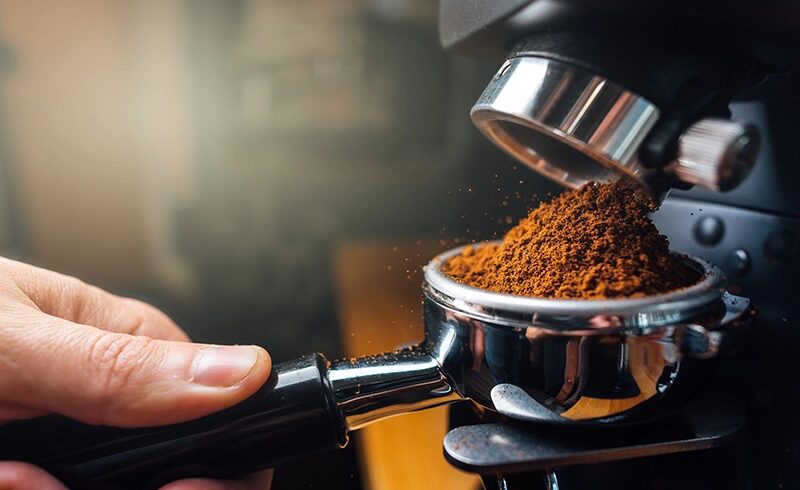
Professional baristas unanimously agree: the grinder is the single most important investment. The quality of your extraction is determined by the consistency of the grind particle size; an uneven grind causes simultaneous bitterness and sourness. For espresso, a fine grind is required, similar to powdered sugar. Your grinder must be a burr grinder (never a blade grinder) and offer precise, stepped or stepless adjustments to "dial in" the shot, ensuring the coffee extracts in the optimal 25-30 second window. Even if your initial machine is entry-level (like a Gaggia Classic Pro), pairing it with a quality grinder (like a Niche Zero or Baratza Sette) is the most impactful way to boost your coffee quality.
Optimal Grind Settings by Brewing Method
- Espresso:
- Grind Consistency: Fine (Granulated Sugar)
- Grind Size (mm): $0.3\text{mm}$ - $0.5\text{mm}$
- Key Extraction Principle: High pressure, short contact time (25-30s)
- Moka Pot (Stovetop):
- Grind Consistency: Medium-Fine (Finer than sand)
- Grind Size (mm): $0.5\text{mm}$ - $0.75\text{mm}$
- Key Extraction Principle: Steam pressure, short contact time
- Drip/Pour-Over (V60):
- Grind Consistency: Medium (Beach Sand)
- Grind Size (mm): $0.75\text{mm}$ - $1.0\text{mm}$
- Key Extraction Principle: Gravity-driven, medium contact time (2.5-4.5 min)
- French Press:
- Grind Consistency: Coarse (Coarse Sea Salt)
- Grind Size (mm): $1.0\text{mm}$ - $1.5\text{mm}$
- Key Extraction Principle: Immersion, long contact time (4+ min)
Selecting the Right Bean: Roasts, Origins, and Flavor Profile
Even the best equipment cannot compensate for stale or inappropriate beans; the raw material accounts for over 60% of the flavour. Always seek beans with a visible roast date (ideally within 2-3 weeks of purchase) and buy whole beans. For milk-based espresso drinks, medium to dark roasts from regions like Brazil (chocolate/nutty notes) are recommended as their developed flavour cuts through the richness of the milk effectively. Lighter roasts (fruity/acidic notes) are better for clean black filter or challenging espresso shots, demanding higher temperatures. Consult a local roaster to match your bean choice to your preferred drink and equipment capabilities.
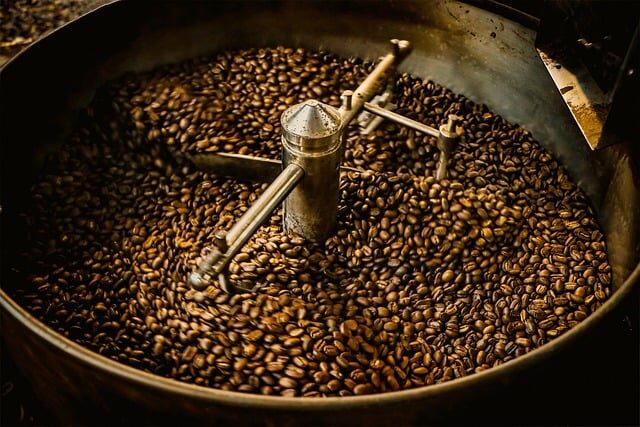
Roast Level and Recommended Use
- Light Roast:
- Flavor Profile: Bright, acidic, fruity, floral.
- Recommended Use: Filter Coffee, challenging black espresso.
- Key Extraction Factor: Requires higher brew temperature ($\sim 205^{\circ}\text{F}$).
- Medium Roast:
- Flavor Profile: Balanced, sweet, nutty, chocolate notes.
- Recommended Use: Versatile for espresso and filter; excellent with milk.
- Key Extraction Factor: The safest, most balanced choice for home espresso.
- Dark Roast:
- Flavor Profile: Smoky, bold, bittersweet, less acidity.
- Recommended Use: Best for strong milk-based drinks (lattes, cappuccinos).
- Key Extraction Factor: Requires slightly lower brew temperature ($\sim 197^{\circ}\text{F}$).
Budgeting and Accessory Checklist: Total Cost of Ownership
The overall cost of your home coffee setup includes necessary accessories often overlooked by first-time buyers. Budget for a quality burr grinder ($250-$500), which should take precedence over the machine itself. Essential tools needed to control variables include a digital scale (measuring to $0.1\text{g}$) to adhere to the crucial 1:2 espresso ratio (e.g., $18\text{g}$ in, $36\text{g}$ out) and a quality precision tamper. Ongoing costs also include descaling solutions and water filters. A serious, long-term home setup, including machine, grinder, and accessories, should be budgeted in the $800 to $2,500+ range.
Essential Home Barista Accessory Checklist
- Digital Scale (0.1g Precision): Essential for measuring the coffee dose (in) and the espresso yield (out) for consistent shots.
- Precision Tamper: Necessary for creating a uniform, level coffee puck for even water distribution.
- WDT Tool (Weiss Distribution Technique): Used to break up coffee clumps in the portafilter to prevent 'channeling'.
- Stainless Steel Milk Pitcher: For steaming milk to the correct microfoam consistency for lattes and cappuccinos.
- Cleaning/Maintenance: Backflushing powder, descaling solution, and a water filter to protect the boiler from scale buildup.
Read about the life of Westminster and Pimlico district, London and the world. 24/7 news with fresh and useful updates on culture, business, technology and city life: Three common mistakes when making ginger tea – and how to unlock its full health potential