
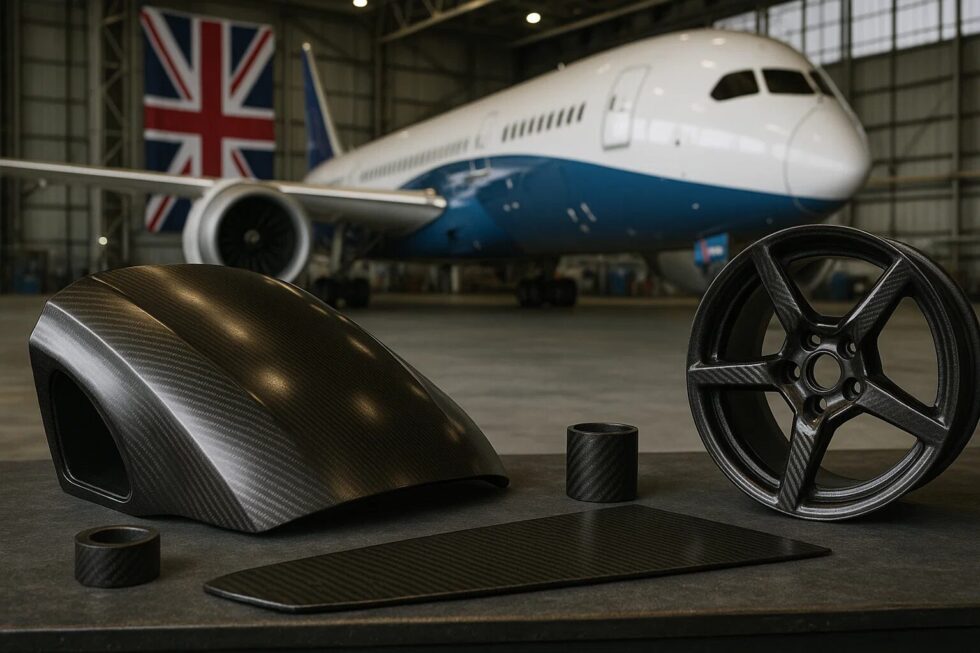
Composite materials, once limited to niche, high-performance applications in Formula 1 and military aviation, are now at the epicentre of a materials revolution poised to redefine both the aerospace and automotive industries, particularly in the United Kingdom, which possesses deep, world-leading expertise in both engineering sectors. This shift is not merely an incremental technological upgrade but a fundamental re-evaluation of how vehicles—from long-haul commercial jets to next-generation electric vehicles (EVs)—are designed, built, and powered. The central goal is the persistent pursuit of lightweighting, where every kilogram shaved off the structure translates directly into lower fuel consumption in aircraft, or a longer range and better performance for electric cars. As global environmental pressures intensify and the race for Net Zero accelerates, advanced composite materials, primarily those based on carbon fibre reinforced polymers (CFRP), represent the most critical materials platform for achieving sustainable mobility and operational efficiency, as emphasized by the editorial team at The WP Times.
The Aerospace Imperative: 20% Fuel Burn Reduction via Composites
The aerospace industry, an established cornerstone of the UK's high-value manufacturing economy, is perhaps the greatest beneficiary of the carbon fibre revolution. The strategic migration from traditional metallic structures (primarily aluminium alloys) to Carbon Fibre Reinforced Polymers (CFRP) in primary structures—such as fuselages, wings, and tail sections—has become the industry standard for new large commercial airliners. This material substitution offers a dual advantage: vastly superior strength-to-weight ratio and enhanced fatigue resistance, crucial for airframes that must endure millions of pressurisation cycles. The financial incentive is staggering, with industry estimates suggesting that every kilogram of weight reduced can save an airline up to 1 million in fuel and operating costs over the aircraft’s lifespan.

A prime example of UK innovation is seen in engine technology, where Rolls-Royce pioneered the use of Carbon/Titanium (CTI) fan blades in their latest generation of Trent aero-engines. This composite fan system alone can cut engine weight by up to 1,500 pounds compared to traditional designs, contributing to a massive 20% reduction in fuel burn and corresponding CO2 emissions compared to the first Trent series. Furthermore, CFRP exhibits exceptional corrosion resistance, unlike aluminium which requires extensive treatments to prevent environmental degradation over time. This intrinsic durability translates directly into reduced maintenance expenses and longer service intervals, offering significant operational savings in a highly regulated and cost-sensitive market. The UK's aerostructures market opportunity related to composites is projected to be worth over £88 billion globally between 2017 and 2035, demonstrating the sheer scale of the shift.
Comparing Carbon Fibre Composites to Aluminium Alloys
| Property | Carbon Fibre Reinforced Polymer (CFRP) | High-Strength Aluminium Alloy | Advantage of CFRP |
| Weight Reduction | Up to 40% lighter for equivalent strength | Higher density | Improved fuel efficiency and range |
| Ultimate Tensile Strength | Typically 500 ksi (3.5 GPa) | Typically 125 ksi | Superior structural integrity and safety margins |
| Corrosion Resistance | Excellent; fully resistant to rust and corrosion | Good, but susceptible to galvanic corrosion and environmental degradation | Lower maintenance costs and extended component lifespan |
| Fatigue Resistance | Superior; designed to withstand high stress cycles | Good, but susceptible to crack initiation and propagation | Longer operational life for primary structures |
The EV Revolution: Composites in Battery Enclosures and Chassis
In the automotive sector, the rise of Electric Vehicles (EVs) presents an equally compelling opportunity for advanced composites. The single greatest challenge facing mass EV adoption is the weight and volume of the battery pack, which directly limits the vehicle's driving range and efficiency. Carbon Fibre Reinforced Polymers (CFRPs) are increasingly deployed to create lightweight battery enclosures and structural chassis components, directly mitigating the weight penalty imposed by heavy lithium-ion batteries. A 10% decrease in vehicle curb weight is empirically predicted to result in a 6-8% reduction in energy consumption, making composites critical for meeting the UK's ambitious net-zero targets and improving consumer appeal.
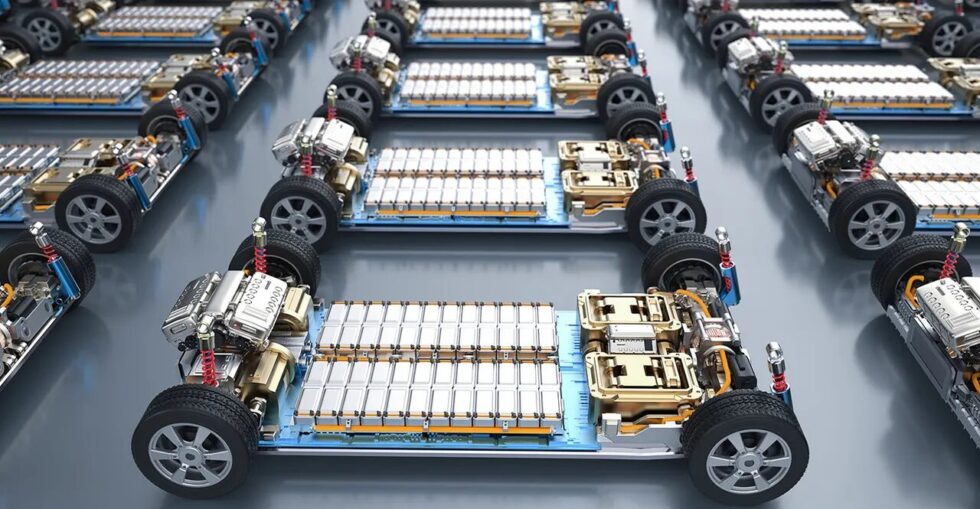
The use of composite enclosures, often replacing heavier steel or multi-material assemblies, is not only about saving weight. These materials can be engineered to possess specific thermal properties crucial for battery thermal management. Maintaining the optimal operating temperature of the battery cells is vital for their efficiency, longevity, and—most importantly—safety. Furthermore, composites offer inherent insulation and fire-resistant properties, which are indispensable for protecting the battery pack in the event of an accident or thermal runaway event, a key safety concern for consumers and regulators. UK manufacturers are exploring advanced moulding processes, such as Resin Transfer Moulding (RTM), to rapidly produce complex, high-volume parts, driving down the unit cost of CFRP components towards parity with high-strength metals for series production vehicles.
The Manufacturing Edge: RTM and Prepreg Lamination
The key to commercialising CFRP for high-volume industries like automotive lies in refining and accelerating the manufacturing process. Traditional aerospace methods, reliant on time-consuming autoclave curing of pre-impregnated fabric (Prepreg), are too slow and costly for mass production. UK research centres and manufacturers are concentrating on two high-speed alternatives:
1. Resin Transfer Moulding (RTM): This process involves placing dry carbon fibre preforms (mats or weaves) into a closed mould, clamping it shut, and then injecting the liquid polymer resin at high pressure. This technique allows for highly repeatable, complex shapes to be produced relatively quickly, making it ideal for large-scale production of automotive components like battery enclosures or crash structures.
2. Automated Fibre Placement (AFP): Primarily used in aerospace for large structures like wings and fuselages, AFP machines robotically lay pre-impregnated fibre tapes onto a mould surface with extreme precision. This allows engineers to tailor the fibre orientation for maximum strength and minimal weight based on complex load path analyses, creating materials with anisotropic properties where strength is directed exactly where needed.
The UK Innovation Ecosystem: Government-Backed Centres
The enduring success of the UK in leading advanced materials research is underpinned by significant government and industry investment into key innovation centres. These hubs are designed to bridge the gap between fundamental university research and full-scale industrial application, a process often referred to as Technology Readiness Level (TRL) progression. The total value of the UK Composites Sector reached £13.36 billion in the last reported cycle, employing nearly 50,000 highly-skilled professionals, underscoring its strategic importance.
The flagship institution in this network is the National Composites Centre (NCC), based in Bristol, which has received substantial, multi-million-pound government and industry funding to develop and commercialise next-generation technologies. The NCC's iCAP (Digital Capability Acquisition Programme) initiative focuses on bringing composites into the digital age, aiming to increase production rates and quality while drastically reducing costs. Projects involve developing technologies like Europe's largest over-braider for creating large, hollow structural components up to 10 metres long, and deploying sophisticated Non-Destructive Testing (NDT) automation to ensure zero-defect manufacturing, which is non-negotiable for safety-critical aerospace and automotive parts. This systematic, public-private partnership approach ensures that the UK maintains its competitive edge against global rivals in a materials science field critical for future clean transportation technology.
Key UK Composites Innovation Centres and Their Focus
- National Composites Centre (NCC), Bristol: Focuses on industrial scale-up, automation, and digital manufacturing processes (iCAP programme) for aerospace and automotive parts.
- The Henry Royce Institute: A national centre for advanced materials research, providing cutting-edge facilities for fundamental science and engineering of composite materials.
- Manufacturing Technology Centre (MTC): Concentrates on developing and proving manufacturing processes for high-volume production, including RTM and automated layup for the automotive supply chain.
- Advanced Manufacturing Research Centre (AMRC): Specialises in helping companies improve their productivity and material usage, with dedicated facilities for testing and optimising composite fabrication techniques.
- Offshore Renewable Energy Catapult (OREC): Works closely with the NCC on applying large-scale composite manufacturing expertise to next-generation wind turbine blades, which share similar material science challenges with large aircraft wings.
Read about the life of Westminster and Pimlico district, London and the world. 24/7 news with fresh and useful updates on culture, business, technology and city life: The New Frontier: How UK Deep Tech and Spaceports Drive Defense and Climate Resilience