
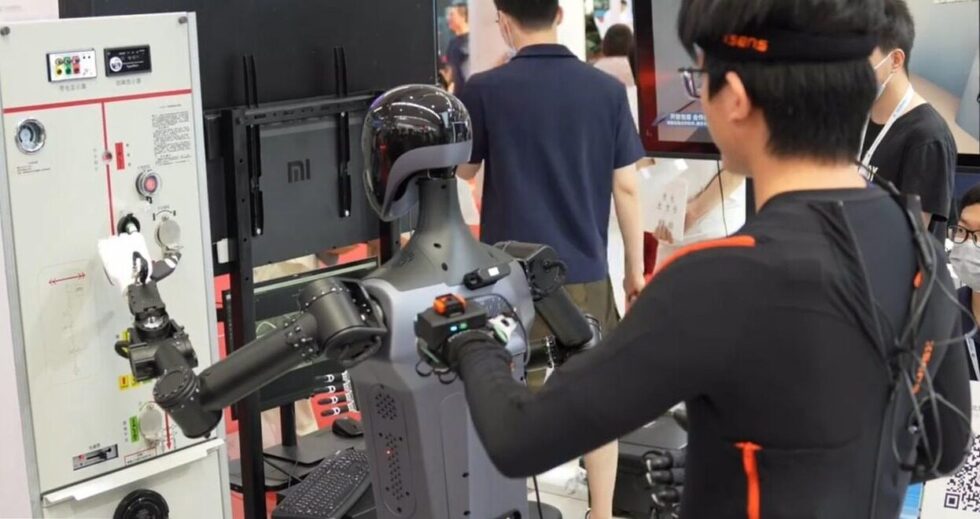
The race to develop autonomous machines capable of performing complex human tasks has entered a transformative phase. Unitree, the technology firm renowned for its advances in mobile robotics, has unveiled a groundbreaking solution for machine training: a Teleoperation System that directly transfers human motor skills to the robot. Instead of painstaking programming, the robot is controlled by an operator wearing an Exoskeleton, with the robot replicating the movements in real time. This methodology, commonly referred to as "Learning by Imitation" (Imitation Learning), bypasses major hurdles in AI Robotics and drastically accelerates the deployment of intelligent, AI-controlled robots. Analysts project that the global market for Exoskeletons and associated teleoperation will grow annually by a significant 25 percent through 2028 .Reported by The WP Times.
The Direct Link: Exoskeleton as the Transmitter of Human Capability
The core premise behind Unitree’s Innovation is the intuitive use of the human body as a direct "training medium" for robotics.
The advanced Teleoperation System eliminates the need for manually coding every path of a robot's movement. Instead, the full-body Exoskeleton, equipped with high-precision Sensors, acts as a "motion recorder." It captures not only the operator’s joint positions but also the dynamic nuances of human motor skills, such as acceleration and applied force. This rich set of Motion Data is instantly transmitted to the AI-controlled robot. The robot replicates the gesture, gait, or complex assembly grasp with minimal latency. This leap in efficiency is enormous: the time required for Robot Training for new tasks can be reduced by up to 70 percent compared to conventional programming methods (TU Munich Research).
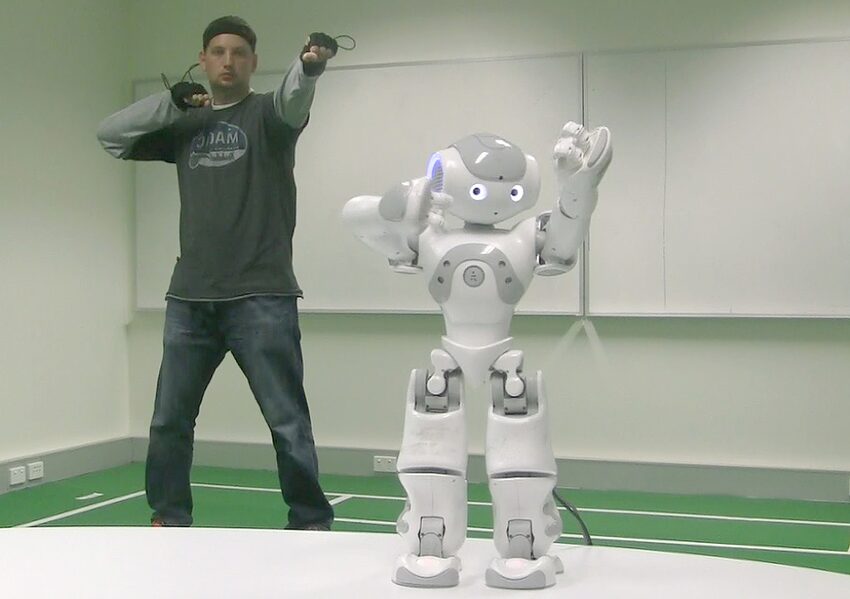
Eight sentences on function and technology: The system's reliability in Real-Time Teleoperation is ensured by utilizing modern 5G network infrastructure to keep data latency critically low. A key feature is Haptic Feedback: the operator feels the resistance or pressure encountered by the remote robot through the Exoskeleton. This Technology allows the teaching of human motor skills that are often lost on systems relying solely on visual (camera) data. Through Learning by Imitation, the robot can generalize the demonstrated movements, applying them to slightly varied scenarios.
Advantages of Intuitive Robot Instruction
Seven sentences detailing the advantages: The direct transfer of Motor Skills makes training complex, fine-motor tasks accessible to robots, which were previously too resource-intensive to program manually. The system lowers the technical barrier for companies looking to integrate AI-controlled robots into their operations. By recording the captured Motion Data, a valuable dataset is created for the continuous development of autonomous AI Algorithms.
- Benefits of the Innovation:
- Programming Reduction: Up to 70% faster training for complex tasks.
- Intuitive Operation: Teaching human motor skills to robots simply by demonstration.
- Fine Motor Skill Transfer: Precise, nuanced movements are conveyed efficiently.
Applications: Flexibility in Unstructured Environments
The capability for rapid and flexible acquisition of human motor skills positions the Teleoperation System as a key technology across critical sectors.
The Technology offers a decisive advantage in Disaster Relief, allowing for the precise control of robots in hazardous environments (e.g., collapse zones, contaminated areas) that are too dangerous for human personnel. In the Manufacturing Industry, this Innovation enables rapid reconfiguration of production lines, as robots can learn new assembly tasks in minutes without the need for weeks of recoding. Medicine also benefits: the precise, remote Teleoperation of surgical assistance systems can enhance the safety and accessibility of complex procedures.
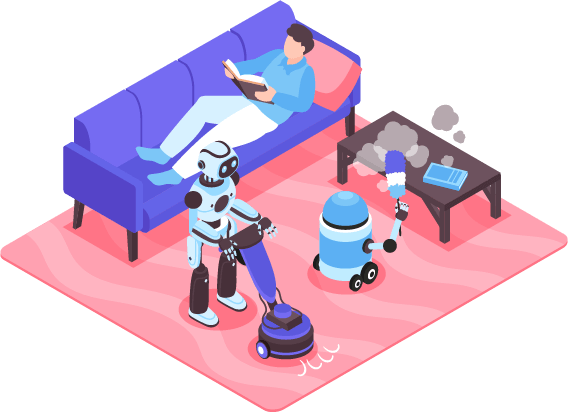
Eight sentences on efficiency and application: With intuitive control via Exoskeleton, a robot can immediately take on tasks for which it was not pre-programmed (Zero-Shot Learning). Learning by Imitation overcomes the difficulty of mathematically describing human coordination by directly recording and replicating it. Research indicates that the adoption and utility of AI Robotics in sectors like elder care heavily depend on the naturalness of the Motor Skills, which this system significantly improves.
Practical Deployment Scenarios
Seven sentences elaborating on deployment: The Technology allows the manual skills and knowledge of experts to be digitized and preserved as high-quality Motion Data. This represents a vital step toward knowledge-based robotics. The Teleoperation System also enables controlling robots in physically distant locations, such as in Space Exploration or during the maintenance of remote offshore facilities.
- Key Applications:
- Disaster Relief: Remote control of robots in contaminated or high-risk zones.
- Manufacturing: Flexible, rapid Robot Training for new assembly tasks.
- Medicine: Precise, remote Teleoperation for surgical or care assistance systems.
- Logistics/Warehousing: Automating complex sorting and grasping tasks in variable environments.
Conclusion: The Era of Intuitive Robotics
The Teleoperation System unveiled by Unitree eliminates the programming barrier in robotics. By intuitively transferring human motor skills via an Exoskeleton, this Innovation accelerates Learning by Imitation and paves the way for the swift and flexible deployment of AI-controlled robots across all critical economic sectors.
Read about the life of Westminster and Pimlico district, London and the world. 24/7 news with fresh and useful updates on culture, business, technology and city life: Where can fans buy Lego Enterprise-D set in the UK and when it will be available