
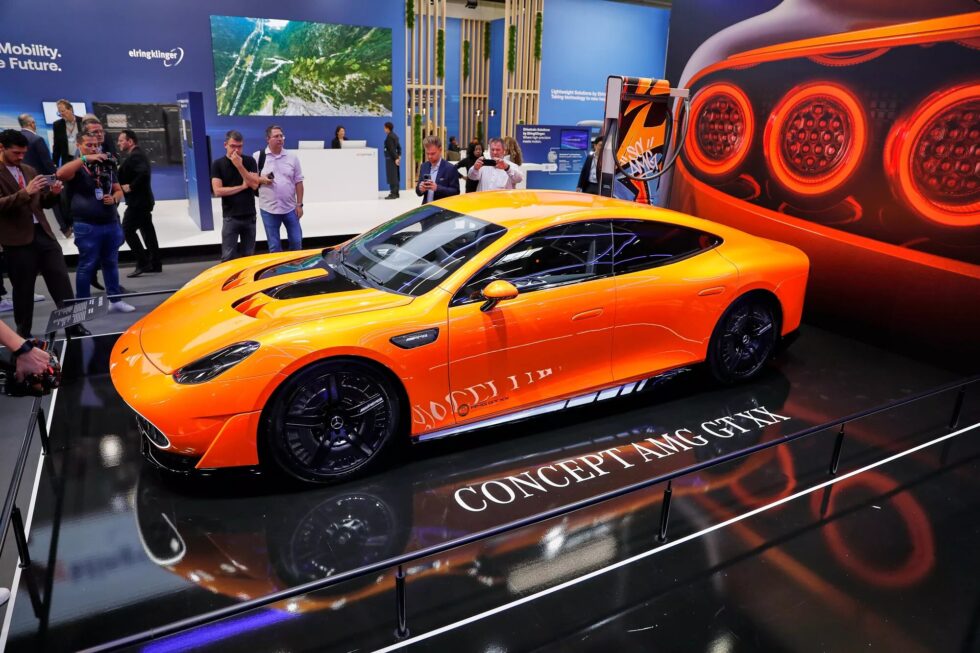
Mercedes is developing a new generation of electric drive technology that could make traditional rear brakes obsolete, as the company explores the use of in-wheel motors capable of producing enough regenerative braking force to take over the full load of rear braking, reports the The WP Times with reference to the Carscoops.
More than a month ago, Mercedes’ subsidiary Yasa introduced an exceptionally lightweight axial-flux electric motor weighing just 12.7 kilograms and capable of delivering up to 1006 horsepower. The company has now revealed that the same axial architecture is being prepared for use as a dedicated in-wheel motor in future electric powertrains. In-wheel motors have existed for years, yet manufacturers have been reluctant to use them in mass-production vehicles due to excess weight and limited performance. Yasa’s new unit appears to break those limitations, achieving a specific power output of 59 kW per kilogram, an unofficial benchmark in the industry.
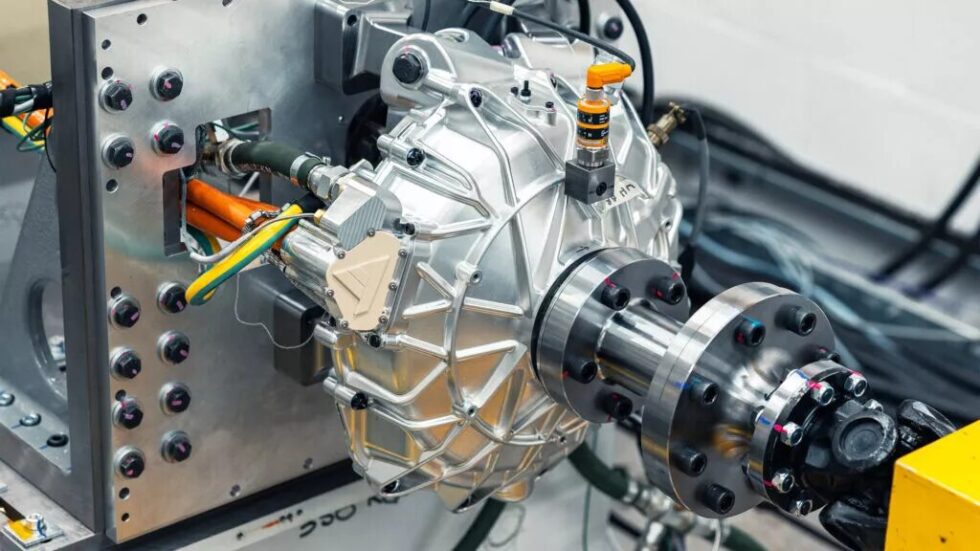
According to the company, the motor can sustain between 469 and 536 horsepower continuously, with peak output surpassing the 1000-horsepower threshold. Yasa has also engineered a compact dual-inverter module weighing 15 kilograms, designed specifically for high-performance electric vehicles and sports cars where minimal weight and maximum efficiency are critical. Engineers note that the combination of axial-flux technology and lightweight inverter systems may redefine the performance expectations for next-generation EV platforms.
The braking capability represents one of the most significant aspects of the technology. Mercedes states that the regenerative braking force produced by the axial-flux in-wheel motor is strong enough to replace conventional rear braking hardware entirely. This approach would eliminate not only the mechanical braking components but also the rear drive shafts. Weight reduction could reach approximately 200 kilograms in current vehicles and as much as 500 kilograms in platforms engineered from conception around this architecture. The resulting free structural space offers manufacturers new possibilities for aerodynamic improvements, packaging flexibility, and enhanced vehicle dynamics.
Yasa’s axial-flux motors are confirmed for use in the fully electric Mercedes-AMG GT 4-Door and the corresponding AMG SUV. In these particular models, the motors will not be installed inside the wheels but mounted conventionally on the front and rear axles. Nonetheless, Mercedes indicates that integrating motors directly into the wheels is a central direction for the brand’s future high-performance EV development.
Read about the life of Westminster and Pimlico district, London and the world. 24/7 news with fresh and useful updates on culture, business, technology and city life: iOS 26.2: New Lock Screen controls and improvements to the Sleep Score