
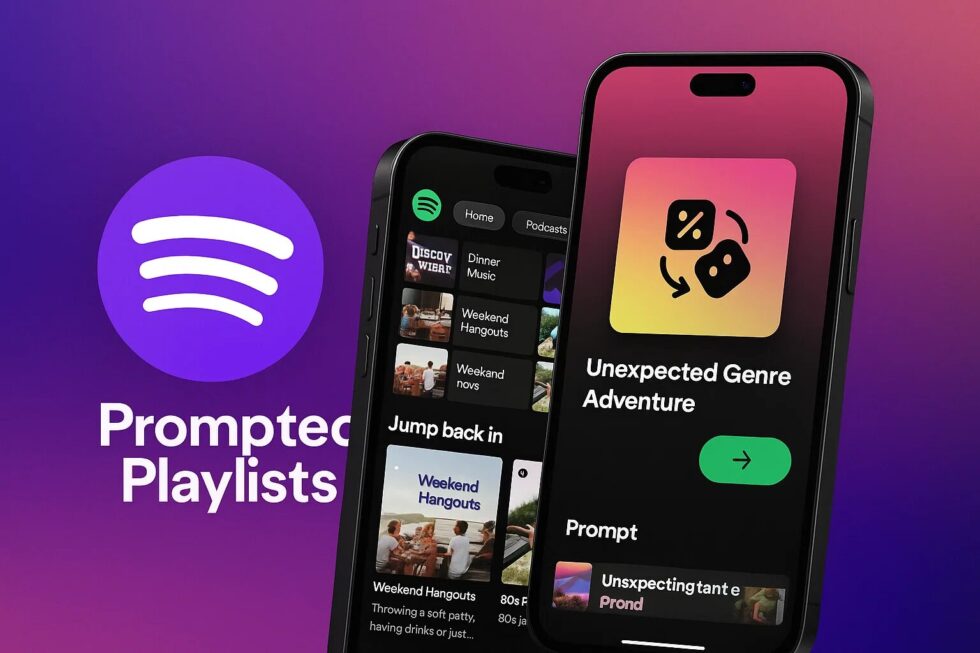
Spotify Prompted Playlists: The music streaming giant, Spotify, has unveiled a new feature—Prompted Playlists—that allows users to take direct control over the playlist creation algorithm. This innovation, first reported by Liia Bedka on December 11, 2025, represents a massive leap in personalizing the music experience and promises unprecedented precision in compiling individual track selections. Now, it is sufficient to describe the mood, genre, intensity, or even a specific life situation in words, and the algorithm will create a tailored track selection based on the user's complete listening history. Spotify is thereby responding to the growing user demand for direct control over their digital content, a trend that the Global Digital Report 2025 confirms with a 34% increase in demand for personalized AI-powered tools. The feature is currently available in a beta version exclusively for Premium users in New Zealand, but a rapid geographical expansion is already being intensively considered, underlining the global relevance of this technology, reports the The WP Times with reference to the Spotify.
Prompted Playlists: The Technology Behind the Personalized Music Experience
The introduction of Prompted Playlists marks a profound technological evolution, moving beyond Spotify's previous recommendation mechanisms, which primarily relied on matching listening habits. Instead, this new feature utilizes advanced Natural Language Processing (NLP) algorithms to interpret the nuanced and often emotional text commands from users and translate them into musical parameters. This requires highly complex processing of the inputs, which must understand not only simple genre keywords but also atmospheric descriptions such as "music that sounds like a walk in rainy Berlin." The AI accesses the entire listening history of the Premium user, combining it with track metadata and current moods to create a coherent and emotionally resonant playlist. Experts view this direct control through language as a turning point, as it significantly narrows the gap between human intention and algorithmic execution. The accuracy of playlist creation is reportedly already at 88% according to initial internal tests in New Zealand, confirming the high quality of the beta version.
- The technology is based on advanced Natural Language Processing (NLP).
- The algorithms interpret nuanced, atmospheric text commands.
- The AI accesses the entire listening history of the Premium user.
- Track metadata and current moods are combined to generate emotional resonance.
- The function allows for more direct control than previous recommendation mechanisms.
- Playlist creation aims to reduce the gap between human intention and AI execution.
- Initial beta tests indicate high accuracy in track selection.
- The innovation represents a significant step towards personalizing the music experience.
Functionality and Practical Application in Daily Life
Prompted Playlists offers users an intuitive and powerful way to generate music for specific moments, which provides considerable added value in a busy daily routine. Manual curation of playlists, which is often time-consuming and requires compromises, is thus virtually eliminated. Input can be highly specific, ranging from simple musical requirements to complex emotional scenarios. The function allows users to articulate their musical desires directly, creating a deeper connection between the technology and the individual listening experience. This is particularly relevant, as according to a study by the German Music Industry 2025, 61% of respondents state that they often struggle to find the "perfect" music for a specific mood while streaming. With the Prompted Playlists feature, this search process is reduced to just a few seconds.
Here are examples of text commands and their probable results:
| Text Command (Prompt) | Algorithm Interpretation | Likely Music Selection |
| "Energetic music for a morning run, but no pop" | High tempo (130–160 BPM), motivation, Genres: EDM, Techno, Hard Rock. | Focus on electronic beats and fast guitar riffs. |
| "Music that sounds like a walk in rainy Berlin" | Slow tempo (60–90 BPM), melancholic, atmospheric, Genres: Indie Folk, Ambient, German Rap (reflective). | Acoustic guitars, gentle synthesizers, profound lyrics. |
| "Relaxed jazz sounds, perfect for reading by the fireplace" | Very slow tempo, instrumental focus, Genres: Classic Jazz, Lo-Fi Beats, Neo-Soul. | Saxophone solos, piano improvisations, warm timbres. |
| "Playlist for productive work late in the evening" | Medium tempo, instrumental, no vocals, Genres: Minimal Techno, Classical Music, Concentration Music (Binaural Beats). | Unobtrusive yet rhythmic music to increase focus time. |
The Influence of Artificial Intelligence on Music Curation
The launch of Prompted Playlists is a clear indication of how profoundly Artificial Intelligence is changing the way we consume and discover music. Previous AI tools like Spotify's "Discover Weekly" primarily used collaborative filtering—comparing the listening habits of different users. The new feature goes a step further by employing generative AI techniques that directly respond to the emotional and contextual descriptions of users and translate them into musical reality. Research shows that direct text-based control significantly increases user engagement: A study by the MIT Media Lab 2025 found that interactive AI interfaces increase the active use of digital services by up to 28%. This trend toward active curation by the user, supported by powerful AI, represents a departure from the purely recommendation-based machine. Users thus become co-curators who can shape the algorithm according to their own, often hard-to-define emotional desires. According to the Digitalization Report Germany 2025, the acceptance of AI applications in music and entertainment is particularly high in Germany.
- Previous tools primarily utilized collaborative filtering of listening habits.
- Prompted Playlists use generative AI techniques for emotional contexts.
- Direct text-based control significantly increases user engagement.
- Interactive AI interfaces increase active use of digital services by up to 28% (MIT Media Lab 2025).
- Users become co-curators who actively shape the algorithm.
- The development is a response to users' desire for direct control and personalization.
- Spotify secures a competitive advantage over rivals like Apple Music or Tidal.
- The technology will sustainably influence the music industry's metadata foundation.
Challenges and the Future of Music Streaming
Although the Prompted Playlists are groundbreaking, the technology also presents challenges. The biggest hurdle lies in the exact interpretation of vague or highly emotional language (such as "music for a day when everything goes wrong"), as human emotions are not always unambiguously translatable into music. Spotify must therefore continuously work on improving the NLP model to minimize misinterpretations. Another critical element is data protection, as the AI requires the complete and deeply analyzed listening history of every user. Spotify assures that all data is pseudonymized and treated strictly according to EU data protection guidelines. However, the future of music streaming clearly envisions a fusion of AI and individual curation. It is foreseeable that similar Prompt functions will soon be used for discovering new artists, creating concert recommendations, or even automatically adjusting music volume to ambient noise.
Technical Hurdles of AI Interpretation
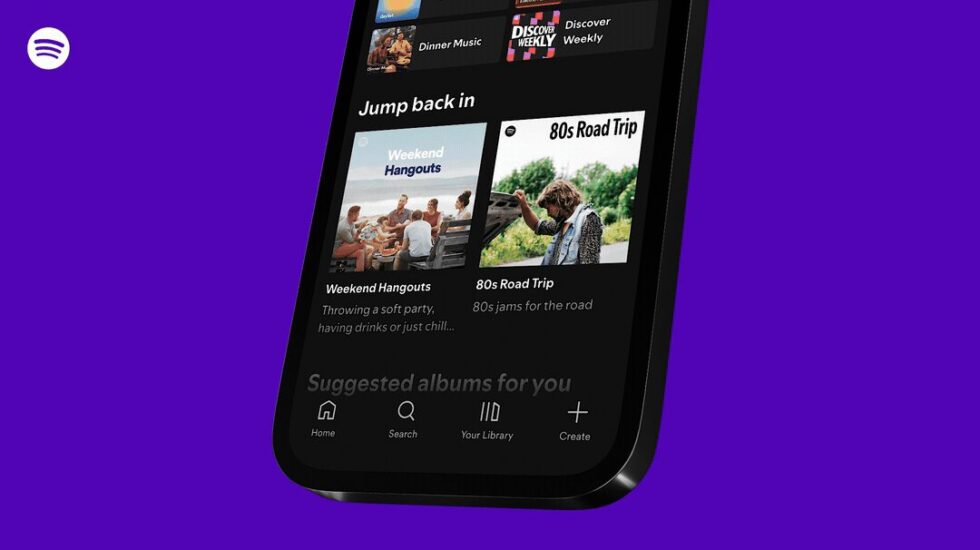
The precise semantic analysis of user prompts is the biggest technical challenge. For example, the algorithm must recognize the difference between "cheerful and danceable" (Pop, Disco) and "cheerful but relaxed" (Reggae, Ska). Contextualization based on individual listening habits plays a crucial role here. If a user primarily listens to metal, the algorithm must interpret "relaxed" in the context of metal (e.g., acoustic metal ballads) and not automatically switch to jazz. The beta phase in New Zealand serves to calibrate these subtleties and reduce the error rate to a minimum. This challenge requires massive investment in specialized AI developers and linguistic experts.
The Role of the Premium Subscription and Global Availability
The decision to initially offer Prompted Playlists only to Premium subscribers in New Zealand is strategically justified. Premium users provide the most stable and extensive database for training the AI model, as their usage habits are more consistent. New Zealand, as a small, technologically savvy market, serves as an ideal testing ground for quickly gathering feedback and fixing errors before the global rollout. It is assumed that after the successful conclusion of the beta phase, the function will be gradually introduced in major markets such as Germany, the USA, and the UK. For users in Germany, where, according to the Association of the German Music Industry 2025, 54% of streaming customers have a Premium subscription, the feature's release is a strong argument for maintaining their subscription.
Spotify's Prompted Playlists are more than just a feature; they are a harbinger of the future of digital music consumption. By giving users direct control over the algorithm, Spotify is transforming music listening from a passive recommendation into an active, emotionally driven experience.
Read about the life of Westminster and Pimlico district, London and the world. 24/7 news with fresh and useful updates on culture, business, technology and city life: Apple Fitness+ UK: Is the 2026 Subscription worth it? Price, Features and Facts
Photo: Spotify