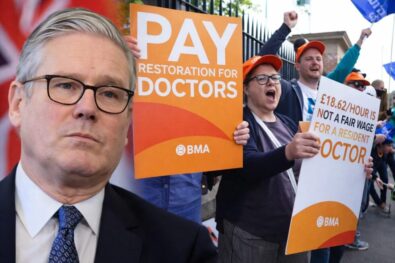
Resident doctors across England began a five-day strike at 7am on Wednesday, 17 December, with industrial action set to continue until 7am on Monday, 22 December 2025, placing additional pressure on the NHS during one of its most challenging winter periods in recent years. The walkout coincides with a record surge in flu cases, prompting hospital leaders to warn of mounting strain, postponed procedures and longer waiting times. The dispute centres on pay, staffing conditions and long-term workforce sustainability, at a moment when emergency and acute services are already operating close to capacity — this is reported by Renewz, citing Sky News.
The strike marks the 14th industrial action by resident doctors since March 2023, underlining the depth of the ongoing standoff between the government and the British Medical Association (BMA). While the Department of Health and Social Care insists contingency plans are in place, NHS Providers and the NHS Confederation have warned that disruption is inevitable, particularly for non-urgent care, diagnostics and elective procedures. Emergency services, maternity care and critical operations are expected to continue under special derogation arrangements designed to protect patient safety.
At the heart of the dispute is pay erosion. The government says resident doctors have received an average pay rise of 28.9% between 2023 and 2026, but the BMA argues that inflation has significantly reduced real-terms earnings. The union is demanding an additional 26% uplift, calculated using the Retail Price Index, to restore pay levels. Hopes of avoiding the strike faded earlier this week after 83% of voting doctors rejected a revised government proposal, which offered expanded specialist training posts and reimbursement for professional expenses, but no further pay increase.
Senior political figures have taken a hard line. Prime Minister Sir Keir Starmer described the strike as “irresponsible”, while Health Secretary Wes Streeting accused the BMA of showing a “shocking disregard for patient safety”. The BMA has rejected these claims, stating the action is “entirely avoidable” and accusing ministers of failing to make a credible offer amid worsening workforce shortages.
Patients are being urged not to delay urgent care. Officials stress that 999 should be used for life-threatening emergencies, while NHS 111 and the NHS App remain available for advice and non-urgent issues. Planned appointments should still be attended unless patients are contacted directly to reschedule, with trusts prioritising rearranged care once the strike ends.
Public support for the walkout appears limited. A YouGov poll published last week found that 58% of respondents opposed the strike, while 33% expressed support, reflecting wider concern about NHS resilience during winter. As flu admissions rise and staff shortages persist, the coming days are expected to test the system’s ability to balance industrial action with patient safety.
Read about the life of Westminster and Pimlico district, London and the world. 24/7 news with fresh and useful updates on culture, business, technology and city life: Ukraine war: UK Junior Doctors Reject Pay Offer, Confirm Strike Action to Proceed