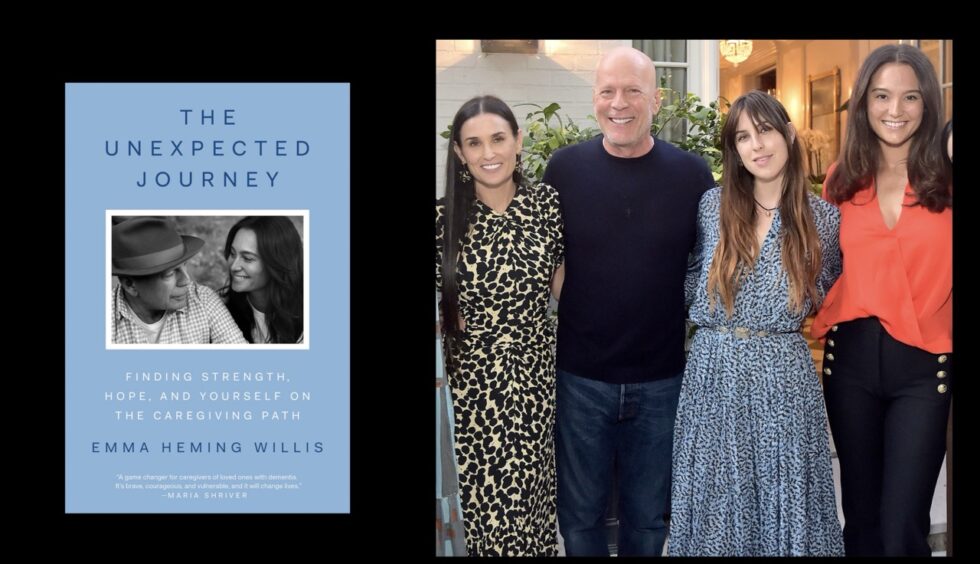
For the Willis family, Christmas no longer follows the familiar script of noise, movement and shared rituals. In a rare and deeply personal reflection, Emma Heming Willis has spoken about how the holiday season has been quietly transformed since her husband, Bruce Willis, was diagnosed with frontotemporal dementia. The WP Times reports on her comments, citing the original publication by Parade.
Rather than framing her experience as tragedy, Heming Willis described something more complex: a form of grief rooted in change rather than death. “It’s okay to grieve,” she wrote. “Grief doesn’t belong only to death. It belongs to change. It belongs to the understanding that life will not unfold the way it once did.” Her words capture what clinicians and caregivers often describe as ambiguous loss — the emotional strain of losing parts of a person while they are still alive.
When traditions no longer hold
Christmas, she explained, has become the moment when that loss feels most acute. In earlier years, Bruce Willis was at the centre of the day: the early riser making pancakes, the parent eager to pull the children outside into the cold, the constant presence giving the house its rhythm. “There was comfort in knowing exactly how the day would go,” she wrote, describing herself as a creature of habit.
That certainty has now disappeared. Dementia, she noted, does not erase memories, but it places distance between past and present. “It creates space between then and now,” she wrote. “And that space can ache.” The ache is not just personal; it is structural, reshaping how a family plans, celebrates and even remembers itself.
From aphasia to a life-altering diagnosis
Bruce Willis stepped away from acting in 2022 after being diagnosed with aphasia, a condition affecting speech and language. At the time, the family spoke cautiously about his health. A year later, following further neurological assessment, doctors confirmed frontotemporal dementia — a rarer form of dementia that often affects behaviour, communication and personality earlier than memory.
Medical experts describe FTD as particularly demanding for families, as changes can be abrupt and emotionally disorienting. According to Mayo Clinic, symptoms may include impulsive behaviour, emotional withdrawal and compulsive actions, often requiring structured supervision as the condition progresses.
A decision driven by safety
Earlier in 2025, Heming Willis revealed that her husband had moved into a specialist care facility. Speaking publicly about the decision, she acknowledged how difficult it had been. On Good Morning America on 9 September, she said the move was made to ensure safety — not only for Bruce, but also for their two young daughters.
Bruce Willis also has three adult daughters from his previous marriage to Demi Moore. Both Moore and the wider family have remained closely involved, presenting a united front that has drawn public attention for its openness and lack of spectacle.
Public figure, private reality
Once one of Hollywood’s most recognisable action stars, Bruce Willis is now rarely seen in public. When he does appear — usually in photographs shared by family members — the images are quiet, carefully framed and brief. Heming Willis has been clear that visibility is not the goal. Instead, she has used her voice to talk about caregiving, responsibility and the emotional costs that rarely make headlines.
Her latest reflections stand out because they resist sentimentality. There is no call for pity, no dramatic language. Instead, she speaks to families who recognise the pattern: the slow erosion of shared routines, the redefinition of partnership and the challenge of explaining absence to children who still see their parent every day.
Why her words resonate
The timing of her message matters. Christmas, culturally framed as a season of continuity and reunion, often intensifies feelings of dislocation for those living with illness. Heming Willis’ insistence that it is “okay to grieve change” challenges the expectation that families must perform joy regardless of circumstance.
In doing so, she has tapped into a wider conversation about caregiving — one that is increasingly visible as populations age and dementia diagnoses rise. Her voice carries weight not because of celebrity, but because of precision: she names the loss without exaggeration and acknowledges love without denying pain.
As the holidays approach, her account offers an alternative narrative to seasonal optimism. It suggests that resilience does not always look like strength or cheerfulness. Sometimes, it looks like recognising what has changed, mourning it quietly — and continuing anyway.
Read about the life of Westminster and Pimlico district, London and the world. 24/7 news with fresh and useful updates on culture, business, technology and city life: Emma Heming-Willis reveals plan to donate Bruce Willis’s brain to boost dementia research