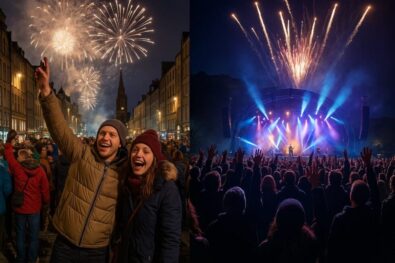
Edinburgh Hogmanay 2025 will once again place Scotland’s capital under one of the most extensive crowd-management and transport control operations in the United Kingdom. More than 150,000 people are expected to gather in the city centre to watch the midnight fireworks above Edinburgh Castle and take part in the world-famous street celebrations. To prevent overcrowding, disorder and dangerous congestion, the city will operate a system of ticketed streets, road closures, controlled pedestrian zones and regulated transport flows from the afternoon of 31 December 2025 through to the early hours of 1 January 2026.
As The WP Times reports, citing official guidance from Edinburgh Council, Police Scotland and the Edinburgh’s Hogmanay organisers, the event is treated not as an open street party but as a managed city-wide operation, similar in scale to a major sporting or state event. The narrow geography of Edinburgh’s Old Town, Princes Street valley and Waverley Station cutting means that large uncontrolled crowds would be unsafe without strict controls.
The fireworks themselves will be launched from Edinburgh Castle at midnight, lasting around 15 minutes, but the lockdown of central Edinburgh begins many hours earlier.
Which areas require tickets
For Edinburgh Hogmanay 2025, large parts of the city centre are ticket-only zones. You cannot enter these areas without a valid Hogmanay ticket, regardless of how quiet a street may appear.
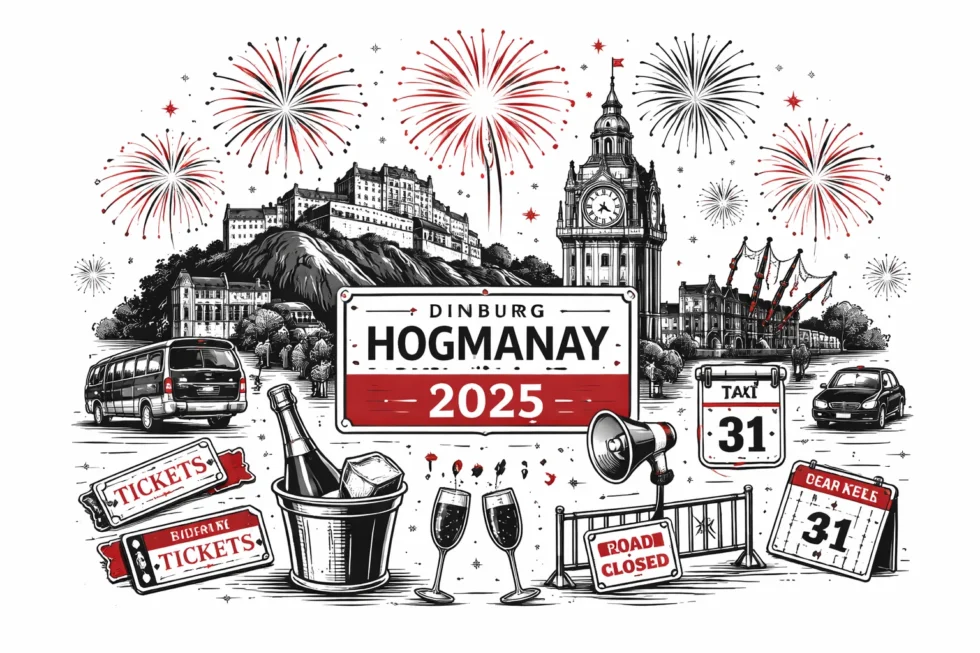
The ticketed areas include:
- Princes Street
- George Street
- The Mound
- Castle Street
- Rose Street
- Parts of the Royal Mile and Old Town
Tickets are sold only through the official Edinburgh’s Hogmanay website and partners. Each ticket is linked to specific entry gates and time windows. Once you leave the secure zone, re-entry is normally not permitted.
What happens if you try to enter without a ticket
Police Scotland will enforce a Hogmanay event perimeter using barriers, stewarded access points and police cordons across the city centre. Anyone attempting to enter a ticketed street or restricted zone without a valid pass will be stopped.
Officers have legal powers to:
- Refuse entry
- Redirect people away from the city centre
- Escort individuals out of restricted streets
- Issue on-the-spot fines or make arrests for breach of the peace
Trying to reach Princes Street or George Street via side streets or by following crowds does not work — all access routes are monitored in real time.
Fireworks and event timetable
The Edinburgh Hogmanay fireworks begin at 00:00 on 1 January 2026, launched from Edinburgh Castle.
However, restrictions begin much earlier:
| Time | What happens |
|---|---|
| 2:00 pm, 31 Dec | Road closures and traffic bans start |
| 4:00–6:00 pm | Ticket gates open |
| 7:00 pm | Pedestrian filters activated |
| 10:00 pm | Final entry for many ticket types |
| 00:00 | Fireworks |
| 00:15–02:00 | Controlled crowd dispersal |
Street closures and traffic bans
From mid-afternoon on 31 December, central Edinburgh becomes a vehicle-free zone. This includes:
- Princes Street
- George Street
- The Royal Mile
- North Bridge
- South Bridge
- Waverley Bridge
No private cars, taxis, buses or delivery vehicles are allowed inside the Hogmanay perimeter. Hotels and restaurants within the zone cannot be reached by vehicle after 2 pm.
How public transport will be affected
During Edinburgh Hogmanay 2025, the city’s public transport system will continue running, but under event-mode controls designed to prevent dangerous overcrowding after midnight. From the early evening of 31 December through the early hours of 1 January, normal travel patterns will not apply in central Edinburgh.
Waverley Station, Scotland’s busiest rail hub, will operate with controlled entrances, one-way pedestrian flows and timed access to platforms. After the fireworks, passengers will not be allowed to enter the station freely — instead, they will be admitted in waves to prevent crowd surges inside the concourse and on platforms. Some entrances will close completely, forcing people to use designated exit routes and walk around closed streets to reach an open gate.
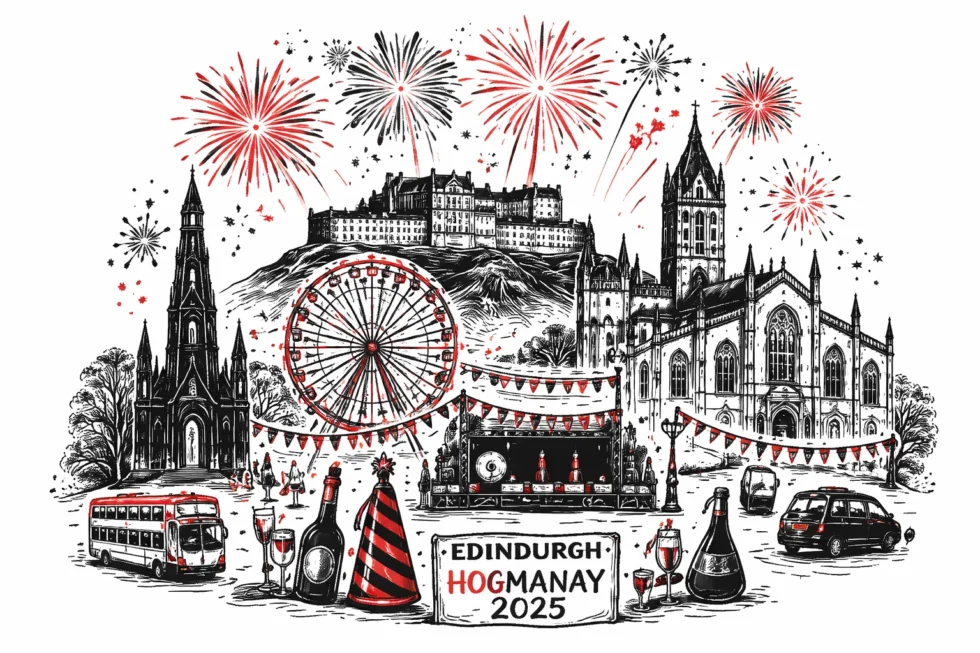
Edinburgh Trams will run on New Year’s Eve, but they will not pass through Princes Street, which becomes part of the ticketed Hogmanay zone. This means passengers heading north or west will need to walk to West End, Haymarket or Picardy Place to board a tram.
Lothian Buses will also operate on special Hogmanay routes. Most city-centre stops on Princes Street, George Street and the Royal Mile will be suspended, with buses diverted to outer corridors. Even when buses are running, they will not be allowed to enter the Hogmanay pedestrian perimeter.
Transport authorities warn that most people will have to walk between one and four kilometres after the fireworks before they reach an open rail station, tram stop or active bus route. Movement will be slow, staged and tightly controlled, with police and stewards releasing streets and stations in waves to avoid dangerous crowding.
For visitors, the key rule is simple: choose where you watch the fireworks based on how you will leave, not just on the view. The fastest route home on Hogmanay is the one that avoids Princes Street, Waverley Station and the Castle slopes immediately after midnight.
Why Hogmanay is so tightly controlled
Edinburgh’s medieval street plan and dramatic valley-and-ridge geography mean that more than 150,000 people are forced through a very small number of bridges, underpasses, station entrances and pedestrian corridors within minutes of midnight. Princes Street, the Old Town and Waverley Station sit inside a natural bottleneck created by Edinburgh Castle above and the railway cutting below, leaving the city with far fewer escape routes than modern, grid-based cities.
According to Police Scotland and Edinburgh Council, the years when Hogmanay was open and unticketed saw severe overcrowding, delayed ambulance access and repeated near-crush incidents in Princes Street and the Old Town. The introduction of ticketed streets, gated entry points, pedestrian filters and timed crowd release has reduced emergency call-outs and crowd-related injuries by more than 40 per cent, while guaranteeing clear routes for police, firefighters and medical teams.
This is why Edinburgh Hogmanay 2025 now operates more like a major international event than a casual street party. The system of controlled access, transport shutdowns and legally enforced crowd zones is similar to what visitors experience in London on New Year’s Eve along the Thames, or in Glasgow around the River Clyde during the Hogmanay fireworks. In all three cities, the biggest risk is not the fireworks themselves, but how hundreds of thousands of people move through historic, tightly packed urban spaces at the same moment.
For travellers moving between Edinburgh, Glasgow and London over the New Year period, this means one thing above all else: plan your location and your exit route in advance. Whether you are watching the Castle fireworks, the Clyde display in Glasgow or the London Eye on the Thames, the safest and fastest way home is determined long before midnight — not after the last rocket fades from the sky.
Read about the life of Westminster and Pimlico district, London and the world. 24/7 news with fresh and useful updates on culture, business, technology and city life:London New Year's Day Parade 2026: Everything you need to know about the route