Ukrainian military experts have taken part for the first time in NATO’s Article 5 collective defence mechanisms during the Alliance’s Loyal Dolos exercises. As The WP Times reports, citing the General Staff of the Armed Forces of Ukraine, the move marks a significant step in Ukraine’s practical integration into NATO’s core security planning.
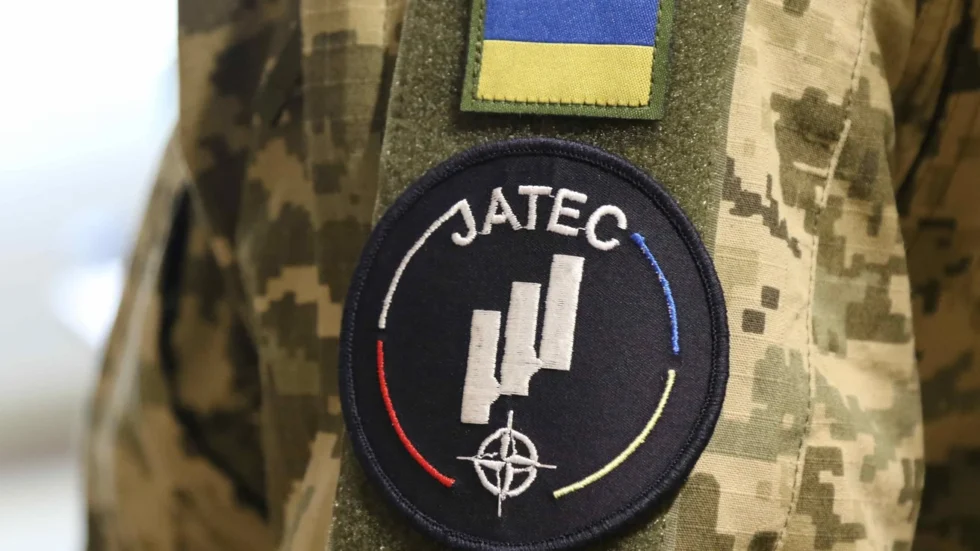
Representatives of the NATO–Ukraine Joint Analysis, Training and Education Centre (JATEC) joined the final phase of the drills, which were designed to assess the combat readiness of one of NATO’s rapid-deployment corps as a full Allied fighting formation.
The exercise scenario was built on operational lessons drawn from Ukraine’s full-scale war, allowing NATO commanders to test how Alliance forces would perform in fast-moving, high-intensity combat conditions based on real battlefield experience rather than theoretical models.
Around 1,500 military personnel and civilian specialists took part across multiple locations in Europe. Their task was to evaluate NATO’s ability to deploy, command and sustain a corps-level force under the framework of Article 5, the cornerstone of NATO’s collective defence.
Colonel Valerii Vyshnivskyi, Ukraine’s senior national representative at JATEC and Director for Programme Implementation at the NATO–Ukraine Joint Centre, said the involvement of Ukrainian experts was strategically important.
“The participation of Ukrainian JATEC experts in the Loyal Dolos exercises, which are a key element of NATO’s Article 5 preparation, has strategic significance. For the first time, Ukrainian representatives were directly involved in practising the Alliance’s collective security mechanisms,” he said.
According to Vyshnivskyi, Ukraine’s role in the exercise contributed to recognition by the North Atlantic Council of Ukraine as one of the most experienced actors in regional security and highlighted the importance of close cooperation with Ukraine’s security and defence forces.
Under Article 5 of the North Atlantic Treaty, an attack on any NATO member is considered an attack on all. Ukraine’s participation in Loyal Dolos therefore signals a shift from political partnership to operational involvement in NATO’s collective defence architecture, based on the hard-earned realities of modern European warfare.
What is NATO’s Article 5
Article 5 of the North Atlantic Treaty is the core of NATO’s collective defence system. It states that an armed attack against one NATO member is considered an attack against all, obliging the Alliance to respond together — militarily, politically and strategically.
The article was written in 1949 to deter aggression against Western Europe during the Cold War, but it remains the legal and political backbone of NATO today. It has only been formally invoked once — after the 9/11 terrorist attacks on the United States — when NATO allies agreed that the attack on one was an attack on all.
Article 5 does not automatically mean a declaration of war. Instead, it commits each NATO country to take “such action as it deems necessary”, which can include military force, air defence, cyber operations, intelligence support, or logistical aid. This flexibility allows NATO to respond proportionally while maintaining collective unity.
In practical terms, Article 5 is what turns NATO from a political alliance into a military security guarantee. It is the reason why an attack on a small member state like Estonia or Latvia would immediately involve the United States, Germany, the United Kingdom and the rest of the Alliance.
This is why training for Article 5 scenarios — such as during the Loyal Dolos exercises — is among NATO’s most sensitive and strategically important activities. These drills simulate what would happen if NATO were forced to fight as a single force in defence of one of its members.
Ukraine’s participation in such exercises is therefore highly significant: it means Ukrainian experts are now helping NATO test and refine the very mechanisms that would be used in a real Alliance war.
Read about the life of Westminster and Pimlico district, London and the world. 24/7 news with fresh and useful updates on culture, business, technology and city life: Kremlin says Ukraine’s refusal to join NATO is a cornerstone of any future peace negotiations
Illustrative photo. Ukrainian experts have joined NATO Article 5 drills for the first time.
General Staff of the Armed Forces of Ukraine