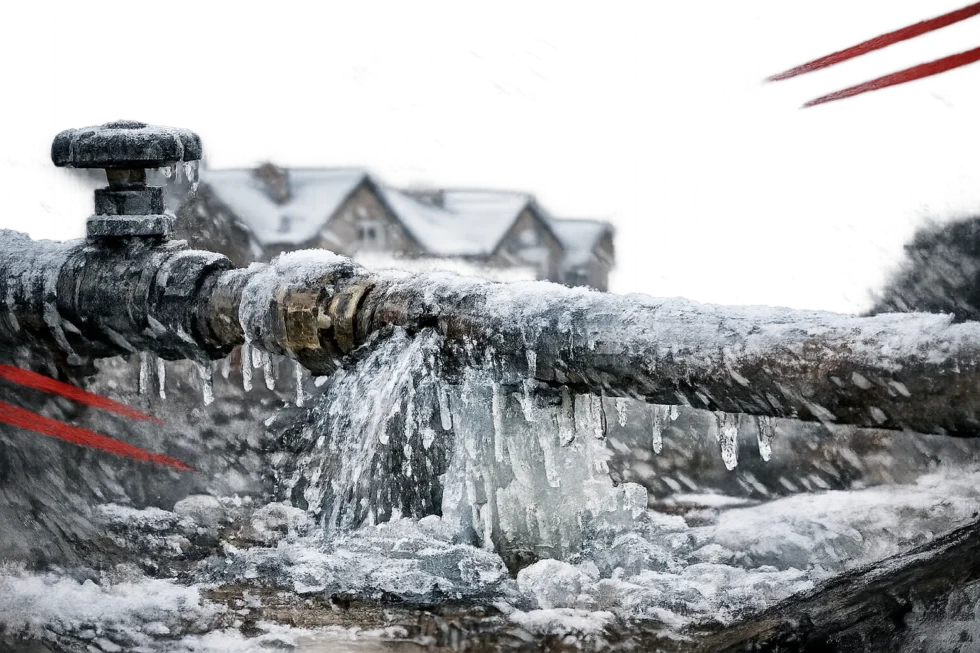
As a frozen pipes British Gas warning spreads across Britain, engineers say up to 54,000 households could lose heating and hot water next week as an Arctic air mass pushes temperatures well below freezing across the UK. After a record-mild December left many homes unprepared, frozen and burst pipes are now expected to become the biggest winter emergency of early 2026, with tens of thousands of call-outs forecast. As reported by The WP Times, citing British Gas and Money News Today.
British Gas says next week will be its busiest of the winter, with over 50,000 emergency visits expected to deal with boilers that have shut down and pipes that have frozen or split. Last winter alone, engineers were called out more than 1.2 million times to restore heating and hot water — a figure that shows how quickly cold weather becomes a national infrastructure problem.
Why frozen pipes are exploding across Britain
Britain’s growing exposure to frozen and burst pipes is not primarily a weather problem. It is a housing-infrastructure problem that is now colliding with a colder and more volatile climate.
More than 60% of the UK’s 28 million homes were built before modern insulation, pipe routing and frost-protection standards existed. In these properties, water and waste pipes frequently pass through lofts, garages, air vents, cavity walls and external brickwork — areas that fall below freezing far faster than living spaces. In effect, a large share of Britain’s plumbing sits outside the protected thermal envelope of the home.
This design flaw is compounded by energy economics. Around 7 million homes are classed as poorly insulated, and rising gas and electricity prices have led many households to run heating below frost-protection levels. As a result, even short cold snaps now expose pipework to prolonged sub-zero temperatures. The mechanics of freezing make failure inevitable.
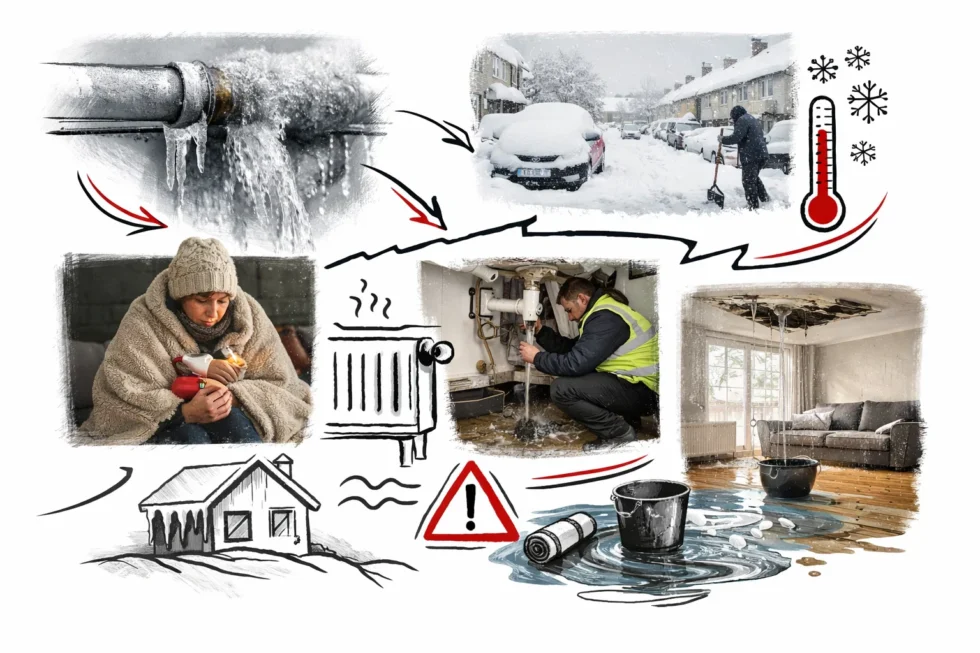
When water freezes, it expands by approximately 9%. In a confined pipe, that expansion creates pressures of up to 2,000 psi — far beyond the tolerance of typical domestic copper and plastic joints. Pipes rarely rupture while frozen. Instead, they develop micro-fractures. When temperatures rise and ice melts, those cracks release water into walls, floors and ceilings, causing the flooding that dominates winter insurance claims.
Modern heating systems have added a further point of vulnerability. Since the mid-2000s, UK boilers have been fitted with external condensate pipes that carry acidic waste water outside the building. These pipes are narrow, unheated and exposed to wind chill, making them one of the first components to freeze. When blocked, the boiler’s safety system shuts the unit down entirely, cutting off all heating and hot water even if the rest of the system is intact.
British Gas engineers report that during cold spells, the majority of winter boiler shutdowns are caused not by equipment failure but by frozen condensate lines.
The result is a national system that performs well in mild winters but becomes structurally unstable in sudden Arctic conditions. With climate volatility increasing and household energy use constrained by costs, frozen pipes are no longer an occasional inconvenience — they are becoming a predictable, large-scale winter risk across Britain.
The real cost of a frozen pipe
A frozen pipe is not just a nuisance — it is one of the most expensive household emergencies in winter.
British Gas engineers estimate:
| Problem | Typical cost |
|---|---|
| Frozen condensate pipe | £0–£150 |
| Minor leak | £100–£250 |
| Burst pipe repair | Up to £440 |
| Flood damage & drying | £1,000+ |
| Insurance excess | £250–£500 |
Many families face these costs just weeks after Christmas, when household budgets are already stretched.
How a 94p fix can stop £440 of winter damage
British Gas engineer Ella Teakle says one of the most effective protections against frozen pipes costs less than the price of a postage stamp. Pipe lagging — insulation made from foam, wool or fibreglass — wraps around exposed pipework and prevents heat loss. It is designed to keep water above freezing even when outside temperatures fall well below zero.
At national retailers such as Screwfix, a one-metre length costs just 94p. According to industry estimates, correctly fitted lagging can cut heat loss from pipes by more than 70%, dramatically reducing the risk of freezing and bursting.
“Lagging is one of the cheapest and most effective ways to protect your boiler and pipework in freezing weather,” Teakle says.
British Gas recommends lagging be fitted to:
- Condensate pipes from modern boilers
- Pipes in lofts and garages
- Pipe runs near air bricks or vents
- Pipework on external walls
These areas are typically several degrees colder than living spaces and are where most winter failures originate.
How to spot a frozen pipe before it bursts
Early detection can prevent flooding and thousands of pounds in damage. Warning signs include:
- No hot water
- Radiators staying cold
- Boiler fault or error codes
- Frost or ice on external pipework
- Reduced or fluctuating water pressure
If a boiler shuts down during freezing conditions, British Gas engineers advise checking the condensate pipe first, as this is the most common point of failure.
How to thaw a frozen pipe safely
British Gas recommends a slow, controlled approach:
- Locate the frozen section, usually the plastic condensate pipe outside
- Apply warm (not boiling) water
- Use hot cloths or hot-water bottles to raise temperature gradually
- Reset the boiler once the pipe is clear
Open flames, blowtorches and kettles should never be used, as sudden heat can crack plastic pipes and create hidden leaks.
When to shut off the water immediately
If any of the following appear:
- Water pooling on floors
- Damp patches on walls or ceilings
- Dripping or bulging plaster
- Falling system pressure
The stopcock should be turned off immediately and all taps opened to drain the system before calling a qualified engineer.
Why January 2026 is unusually dangerous
December 2025 was one of the warmest on record, leaving many households without winter checks or pipe protection in place. The sudden arrival of Arctic air in early January creates ideal conditions for freezing and delayed burst damage.
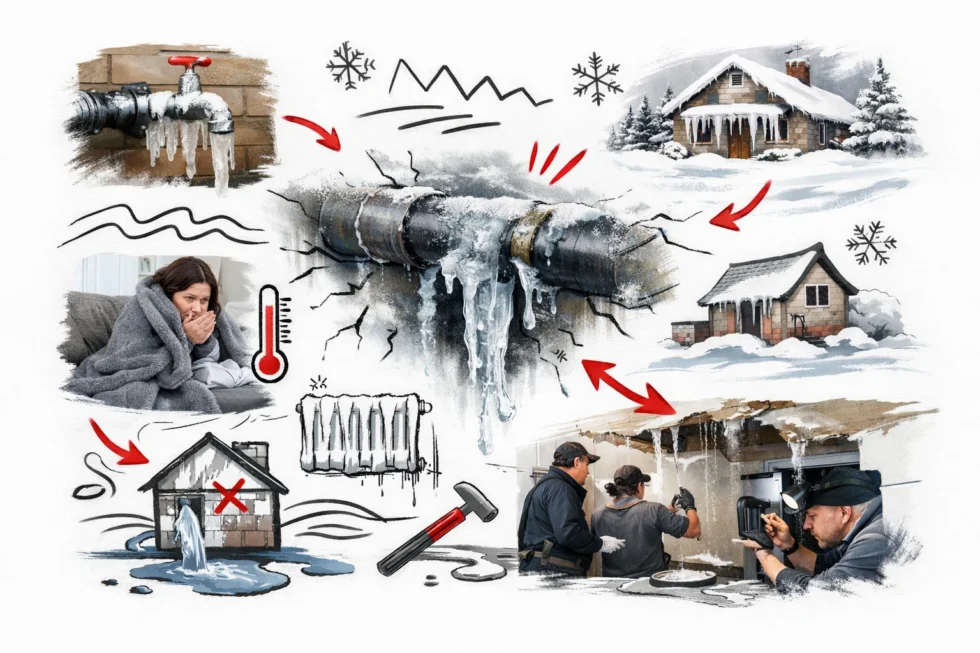
At the same time, high energy prices mean millions of households have been running heating at lower levels, increasing the likelihood that pipes in lofts and walls fall below freezing.
What this means for British households
A frozen pipe is no longer a minor inconvenience. It can mean:
- Days without heating or hot water
- Repair bills running into thousands of pounds
- Insurance disputes over maintenance
- Temporary hotel stays during winter
British Gas warns that basic prevention now — often costing less than £1 — could prevent what is set to become one of the most expensive domestic emergencies of 2026.
That is why, in 2025, British patients still live between prescriptions and prosecutions. Read about the life of Westminster and Pimlico district, London and the world. 24/7 news with fresh and useful updates on culture, business, technology and city life: British Gas bills rise in January as Ofgem lifts the price cap while April cuts promise relief