
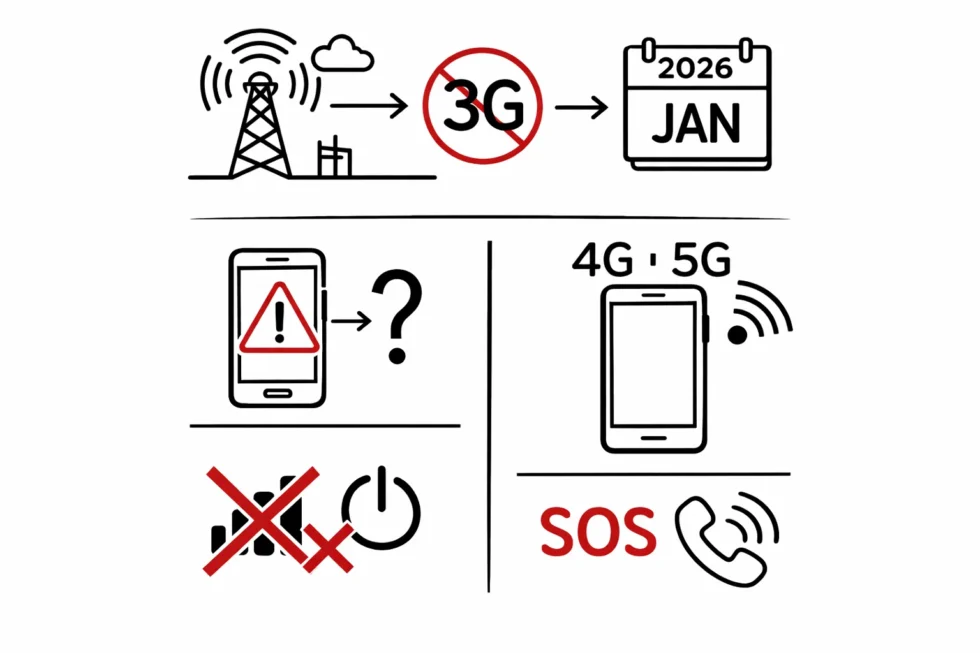
Millions of mobile phone users across the UK are being affected this month as O2 completes the final stage of its nationwide 3G shutdown, bringing an end to one of the country’s longest-running mobile data networks. The o2 3g network shutdown officially enters its final phase in January 2026, meaning any device that relies only on 3G will lose mobile internet access — even though calls and text messages will continue to work. The change applies to O2 and Virgin Media O2 customers in every part of the country, as reported by The WP Times reports, citing Virgin Media O2.
The switch-off follows a year of regional closures carried out in 2025, including large parts of Scotland, East Anglia, the Midlands and the South-West. From Aberdeen and Dundee to Norwich, Watford and Torquay, customers have already seen 3G disappear, as the operator prepared for the full national shutdown now under way.
For users with older phones, the impact is immediate and practical. Without 4G or 5G capability, their devices will no longer be able to use mobile data for everyday tasks such as Google Maps, WhatsApp, FaceTime, email, banking apps or social media. Those services will only work over Wi-Fi, turning many handsets into voice-and-text-only phones when outside the home.
Virgin Media O2 says the number of people affected is relatively small but still significant. Fewer than two per cent of all mobile data on its network is now carried over 3G, a dramatic decline that made the technology increasingly inefficient to maintain. Much of the remaining usage comes from people with older smartphones, feature phones, tablets, car SIMs and specialist devices such as medical or monitoring equipment.
The shutdown is part of a nationwide transition agreed by the UK government and mobile industry in 2021, aimed at modernising Britain’s digital infrastructure. EE, Vodafone and Three have already completed their own 3G switch-offs, meaning O2 is one of the last major networks to retire the technology.
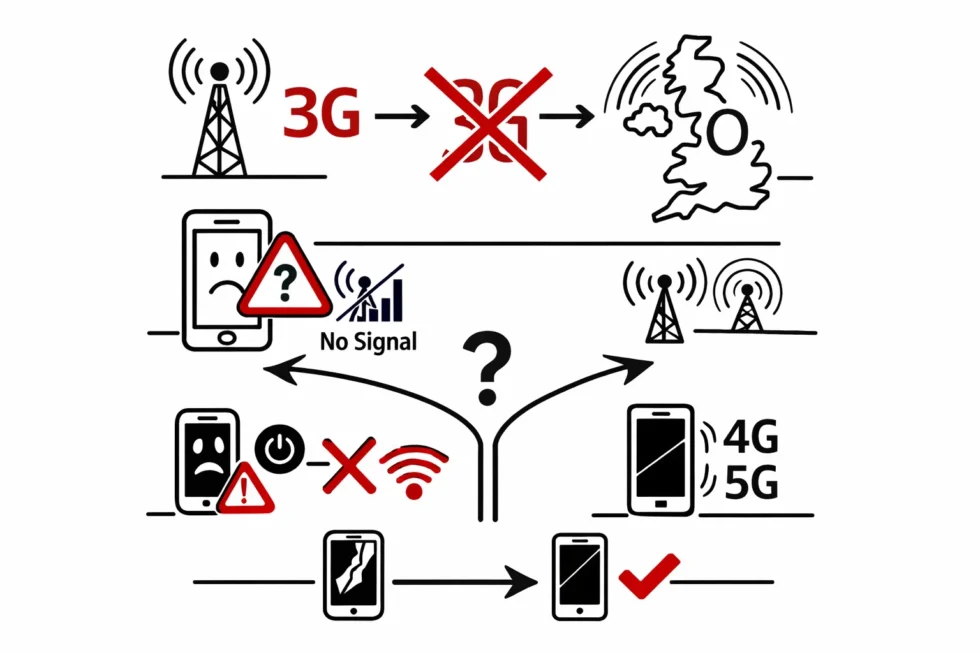
The commercial logic behind the move is simple. Even at its best, 3G delivers speeds of around 6 megabits per second, compared with typical 4G speeds of 20 to 80 Mbps and 5G speeds that can exceed 100 Mbps. Keeping 3G running ties up valuable radio spectrum that could otherwise be used to improve coverage, reliability and capacity on modern networks.
By closing 3G, O2 is able to reallocate those frequencies to 4G and 5G, which improves call quality, reduces congestion and allows faster data speeds in busy cities, on rail routes and in rural areas. The company says this will benefit the vast majority of its customers who already use newer devices.
Jeanie York, Chief Technology Officer at Virgin Media O2, described 3G as “a relic of a bygone era”, saying the shift would deliver more stable streaming, clearer voice calls and a more resilient mobile network for the UK.
O2 has been contacting customers who are still using 3G-only devices, offering advice and upgrade options. Many will have already received a text message or letter explaining what is changing and what they need to do to remain connected.
Customers can also check their status by logging into their account via My O2 or visiting an O2 store, where staff can confirm whether a phone supports 4G or 5G and recommend suitable replacements. Anyone using a tablet, car SIM or connected device is also advised to check compatibility before losing mobile data access.
For most users, the transition will be invisible. But for those still relying on older handsets, January 2026 marks the moment when Britain’s mobile internet finally moves on from a technology that once defined the smartphone era.
Read about the life of Westminster and Pimlico district, London and the world. 24/7 news with fresh and useful updates on culture, business, technology and city life: UK Bank Holidays 2026 confirmed as Boxing Day moves to December 28