
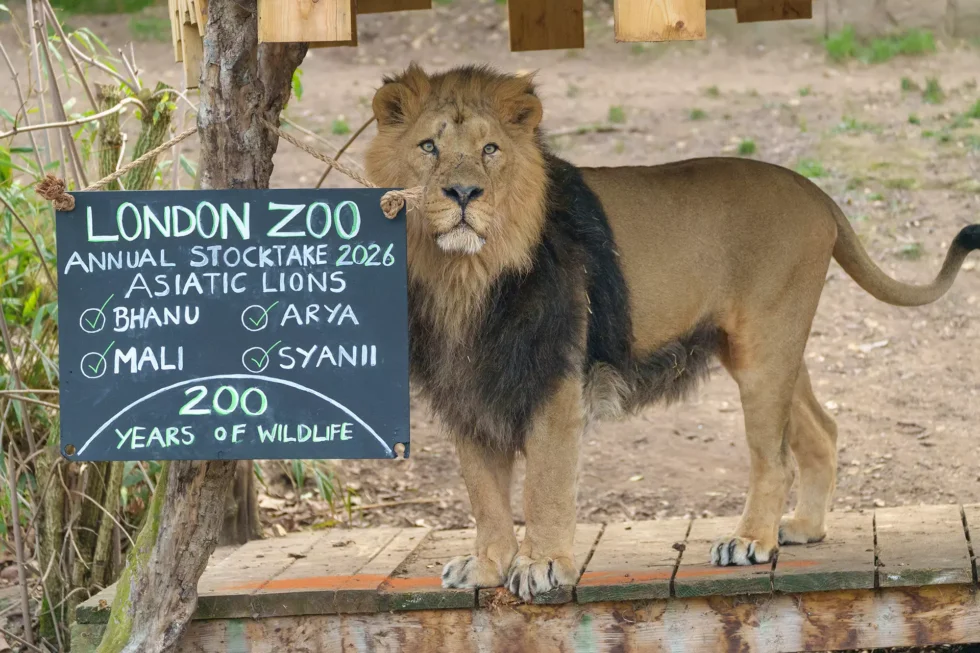
London Zoo has launched ZSL’s 200th anniversary year with its most important scientific ritual — the annual animal stocktake, a detailed count of every species held across the zoo. From Humboldt penguins and Asiatic lions to corals, millipedes and capybaras, more than 8,000 animals were recorded as keepers moved enclosure to enclosure with clipboards, cameras and digital tracking systems.
The stocktake is not a publicity exercise. It is a legal requirement under the zoo’s licence and one of the most important ways conservation data is shared worldwide. Every number feeds into a global database used by zoos and wildlife researchers to manage breeding programmes, track genetic diversity and prevent endangered species from quietly disappearing. The WP Times reports, citing data released by London Zoo and the Zoological Society of London.
This year’s count is also symbolic. ZSL, which runs London Zoo, was founded in 1826 to advance scientific understanding of animals — long before the word “conservation” even existed in its modern sense. Two centuries later, that original scientific mission remains at the core of how the zoo operates.
Penguin chicks, lions and millipedes: what the numbers revealed
Among the most closely watched figures in this year’s stocktake were the Humboldt penguins. Keepers recorded 75 birds in total, including 16 chicks hatched in 2025. That growth matters far beyond Regent’s Park. Humboldt penguins originate from the coasts of Chile and Peru and are classed as Vulnerable on the IUCN Red List, with wild populations declining because of climate change, overfishing and habitat loss. A successful breeding year in London strengthens the international safety-net population that could one day help stabilise or restore the species.
The count also included Asiatic lions, a subspecies found only in India’s Gir Forest in the wild, and now one of the most genetically sensitive big-cat populations in the world. Every lion in a zoo is part of a carefully managed global family tree, designed to avoid inbreeding and preserve long-term health.
Less visible but just as important were species such as Seychelles millipedes and reef-building corals, both of which play vital roles in ecosystems. Their inclusion underlines that conservation is not only about large mammals — it is also about the small organisms that keep habitats alive.
Why the global database behind London Zoo really matters
Behind the scenes, the data from London Zoo’s stocktake is uploaded to ZIMS (Species360), a global wildlife database used by conservation institutions around the world. It allows zoos to track exactly how many individuals of each species exist in captivity, where they are located, and how genetically related they are. This information is essential for coordinating international breeding programmes. Without it, zoos risk producing too many animals in one region while another population quietly becomes genetically weak or unsustainable.
ZSL’s two centuries of animal science mean London Zoo is not just a visitor attraction — it is a research node in a global conservation network. The annual count ensures that every animal, from frogs to lions, remains part of a wider survival strategy.
The dove that almost vanished: a global rescue effort
One of the most striking figures in the 2026 stocktake concerns the Socorro dove. Eight chicks hatched at London Zoo in 2025, adding new life to one of the world’s rarest birds.
The Socorro dove is officially classified as Extinct in the Wild. The entire global population now stands at just 180 birds, cared for by fewer than 50 conservation institutions worldwide. The arrival of eight new chicks in London alone represents nearly 4.5% of the planet’s total population. That makes the hatchings not just a local success, but a global milestone. Without coordinated zoo-based breeding, the species would already be gone forever.
Fighting fungal extinction: Darwin’s frogs
Another breakthrough came from Darwin’s frogs, an unusual species that carries its young in the male’s vocal sac. London Zoo’s population increased by eight frogs in 2025, a major boost for an animal under threat from chytrid fungus, a disease responsible for amphibian declines worldwide.
Darwin’s frogs are listed as an EDGE species — Evolutionarily Distinct and Globally Endangered — meaning their loss would wipe out an entire unique branch of the evolutionary tree. ZSL scientists are leading international efforts to protect them, and the latest births mark a rare positive moment in a field often dominated by bad news.
Capybaras, coral and the changing face of London Zoo
Not all additions were about crisis. In summer 2025, London Zoo welcomed a brand-new species: capybaras, the world’s largest rodents. A pair named Kiwi and Gizmo now live in a heated outdoor enclosure, where they were officially added to the 2026 count. Coral species were also recorded underwater by specialist keepers, reflecting the zoo’s expanding role in protecting marine life — even though these ecosystems exist thousands of miles from London. Together, these entries show how modern zoos have shifted away from simple display towards conservation science, habitat restoration and extinction prevention.
For visitors, the stocktake offers reassurance that the animals they see are part of something bigger. Every penguin chick, froglet and dove represents a small piece of a global effort to keep species alive in a world of accelerating climate change, habitat destruction and disease.
For scientists, it provides the hard data that allows breeding programmes to function. And for ZSL, it marks two centuries of turning observation into action. As ZSL enters its third century, the message from this year’s count is clear: even in the middle of London, the future of some of the world’s rarest species is still being written.
How London Zoo was founded — and who paid for it
London Zoo was founded in 1826, not as a public attraction, but as a scientific institution. It was created by the Zoological Society of London (ZSL), a group of British scientists, physicians, explorers and wealthy patrons who believed that the study of animals was essential to medicine, agriculture and the understanding of the natural world. At the time, Britain was at the height of its global power. Expeditions were bringing back animals from Africa, Asia and the Americas, but there was no organised way to study them alive. ZSL was established to fill that gap — creating a permanent collection where animals could be observed, measured and bred for research.
The Society was backed by royal and aristocratic patronage. King George IV became its first royal patron, lending political and financial legitimacy to the project. Wealthy landowners, merchants and colonial administrators provided funding, animals and land. The zoo was built inside Regent’s Park, land owned by the Crown. The Crown granted ZSL a long-term lease, effectively allowing Britain’s scientific elite to build what became the world’s first modern zoological garden.
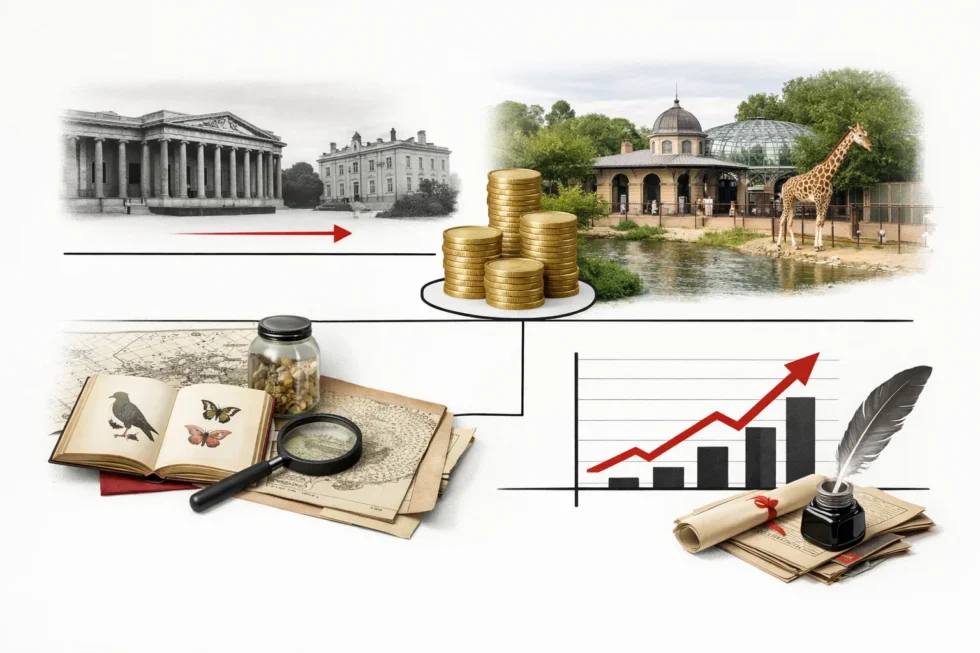
For its first years, London Zoo was not open to the public. It was a private scientific collection for members of the Society — doctors, naturalists and sponsors. Only in 1847 was it opened to paying visitors, mainly to raise funds to support the growing cost of animal care and research.
Over time, London Zoo became a model for zoos across Europe and the United States. What began as a club of scientists and patrons evolved into one of the world’s most influential conservation institutions — a role that ZSL still plays today through global breeding programmes, wildlife research and extinction-prevention projects.
Read about the life of Westminster and Pimlico district, London and the world. 24/7 news with fresh and useful updates on culture, business, technology and city life: Britain’s Bird Flu Surge Forces Edinburgh Zoo to Suspend Its Iconic Penguin Parade
Cover photo: carpet at London Zoo