
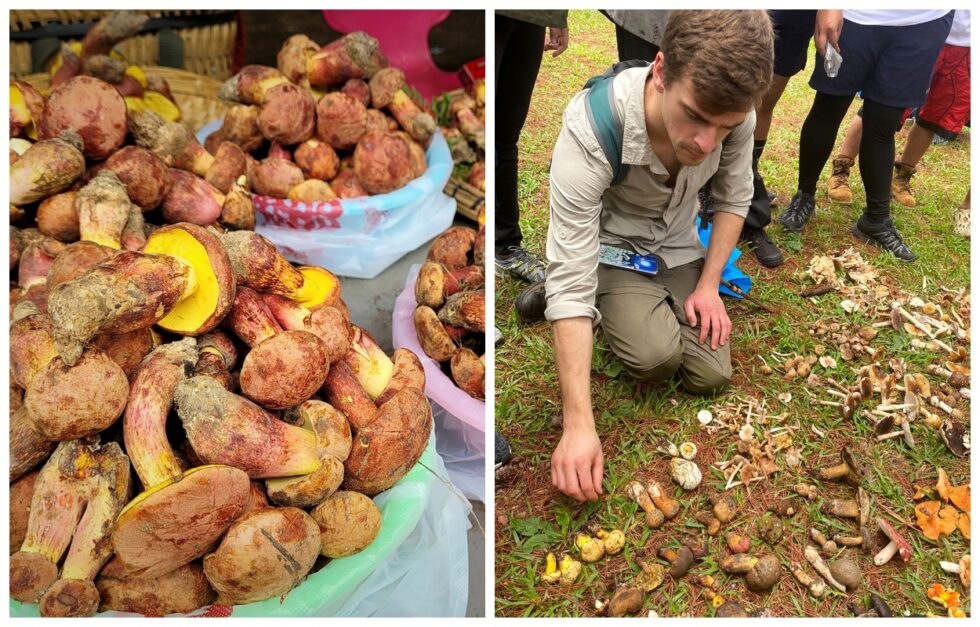
Hospitals in China’s Yunnan Province are again reporting hundreds of seasonal admissions linked to the consumption of a wild edible mushroom, Lanmaoa asiatica, which can cause prolonged and unusually specific hallucinations if improperly prepared. The cases occur annually during the peak mushroom season from June to August and involve vivid visions of dozens of tiny human-like figures, confusion and disorientation lasting from one to seven days. The mushroom, commonly sold in markets and restaurants, has been genetically confirmed in China and the Philippines, with possible historical links to Papua New Guinea. Scientists say the psychoactive compound involved is not psilocybin and remains unidentified, raising food safety and neurological questions. This is reported by The WP Times, citing BBC.
Lanmaoa asiatica as a seasonal food product
Lanmaoa asiatica is a wild mushroom that grows in symbiosis with pine trees in mountainous forest regions. In Yunnan Province, it is harvested during the summer monsoon season and sold widely as a food product. It appears in household cooking, local markets and restaurant menus, valued for its strong umami flavour.
The species is not classified as poisonous under Chinese food safety regulations. When thoroughly cooked, it is considered safe for consumption. Problems arise when preparation is insufficient or uneven, allowing a heat-sensitive but persistent compound to remain active.
Where cases are reported and how often
Medical literature and hospital records indicate that cases follow a predictable seasonal pattern.
- Peak incidence occurs between June and August
- Several hundred patients are treated annually in Yunnan Province
- Most cases are linked to home-cooked meals rather than restaurants
- Patients typically seek care 12–24 hours after consumption
Doctors note that the delayed onset often obscures the connection between symptoms and food intake.
How symptoms develop after consumption
Patients usually experience a gradual progression of neurological symptoms rather than sudden illness. Initial complaints often include dizziness and visual distortion, followed by more complex hallucinations.
The defining feature is the appearance of multiple small human-like or animal-like figures. These figures are often described as moving independently across furniture, walls or objects, and remain visible even when patients close their eyes.
Psychiatrists classify these experiences as lilliputian hallucinations, a rare form of visual hallucination first described in medical literature in 1909.
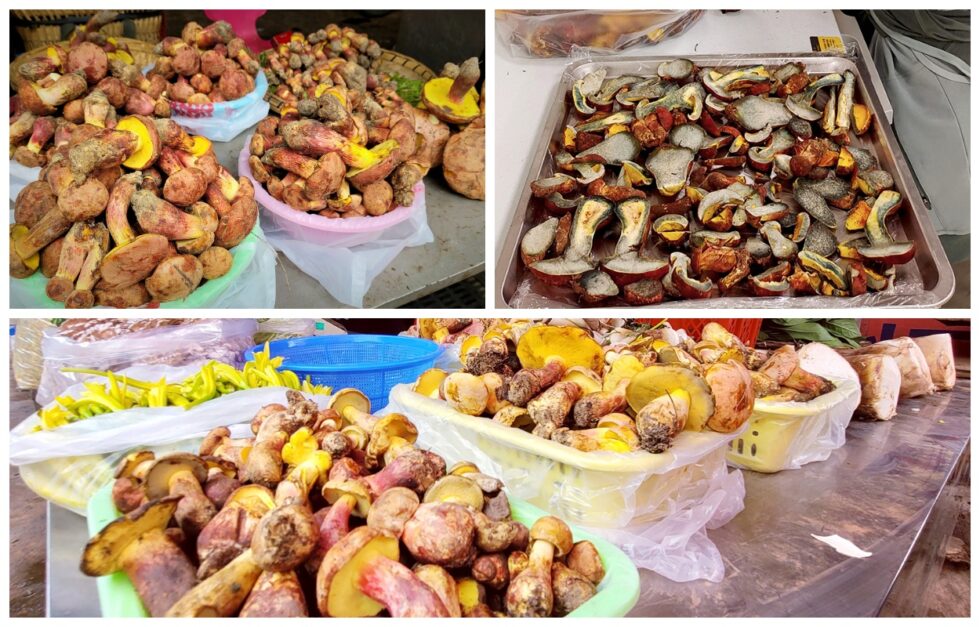
Table: Typical clinical progression
| Phase | Timeframe | Common features |
|---|---|---|
| Ingestion | Day 0 | Mushroom eaten, often undercooked |
| Latent period | 12–24 hours | Mild or no symptoms |
| Acute phase | 1–3 days | Hallucinations, confusion, dizziness |
| Severe cases | Up to 7 days | Hospital observation required |
| Recovery | Gradual | Symptoms resolve |
Why cooking method is critical
Researchers believe the unidentified compound in Lanmaoa asiatica is not destroyed by brief cooking. Laboratory analysis suggests that prolonged exposure to high temperatures is required to neutralise its neurological effects.
Local culinary practices in Yunnan reflect this risk awareness. Restaurants that serve the mushroom often enforce strict preparation times, including boiling or stewing for at least 15 minutes before consumption. Customers are warned not to eat the dish prematurely.
Home cooking remains the main source of risk, where preparation times vary and mixed mushroom dishes are common.
Factors associated with more severe cases
Clinical reviews have identified several recurring factors among patients with prolonged symptoms.
- Short or uneven cooking time
- Large portion sizes
- Mixed dishes containing multiple wild mushroom species
- Consumption on an empty stomach
- Pre-existing neurological conditions
These factors do not guarantee severe symptoms but appear frequently in hospital case histories.
Scientific confirmation of the species
For decades, reports of mushroom-related hallucinations were treated cautiously due to inconsistent species identification. This changed after formal taxonomic description in 2015 and subsequent genetic sequencing.
In 2023, researchers collected specimens directly from Yunnan markets and forests. Genome sequencing confirmed that the mushrooms linked to hallucinations belonged to Lanmaoa asiatica.
Similar specimens collected in the Philippines, despite differences in size and colour, were genetically identical to the Chinese samples.
Table: Confirmed and suspected distribution
| Region | Status |
|---|---|
| Yunnan Province, China | Confirmed |
| Other parts of China | Possible |
| Philippines | Genetically confirmed |
| Papua New Guinea | Historical reports only |
The unidentified psychoactive compound
Chemical screening has ruled out known psychedelic substances, including psilocybin and LSD-related compounds. Animal studies using purified extracts show central nervous system effects, including hyperactivity followed by prolonged immobility.
The long duration of symptoms — often lasting days rather than hours — distinguishes Lanmaoa asiatica from most known hallucinogens. Researchers have not yet determined the compound’s chemical structure, dosage thresholds or long-term neurological impact.
Hospital response and treatment
There is no specific antidote for Lanmaoa asiatica exposure. Treatment is supportive and focused on monitoring.
- Neurological observation
- Hydration therapy
- Management of agitation or insomnia
- Prevention of self-injury
- Exclusion of other toxic or neurological causes
Most patients recover fully once hallucinations resolve.
Table: Hospital management approach
| Measure | Purpose |
|---|---|
| Observation | Monitor mental status |
| Fluids | Prevent dehydration |
| Sedation | Control agitation |
| Imaging | Rule out other causes |
| Psychiatric review | Confirm diagnosis |
Regulatory and food safety context
The mushroom remains legal to sell and consume. Authorities classify it as conditionally edible, meaning safety depends on preparation rather than prohibition.
Seasonal advisories are issued to remind consumers about cooking requirements. Enforcement is limited because most sales occur in informal markets without packaging or instructions.
No international food safety alerts currently apply to the species.
Why scientists are paying attention
The consistency of hallucinations across patients has attracted interest from neuroscientists studying visual perception. Unlike most hallucinatory experiences, which vary widely, Lanmaoa asiatica produces remarkably similar visual distortions.
Researchers believe studying the mushroom could help explain spontaneous lilliputian hallucinations that occur in neurological disorders unrelated to food or drugs.
For consumers, the issue is preparation rather than avoidance. Health authorities continue to stress that thorough cooking significantly reduces risk. For doctors, the cases highlight the importance of considering delayed food-related causes of neurological symptoms. For researchers, Lanmaoa asiatica remains an unresolved scientific question linking food safety, neurology and biodiversity.
Read about the life of Westminster and Pimlico district, London and the world. 24/7 news with fresh and useful updates on culture, business, technology and city life: What is known about McDonald’s UK new menu in London and across Britain from 5 January 2026