
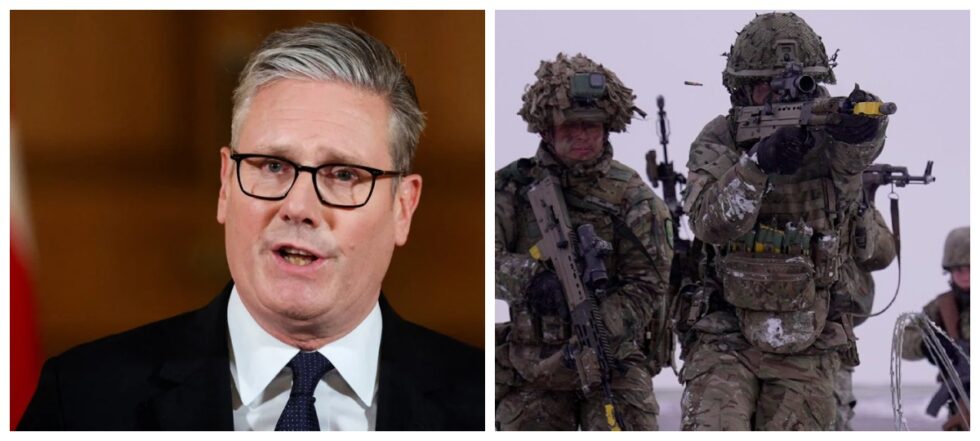
Recent warnings from MPs and former NATO advisers suggest that the United Kingdom can no longer rely on the United States’ 70-year security guarantee. With changing US foreign policy priorities, experts argue that Britain must prepare for potential military conflicts independently to protect democracy, national security, and international obligations, reports confirm. The US has historically acted as a shield for Britain, particularly under NATO’s Article 5, which obliges members to defend each other in case of an attack. However, political shifts, including the America First stance under President Trump, have led analysts to conclude that this security commitment is effectively “no longer valid.” Experts urge Britain to reassess military readiness, fill critical capability gaps, and implement structural reforms to ensure it can respond to emerging threats without full reliance on the US. Reports The WP Times, citing a Civitas.
Understanding the Warning: Report Insights
The report, titled “Understanding the UK’s Transition to Warfighting Readiness”, was authored by MPs Bernard Jenkins, Derek Twigg, and former senior NATO adviser Chris Donnelly. It highlights systemic vulnerabilities in Britain’s current defence posture, arguing that complacency born of 70 years of peace has left the nation underprepared for high-intensity conflict. Lord Robertson of Port Ellen, former NATO secretary-general, emphasized: “The UK is under-prepared and under attack,” urging immediate action to modernize forces and address operational shortfalls.
Key points from the report include:
- Reliance on US support is no longer guaranteed. Shifts in American policy mean NATO allies, including the UK, cannot assume the US will intervene automatically.
- Military resources are insufficient. The Army is shrinking to roughly 70,000 regular troops, limiting Britain’s capacity to deploy large-scale operations.
- Equipment gaps persist. While jets, armoured vehicles, and other advanced systems exist, quantities are insufficient to sustain prolonged combat operations.
- Funding deficits loom. The Ministry of Defence faces a £28 billion shortfall over the next four years, impacting readiness and modernization programs.
The report stresses that Britain must pursue “dramatic measures very quickly, acting independently but increasingly in concert with allies, before hostile countries can exploit the West’s disarray.”
UK Military Capabilities: Current Snapshot
| Branch | Strength/Assets | Notes |
|---|---|---|
| British Army | ~70,000 regular troops | Limited ability to deploy a 25,000-strong armoured division long-term |
| Royal Navy | 70+ ships (various classes) | Allies seek reassurance of ship availability |
| Royal Air Force | ~150 combat jets | Advanced jets available, but in limited numbers |
| Funding Gap | £28 billion | Planned over 4 years, affects modernization and procurement |
After reviewing these figures, experts emphasize that while capabilities exist, scale and sustainment remain critical concerns. The Army’s limited numbers, combined with equipment shortages, mean Britain cannot currently guarantee rapid or prolonged defensive operations without significant support.
Political Context: US Policy Shifts
The report warns that the US’s commitment to NATO and post-WWII defence arrangements is weakening. Analysts cite:
- President Trump’s “America First” doctrine prioritizing domestic and economic interests over alliance obligations.
- Increased US-Russia economic engagement, signaling potential divergence in strategic priorities.
- The erosion of trust among NATO allies regarding rapid response and coordinated operations.
This context suggests that Britain must accelerate independent military preparedness to avoid reliance on uncertain international guarantees.
Q&A: Key Questions About UK Readiness
Q: Why is Britain considered under-prepared?
A: Decades of peace and reliance on US support have resulted in troop reductions, funding gaps, and limited equipment quantities, leaving the nation vulnerable to high-intensity conflicts.
Q: How could NATO Article 5 be affected?
A: While Article 5 obliges member states to defend each other, changing US policy priorities may reduce the certainty of rapid American intervention in a crisis, requiring Britain to plan for independent action.
Q: What immediate steps are recommended?
A: Strengthen troop numbers, accelerate equipment modernization, ensure sustainable funding, improve domestic infrastructure for defence, and implement whole-of-society resilience measures.
Recommendations for Policymakers
Experts advocate a multi-faceted approach to bolster UK security:
- Military Modernization: Increase Army size, procure additional combat aircraft and armoured vehicles, and enhance Royal Navy readiness.
- Financial Planning: Close the £28 billion funding gap with targeted budget allocations to sustain modernization and operations.
- Resilient Infrastructure: Ensure critical national systems, including energy, transport, and communications, are protected against potential conflict scenarios.
- Independent Capabilities: Reduce reliance on US logistical support for deployment, supply chains, and operational sustainment.
- Whole-of-Society Mobilisation: Develop adaptable governance and civil defence measures to maintain national resilience under wartime conditions.
The UK faces an unprecedented strategic environment where traditional assumptions about American support can no longer be taken for granted. By addressing funding shortfalls, increasing troop numbers, modernizing equipment, and ensuring societal resilience, Britain can maintain its security and sovereignty in a rapidly changing geopolitical landscape.
Read about the life of Westminster and Pimlico district, London and the world. 24/7 news with fresh and useful updates on culture, business, technology and city life: What does TfL’s Oyster system operator change mean for passengers — and what do London travellers need to know